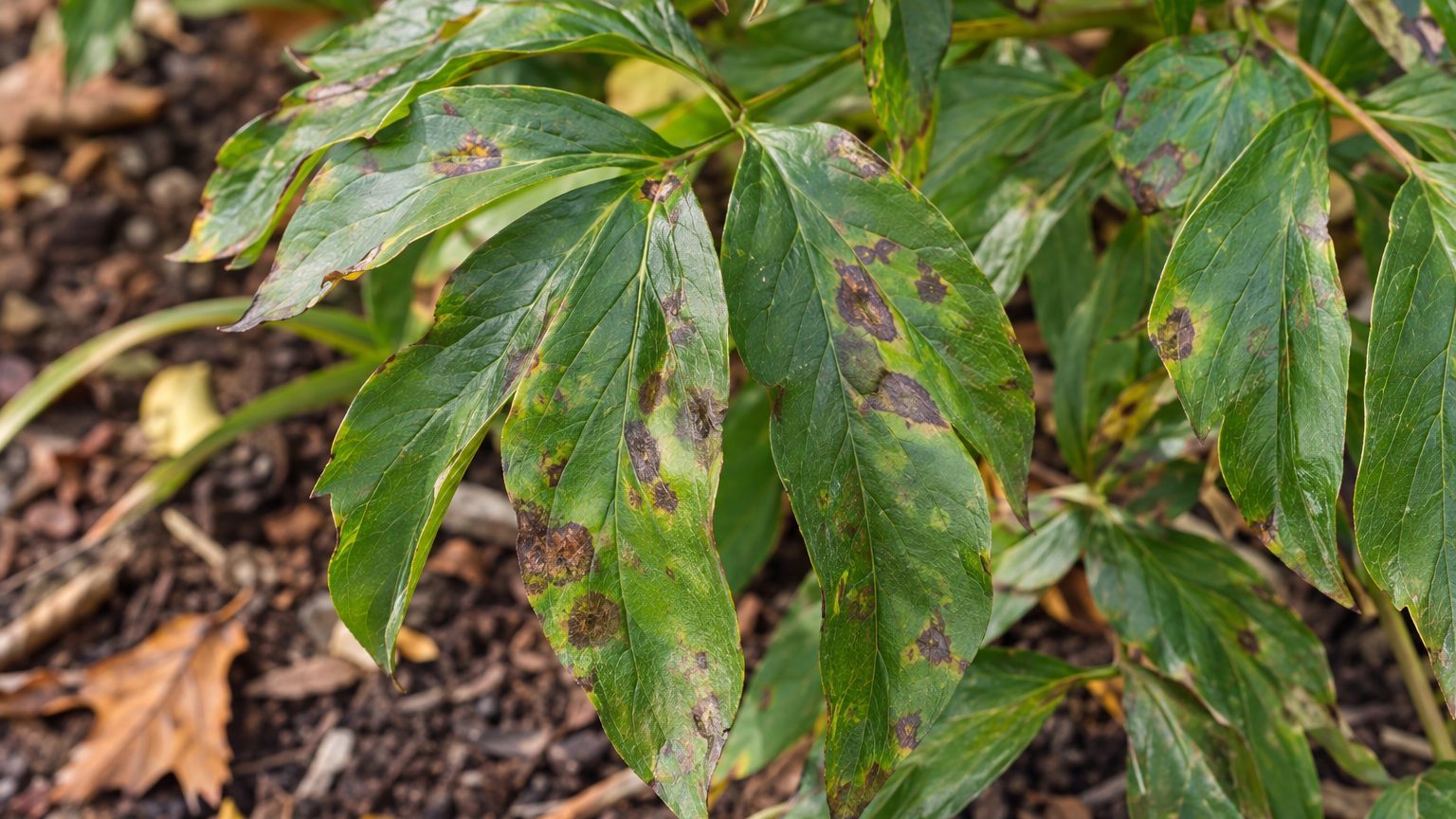
Purple-red blotches can spread across peony leaves; in Minnesota, they typically appear in mid to late summer after bloom. That is leaf blotch, a fungal disease that looks ugly but rarely harms the plant. What matters is what you do with the cut stems and fallen leaves, because that is where the fungus waits out winter.
Leaf Blotch: What You See

Start with the upper side of the leaves, where the first marks show up.
- Glossy, purplish-brown spots sit on the upper side of the leaf, while the underside of the same spot turns chestnut brown.
- Early spots are small, circular and red or purplish, often appearing on young leaves just before bloom.
- Later the spots merge into large, irregular, dark purple blotches, some 1 inch or larger.
- Older spots dry out into dead tan areas with irregular black lines through the center.
- Young stems can show elongated, reddish-brown streaks; in Minnesota, leaves near a spot may curl or twist.
In severe cases, the leaves die completely but stay attached; in Minnesota, the disease is typically seen in mid to late summer after bloom.
From the almanac
Peonies in your state
The dates on this page depend on where you live. Your state's page carries its frost dates, its USDA zones and the year laid out month by month.
Northeast
Southeast
- Alabama
- Arkansas
- Delaware
- Florida
- Georgia
- Kentucky
- Louisiana
- Maryland
- Mississippi
- North Carolina
- South Carolina
- Tennessee
- Virginia
- West Virginia
Midwest
Southwest
West
Pacific Northwest
Canada
Leaf Blotch or Something Else?
Dark marks can have different causes, and relying on color alone can mislead you. Check the color of the spot and where on the plant it sits, then flip the leaf over.
Botrytis blight can look similar and is common in wet springs.
| Looks like | How to tell them apart |
|---|---|
| Botrytis blight | Stems soften and decay, and flower buds blacken and fail to open; those signs point to Botrytis blight. |
| Red spot on stems only | Raised individual spots on the upper stems with glossy purple blotches on the leaves above point to leaf blotch, not a stem rot. |
A soft, collapsing stem or a rotting bud points to Botrytis blight rather than leaf blotch. Firm tissue with glossy purple spots and a chestnut-brown underside points to it.
What Causes Leaf Blotch, and Where It Is Worst
A fungus causes it, now named Graphiopsis chlorocephala and formerly called Cladosporium paeoniae. It grows on the surface of leaves, stems and leaf stalks, which is why the damage looks so unsightly but stays shallow.
The fungus survives on infected peony debris and probably on infected scales of crown buds, so last year’s leftovers feed this year’s outbreak. Warm, humid weather gives the best conditions for infection, and in California the disease is favored by rainy spring weather.
How to Treat Leaf Blotch
Treatment is mostly cleanup, since sanitary measures give the strongest control of this disease.
- Remove spotted leaves as you see them, so that fewer spores sit on the plant while it keeps growing.
- In Washington, cut all stems at ground level in the fall or early spring so that infected tissue is not left in the bed.
- Bag the cut stems and leaves and put them in the trash, so that the fungus cannot overwinter in a compost pile or on the soil.
- Rake away infected peony debris around the crown, where the fungus can survive.
Spots that show up late in the season usually do no harm to growth. In Illinois, early-season infection on susceptible plants may reduce vigor.
How to Prevent Leaf Blotch Coming Back
Prevention follows the calendar, and nearly all of it is cleanup.
- In Indiana, do a thorough fall cleanup of old, infected stems, leaves and other plant debris so that the fungus has less material in which to overwinter.
- In Washington, cut back any missed stems in early spring and clear the crown area before new shoots emerge.
- In Minnesota, check the leaves after bloom, when blotches typically appear in mid to late summer, and remove badly affected leaves.
Where This Comes From
Leaf blotch begins when the fungus survives in infected plant material and reaches peony foliage or stems.
Common Questions
Does Leaf Blotch Kill a Peony?
Not usually. It looks bad and does not significantly damage the plant, though leaves can die in severe cases while staying attached.
Will Peonies Still Bloom After Leaf Blotch?
In Minnesota, the disease typically shows after bloom in mid to late summer, when the flowers are usually finished. Early infection can reduce vigor.
Is Leaf Blotch the Same as Peony Measles?
Yes. Peony measles, red spot and stem spot are other names for the same disease.