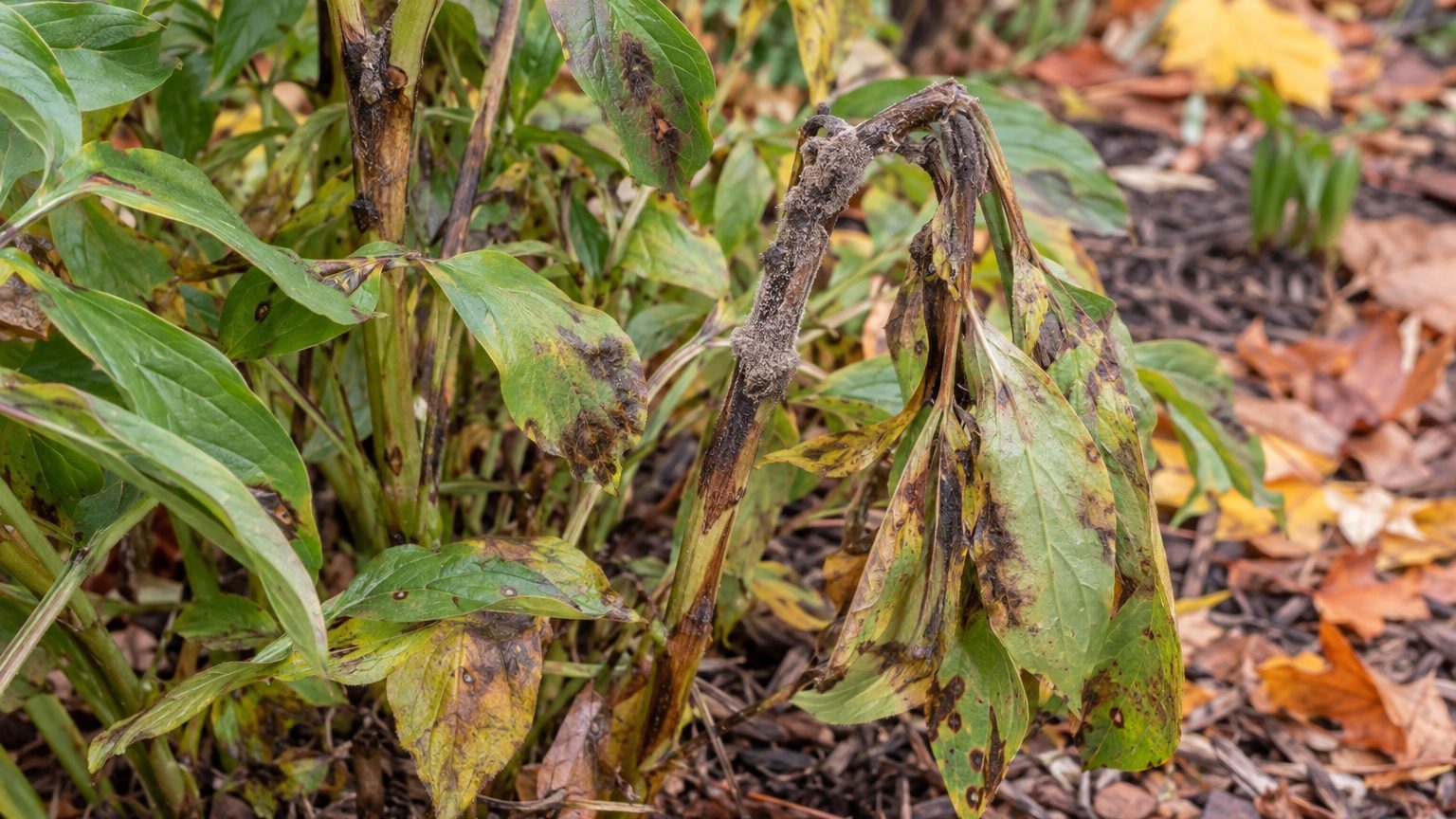
Gray fuzz on peony stems and buds after a rainy spell, or a young shoot that wilts and flops in spring, usually points to botrytis blight. The fungus starts early, sometimes as the new shoots push out of the ground. It spreads in damp, crowded foliage, and a few habits in how you water, space and clean up make the difference.
Botrytis Blight: What You See

The clearest sign shows up after moisture, so look after rain, overhead watering or a humid day.
- Fuzzy, gray fungal growth covers the surface of affected tissue once the plant has been wet.
- Blighted areas usually sit on the lower half of young shoots or stems, and the entire shoot may collapse.
- Black lesions several inches long can form on those stems, as reported in Wisconsin.
- In Wisconsin, buds may shrivel, turn brown and rot suddenly at any stage of development.
- Leaves develop reddish-purple spots, and stems and petals may discolor, wilt or shrivel, as reported in Illinois.
Because the disease begins as new shoots emerge, early spring is the time to start checking.
From the almanac
Peonies in your state
The dates on this page depend on where you live. Your state's page carries its frost dates, its USDA zones and the year laid out month by month.
Northeast
Southeast
- Alabama
- Arkansas
- Delaware
- Florida
- Georgia
- Kentucky
- Louisiana
- Maryland
- Mississippi
- North Carolina
- South Carolina
- Tennessee
- Virginia
- West Virginia
Midwest
Southwest
West
Pacific Northwest
Canada
Botrytis Blight or Something Else?
Peonies suffer from more than one fungal problem, and several leave dark, collapsing tissue. Gray fuzz is the detail that separates botrytis from most of them, so pair what you see with where it sits on the plant.
| Looks like | How to tell them apart |
|---|---|
| Phytophthora blight, with dark lesions and a collapsing shoot | Botrytis is more likely to cause bud rot, and it produces fuzzy gray spores once the plant is moistened. |
| Other leaf spots, with discolored patches on foliage | Botrytis can cause reddish-purple spots and shriveled, discolored buds. |
Two different botrytis fungi can infect peonies. One, Botrytis cinerea, attacks many kinds of plants, while Botrytis paeoniae infects only peonies. Control recommendations differ slightly between them, so seek local guidance to help confirm which one you have.
What Causes Botrytis Blight, and Where It Is Worst
A few related species of the fungus Botrytis cause the disease, including B. cinerea. It can affect every above-ground part of the plant, though leaves and buds show symptoms most often. The fungus makes dense thickets of spores that blow or splash away to start new infections.
Wet foliage is what lets it spread. Rain, overhead watering and humid days all give the spores the moisture they need, and crowded plants hold that moisture longer.
Where spring growth stays damp, conditions can favor the fungus. On older, multi-stemmed clumps, infections show up more often near the center of the plant, where air moves least. Sometimes only one side of a stem is affected.
How to Treat Botrytis Blight
Treatment is mostly about removing infected tissue and drying out the plant, and the order matters.
- Inspect new shoots as they emerge, looking for gray fuzz or dark lesions on the lower stems.
- Cut off collapsed shoots and rotted buds at the base, so that the spore-covered tissue is no longer feeding new infections.
- Bag the removed material and put it in the trash, because spores blow and splash away from dead tissue and a compost pile is no safe place for it.
- Water at the base of the plant and skip the overhead spray, so that the foliage stays dry between rains.
- Keep neighboring plants from crowding the clump so that air can move through and dry the leaves.
- Check local guidance before choosing a fungicide so that it is approved where you live and suited to the disease you have.
Cleanup comes first, and sprays are an addition rather than a replacement. In a severe case, gray fungal growth may be visible after wet weather.
How to Prevent Botrytis Blight Coming Back
Prevention follows the season, and most of it comes down to keeping air moving and leaves dry.
- In early spring, start checking as the first shoots come up, since the disease can begin before the plant has leafed out.
- When you plant or divide, choose a spot with full sun and good drainage, because peonies prefer both.
- Through the growing season, keep plants spaced so that air flows between them, which helps deter fungal foliar disease.
- During dry spells, water at the soil line rather than over the leaves, since overhead watering wets the foliage that the fungus needs.
- After rain or humid weather, look over the plants again for gray fuzz, as it appears once the plants have been moistened.
A sunny, open bed supports the dry foliage and airflow that help deter fungal leaf disease.
Where This Comes From
The supporting references appear in the Sources box below. Because timing and symptoms can vary with local weather, seek advice suited to your yard.
Common Questions
Can Botrytis Blight Kill a Peony?
It can collapse whole shoots and rot buds, which ruins a season of growth on the affected stems. Removing infected tissue promptly keeps the damage from spreading across the clump.
Should You Water Peonies from Above?
Overhead watering wets the leaves and buds, and gray fungal growth shows up after plants have been moistened. Watering at the base keeps the foliage drier.
Is It Too Early to Look for Botrytis in Spring?
No. The disease can start while new shoots are just coming out, so spring checks are worth making from the moment growth appears.