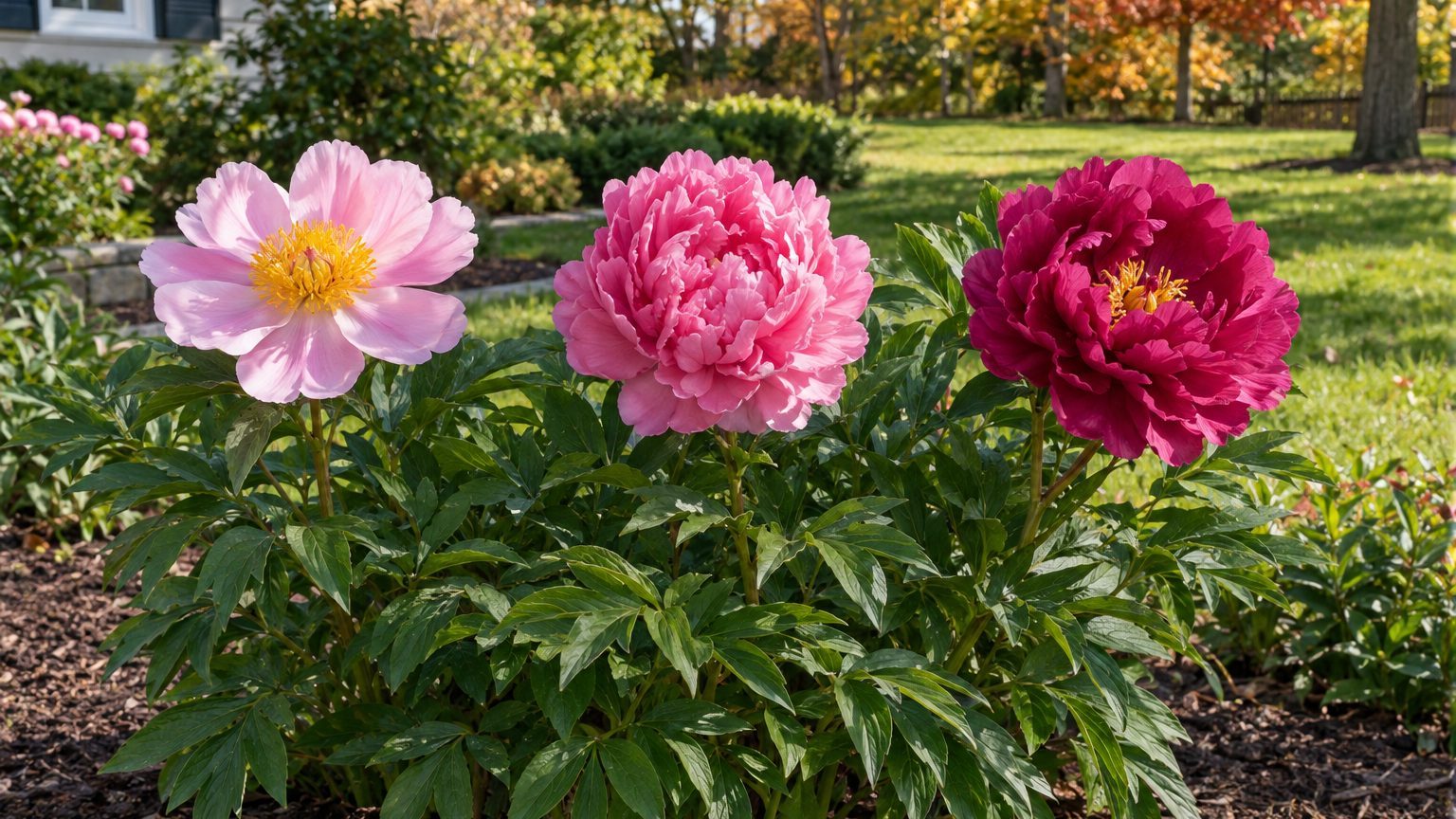
A peony that wakes up in a Wyoming spring has already had the cold winter rest it needs to flower. Herbaceous peonies and tree peonies suit that cold. Which one earns your space depends on shelter, size and how much staking you want to do.
Best Peonies to Grow in Wyoming

Herbaceous peonies handle cold winters well, while tree peonies need light shade and a protected location. Hardiness zones run from 3a to 6a on the USDA system, so winter conditions differ across the state and gardeners should check their own zone.
Herbaceous Peonies

This is the classic garden peony. It dies back to the ground each year and returns from the roots, and it grows better in full sun than in shade.
Paeonia hybrids have showy spring blooms in pink, purple, red or white, with foliage that stays attractive after the flowers fade.
Tree Peonies

Tree peonies are not trees. Paeonia suffruticosa is a deciduous shrub that keeps its woody stems through winter, and it asks for light shade and a protected location.
Mature plants rarely need staking because their woody branches hold up the large flowers. They also tend to bloom earlier and bigger than herbaceous peonies, and the color range stretches into yellows.
Cut-Flower Varieties
Hundreds of varieties exist, and some are bred for the vase rather than the border. If you plan to cut armfuls for the house, buy varieties recommended for cut flower production instead of ones sold only for landscaping.
Early, Mid and Late Varieties
Varieties differ in blooming date, so you can choose early, mid or late types. Mixing them stretches the flowering season and reduces the chance that late frost will catch every bud at the same stage.
Single and Double Flower Forms
Flower forms include single, double, bomb and anemone. Double blooms hold a lot of water, so after a hard rain the heavy heads tend to flop. Singles and anemone forms are lighter on their stems.
Wyoming — the year and the numbers
- State
- Wyoming
- USDA zones
- 3a-6a
- Last spring frost
- May 7 to May 18
- First fall frost
- September 24 to October 5
- Annual rain
- 15 in
- Lawn zone
- cool-season
- Source
- NOAA NCEI 1991-2020 Climate Normals, 32F freeze probabilities · Cheyenne
How to Choose a Peony for a Wyoming Garden
Start with your yard, not the catalog photo. Sun, shelter and elevation narrow the field quickly, and the type that fits those conditions will outlast a fussier one.
Size matters too. A crowded peony or one that needs constant staking is a poor fit for the site.
| Your situation | What suits it in Wyoming | Why |
|---|---|---|
| Very cold winters | Herbaceous peonies | They need a cold winter rest to bloom |
| Frost risk at higher elevations | A mix of early, mid and late varieties | Bloom is spread out, so cold weather is less likely to catch every flower at the same stage |
| Little time for staking | Tree peonies | Woody branches support the large flowers once the plant is mature |
| Small space | Herbaceous hybrids | They stay lower than a tree peony |
| Sheltered or lightly shaded corner | Tree peonies | They prefer light shade and a protected location |
| Full-sun bed | Herbaceous peonies | They grow better in full sun |
Cutting for bouquets is a separate case. Pick varieties recommended for cut flower production, and choose early, mid and late types so the harvest lasts.
Which Peonies Suit Different Parts of Wyoming
Elevation does most of the sorting in Wyoming. The same peony behaves differently on the plains than in the mountain valleys, mostly because of when frost arrives.
- Cheyenne and the Front Range: Bloom often comes in late May or early June, so herbaceous peonies fit well here, and a sheltered spot gives a tree peony an edge against wind.
- Jackson Hole and the high country: Frost can come in any month at higher elevations, so use season protection for herbaceous peonies and give tree peonies their protected, lightly shaded corner.
- Laramie and the southeastern plains: Cold winters give plenty of chilling, so herbaceous peonies in full sun are the easy choice, with tree peonies reserved for a wind-sheltered bed.
Where spring frosts linger, protect plants instead of relying on a late-opening variety.
Peony Buying Mistakes to Avoid in Wyoming
Tree Peony in an Open Spot
A tree peony set out in a bare, exposed bed is working against its own preference. It likes light shade and a protected location, and a spot with no shelter leaves those woody stems and large flowers exposed.
Choose a place near a fence or the east side of the house before you buy.
Skipping the Adult Size
A small pot hides a big plant. Tree peonies grow taller than herbaceous hybrids, so a pot-sized plant squeezed against a walkway may outgrow its place.
Read the tag, measure the space, and give the mature size room.
Ignoring Bloom Season
Buying varieties that all open at the same time leaves the whole bed exposed to the same frost. Early, mid and late varieties bloom on different dates, and a careful mix lengthens the show.
Check the bloom date on each label before you check out, particularly if your yard sits at higher elevation.
Where to Get Peony Advice in Wyoming
Local growers can tell you which varieties and spots have worked in your own town, which beats a generic planting guide.
- University of Wyoming Extension offers research-based guidance on perennials and cold-climate planting, so check it before you place a fall order.
- Your county extension office can speak to local elevation and frost patterns, and a visit in late summer leaves time to choose varieties before fall planting.
Common Questions
When Should You Plant Peonies in Wyoming?
Fall is the time, in September or October, while the ground is still workable and before it freezes. Bare-root plants settle in best then. Keep the eyes near the soil surface, because a peony set too deep may bloom poorly or not come up.
When Do Peonies Bloom in Wyoming?
June is the usual month, and May is possible, with late May or early June along the Front Range. A newly planted or transplanted peony may not bloom the first spring, so do not judge it by its first year.
When Should You Cut Back Peonies in Wyoming?
Wait until a hard freeze has killed the foliage, in October or November, then cut herbaceous stems to within a couple of inches of the ground. Bag the debris rather than composting it, which helps prevent disease. A tree peony keeps its woody stems and is never cut back.