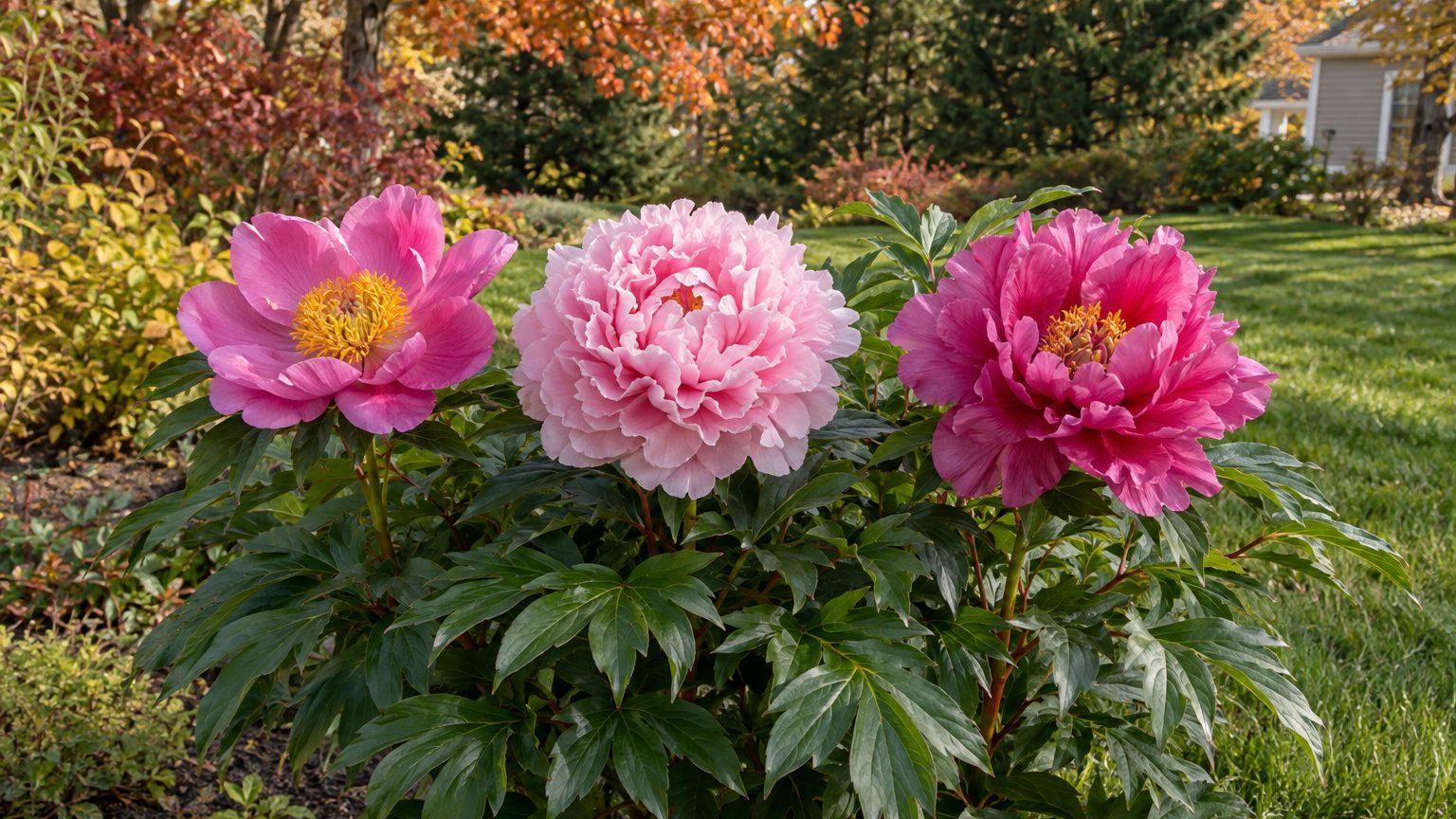
Peonies reward a Wisconsin yard with the plain fact that they want a cold winter, and the state delivers one every year. Herbaceous garden peonies and intersectional (Itoh) peonies are the dependable choices here, with tree peonies as a sheltered-spot gamble.
Best Peonies to Grow in Wisconsin

Herbaceous and intersectional peonies suit Wisconsin best, because the state’s winters supply the cold rest these plants need to flower. Wisconsin spans USDA zones 3b to 6a, and its winters provide the cold rest peonies need. Tree peonies can work, but only with protection.
Herbaceous Garden Peonies

Most Wisconsin gardeners know these. They descend from the Chinese peony (Paeonia lactiflora) and the common peony (P. officinalis), which have given rise to a wide range of cultivars. Each fall they die back to the ground, and new growth emerges in spring.
Plant them in September to early October so the roots settle before the ground freezes. Keep the eyes near the soil surface, since a peony set too deep may bloom poorly or not come up.
Intersectional Peonies

Also called Itoh peonies, these are a hybrid of the garden and tree peonies. They are among the easiest to grow and follow the same yearly rhythm as herbaceous types: they die back in fall and push new shoots in spring.
Treat them like a garden peony for planting and fall cleanup. If you want a tree peony’s look without its fussiness, this is the type to try.
Disease-Tolerant Cultivars
Varieties differ in disease susceptibility, so ask a nursery about disease history and less susceptible planting stock. The variety Avalanche is reportedly especially susceptible to Phytophthora.
Ask a nursery about disease history before you buy. Phytophthora also rarely develops in light, sandy soils, so a well-drained spot helps.
Tree Peonies
Woody tree peonies, mostly derived from P. suffruticosa, are generally not as hardy as the garden types. Give them a protected site or mulch them over winter.
A tree peony keeps its woody stems, so it is never cut back to the ground the way a herbaceous peony is.
Wisconsin — the year and the numbers
- State
- Wisconsin
- USDA zones
- 3b-6a
- Last spring frost
- April 16 to April 29
- First fall frost
- October 17 to October 29
- Annual rain
- 35 in
- Lawn zone
- cool-season
- Source
- NOAA NCEI 1991-2020 Climate Normals, 32F freeze probabilities · Milwaukee
How to Choose a Peony for a Wisconsin Garden
Start with what your yard asks of the plant. Wisconsin’s cold is rarely the limit, so the choice usually comes down to disease, effort and how much shelter you can offer.
A new or transplanted peony may not bloom its first spring, so patience belongs in every choice.
| Your situation | What suits it in Wisconsin | Why |
|---|---|---|
| Very cold winter | Herbaceous peony | It dies back to the ground each fall, so nothing above the soil has to survive the freeze. |
| Hot, humid summer | A less blight-susceptible variety in light, well-drained soil | Varieties differ in disease susceptibility, and Phytophthora rarely develops in light, sandy soils. |
| Little time | Herbaceous or intersectional peony | They are the easiest to grow and share the same simple yearly culture. |
| Need for winter cold | Herbaceous peony | Peonies need a cold winter rest to flower, and Wisconsin winters give it. |
| Exposed or windy spot | Herbaceous peony rather than tree peony | Tree peonies are less hardy and need a protected site or winter mulch. |
Small yards deserve a note too. Check a plant’s mature size before you buy, since a potted peony shows little of what it will become.
Which Peonies Suit Different Parts of Wisconsin
Wisconsin’s range from 3b to 6a means the north and south call for slightly different caution, and Lake Michigan adds its own twist.
- Northern Wisconsin: Herbaceous peonies are the safer pick, while tree peonies need a protected site or winter mulch.
- Southern Wisconsin: Milder winters widen your options, so intersectional peonies and a sheltered tree peony are easier to try.
- Lake Michigan shore: The lake delays the first fall freeze, so cutting back waits a little longer than it does inland.
Inland southern gardens usually freeze in early October, which fits the planting window for new roots.
Peony Buying Mistakes to Avoid in Wisconsin
Choosing a Fragile Type
A tree peony set in an open, windy bed can lose its woody stems to winter. That can leave the plant badly damaged.
Plant it in a protected site and mulch it over winter, or choose an intersectional peony for a similar look with less risk.
Ignoring Disease Susceptibility
Some varieties catch blight more readily, and Avalanche is reportedly especially prone to Phytophthora. A susceptible plant in heavy, wet soil can fail in a humid summer.
Ask about the variety’s record, and favor a light, well-drained spot.
Buying a Pot Without Knowing Its Size
Potted peonies at garden centers look small, but the adult clump spreads far beyond the pot. Crowded plants bloom less and need dividing.
Read the tag for mature size before you buy. Fall is the time to divide older, crowded clumps, in September to early October.
Where to Get Peony Advice in Wisconsin
The state’s land-grant extension service offers plant-specific guidance, and your county office can speak to local soil and conditions.
- The University of Wisconsin Extension publishes fact sheets on peony diseases and a monthly gardening guide, so browse it before you shop.
- Your county extension office can answer questions about soil drainage and variety choices, so call before planting in September.
Common Questions
When Do Peonies Bloom in Wisconsin?
Bloom runs from early June into early July, with June the main month. Peonies cut in tight bud can be wrapped and kept in the refrigerator for later use.
How Do You Get Bigger Peony Flowers?
In Wisconsin, extension advice is to de-bud several branches so the plant puts its energy into fewer, larger blooms. It also suggests giving peonies 2-3 applications of complete fertilizer two weeks before flowering.
When Should You Cut Back Peonies in Wisconsin?
Herbaceous peonies are cut back in October to November, after a hard freeze has killed the foliage. Cut old leaves to ground level and destroy the debris rather than composting it, which helps prevent disease.