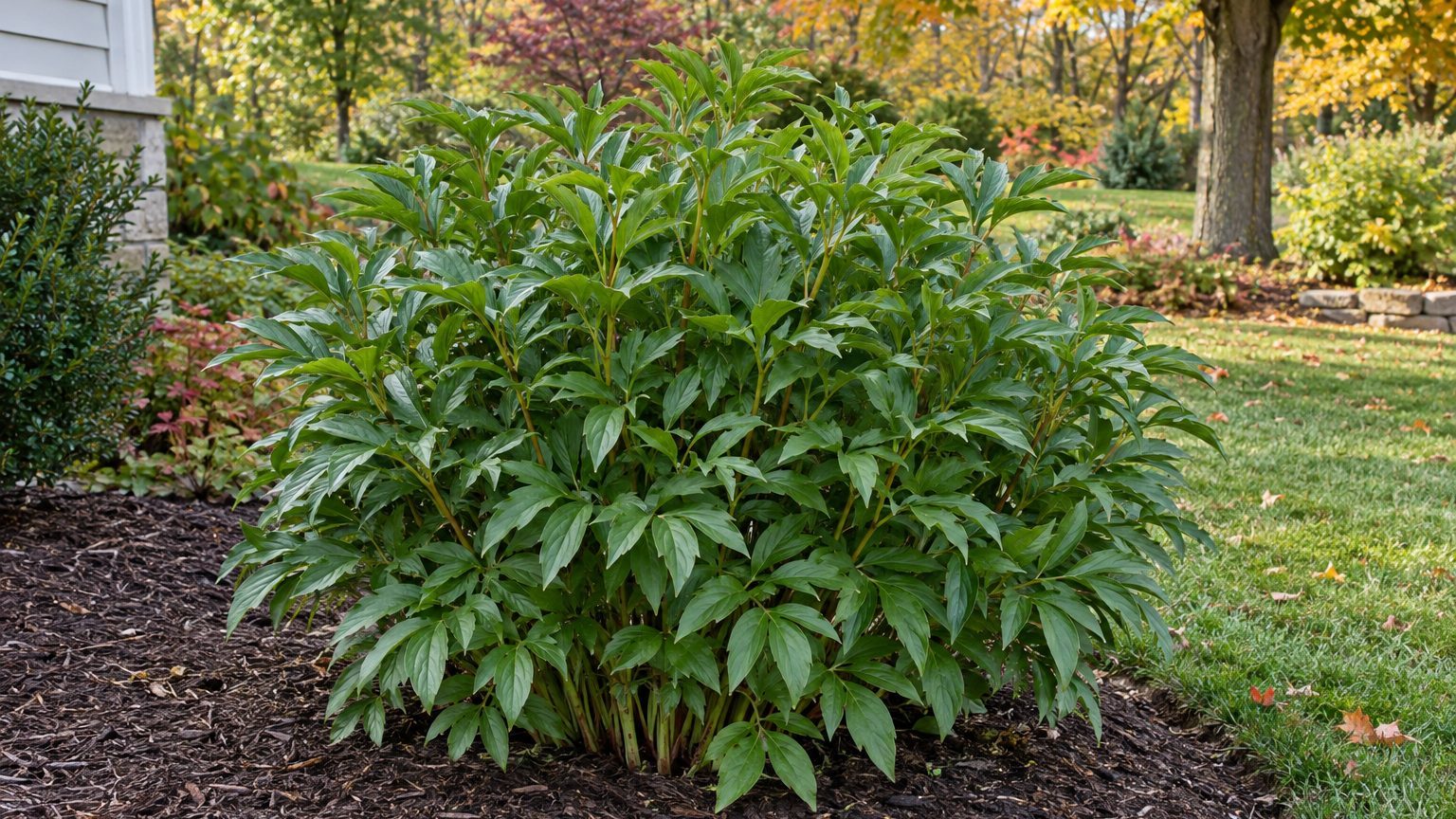
A peony that leafs out lush and green every spring but never sets a bud is a frequent puzzle in a home garden. Common causes include crown depth, sun exposure, the plant’s age, and winter cold.
Why Is Your Peony Not Blooming?
Check planting depth, shade, and whether the plant is still settling in. Peonies are slow to settle in, and they flower only when the buds sit near the surface, the leaves get plenty of direct sun, and winter delivers real cold. Type and climate shift how those rules play out.
In Illinois, a peony planted in the last year or two may take 2-3 years to establish and bloom. In Alaska, plants may not flower until they have matured 2-4 years in a location.
Warm winters matter too. In South Carolina, some cultivars in zones 8 and 9 fail for lack of chilling. The state selector just below this section takes you to the page for your own state.
From the almanac
Peonies in your state
The dates on this page depend on where you live. Your state's page carries its frost dates, its USDA zones and the year laid out month by month.
Northeast
Southeast
- Alabama
- Arkansas
- Delaware
- Florida
- Georgia
- Kentucky
- Louisiana
- Maryland
- Mississippi
- North Carolina
- South Carolina
- Tennessee
- Virginia
- West Virginia
Midwest
Southwest
West
Pacific Northwest
Canada
How to Get a Peony to Bloom

Work through the likely causes in the order you would check them in the yard, starting with the ones you can see and ending with the ones that only time fixes.
- Check the depth of the buds, called eyes, by gently pulling soil back from the crown, because buried buds make a handsome leafy shrub that never flowers. In Kentucky, buds deeper than 2 inches often fail to bloom satisfactorily.
- Lift and replant a too-deep crown in fall so the eyes sit 1 to 2 inches below the surface, as advised for Iowa gardens, because deeper planting can keep a peony from flowering.
- Watch how long the sun reaches the plant, and move it if it falls short. In Wisconsin, full sun means a minimum of 6 hours of sunlight each day, and a peony in shade puts its energy into leaves.
- Pull back winter mulch if you have been piling it on. In Connecticut, the advice is to plant on a northern exposure and skip winter mulch, which helps the crown get its cold.
- Hold off on dividing a young plant, because in Washington the guidance is never to divide a plant less than 3 years old, as it may retard flowering.
- Give a recent division time, since in Iowa divisions with fewer than three buds may take 2 or more years to flower.
If none of these fits, the winter may be the culprit. Peonies need a stretch of real cold to set flowers, and a mild climate can keep a healthy plant from ever blooming. That is not a cause you can fix with a shovel.
Blooming Habits by Peony Type
Peonies are not all alike underground. The herbaceous kind dies back each winter and renews from buds at the crown, while tree peonies keep woody stems and are planted differently.
The depth rule you follow depends on which one you have, so check the type before you start digging.
| Peony Type | What changes | Why it matters |
|---|---|---|
| Herbaceous peony | Buds should sit no more than 2 inches below the soil surface, according to Kansas | Deeper planting can delay flowering or prevent it completely |
| Tree peony | The graft union goes at least 4 inches below the surface, according to Kansas | Planting this deep encourages the plant to develop its own roots |
These types follow opposite logic, so a tree peony planted at the shallow depth meant for herbaceous plants misses its graft rule, and the reverse buries the buds of an herbaceous plant. Either way, check what you planted before you dig, and match the depth to the type.
Peony Blooming Mistakes to Avoid
Planting Too Deep
This is the classic mistake, often made with the best intentions of giving roots a good start. The cost is a plant that grows well and never flowers. In Alaska, a peony set too deep may make a beautiful shrub but never produce blooms.
Dig the crown up in fall and reset it so the eyes are no deeper than the depth given above for your type.
Dividing Too Soon
Dividing feels like a favor to a crowded clump, but a young plant has little to spare. The cost is lost flowers, since dividing a plant less than 3 years old may retard flowering in Washington.
Leave young clumps alone. When you divide an established plant in Iowa, keep each piece large, with at least three buds.
Giving Up Too Early
A new peony that does not flower in its first spring or two is usually fine. In Illinois, it can often take 2-3 years to establish and bloom, so there is no reason to dig it up.
Instead, make sure the depth and sun are right, and wait. Moving a healthy young plant resets the clock and costs you more seasons of waiting.
When Peonies Bloom in Your State
Firm, plump buds at the tips of rising stems show that a plant is on track to flower. That is your cue to check sun, depth and mulch before the season passes.
- Your state page gives the months for peonies where you live, so open it before you plan any planting or moving.
- Open your state page when the new shoots first break the soil.
Common Questions
Can You Grow Peonies in a Warm Climate?
You can, but flowering is the problem. Peonies grow well in USDA hardiness zones 3 to 8 and can survive down to zone 9, but are unlikely to flower there, according to Virginia. Choose with care and expect fewer blooms.
How Much Winter Cold Do Peonies Need?
Peonies require winter cold to flower. In Connecticut, they need a minimum of 6 weeks of temperatures below 40°F. Mild winters can leave a healthy plant without buds.
Should You Mulch Peonies in Winter?
For flowering, it is better to leave the crown bare. Connecticut advice is to avoid winter mulch, which can keep the crown too warm and shallow buds from getting their chill.
Sources : rhs.org.uk