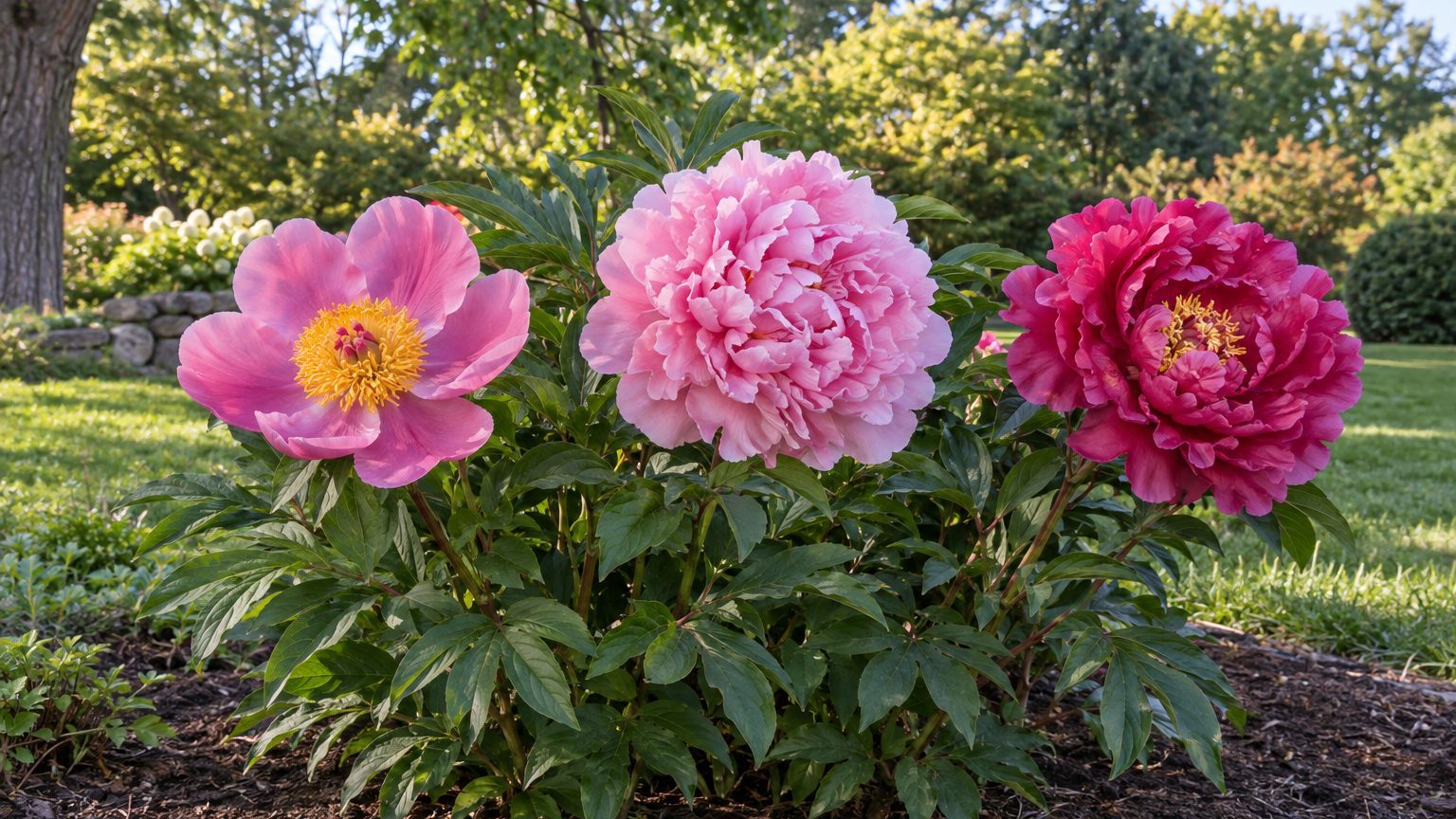
Peonies reward West Virginia gardeners who give them a cold winter, a sunny spot and soil that drains. Herbaceous peonies suit the state’s winters, while woodland peonies can fit shady sites.
Best Peonies to Grow in West Virginia

Herbaceous peonies fit West Virginia’s cold winters because peonies need winter cold to flower. West Virginia spans USDA hardiness zones 5a to 7a, but that range describes extreme winter lows rather than the full winter chill a peony receives. Peonies may flower poorly in mild-winter climates, so local conditions still matter.
Common Garden Peony

The common garden peony (P. lactiflora) is the standard herbaceous form found in most home gardens, and it comes in many flower forms and colors. Herbaceous types die back to the ground each fall and send up new growth in spring, so they suit a yard with real winters.
Sarah Bernhardt

Sarah Bernhardt is grown for cut flowers and in landscape beds. Its flowers can be cut during the May bloom season.
Karl Rosenfeld
Karl Rosenfeld is grown for cut flowers and in landscape beds. Plant it where it gets sun and room.
Festiva Maxima
Festiva Maxima is grown for cut flowers and in landscape beds. Like the others, it needs a cold winter rest to flower well.
Intersectional Peony
Herbaceous and intersectional peonies are among the easiest to grow and share the same culture. Each fall they die back to the ground, and new growth emerges in spring.
Woodland Peony
Woodland peonies (P. japonica and P. obovata) suit shady gardens. If part of your yard is shaded, this is the group to consider there.
Fernleaf Peony
The fernleaf peony (P. tenuifolia) is noted for finely cut, fern-like foliage and crimson red flowers. It brings a different texture to a border than the broad leaves of garden peonies.
West Virginia — the year and the numbers
- State
- West Virginia
- USDA zones
- 5a-7a
- Last spring frost
- April 9 to April 23
- First fall frost
- October 18 to November 1
- Annual rain
- 46 in
- Lawn zone
- cool-season
- Source
- NOAA NCEI 1991-2020 Climate Normals, 32F freeze probabilities · Charleston
How to Choose a Peony for a West Virginia Garden
Start with the winter you actually get. Peonies need cold to flower, but winter is only part of the choice; match the peony to the light and soil in your garden.
Then think about how much time you want to give the plant. A herbaceous peony is simple: it dies back each year and is cut back after frost.
| Your situation | What suits it in West Virginia | Why |
|---|---|---|
| Very cold winter | Common garden peony | Peonies need winter cold to flower, so cold winters help them |
| Mild winter spot | A peony suited to local winters | Peonies may flower poorly where winters are mild |
| Little time | Herbaceous or intersectional peony | Easiest to grow, they die back each fall and return in spring |
| Shady corner | Woodland peony | Best suited for shade gardeners |
| Cut flowers | Sarah Bernhardt | A widely grown cut-flower cultivar |
Fernleaf peony is a good pick when you want fine foliage and red blooms as a feature. Whatever you choose, expect that a newly planted or transplanted peony may not bloom the first spring.
Which Peonies Suit Different Parts of West Virginia
Winter cold varies across the state, so the choice shifts a little with where you live.
- Charleston and the river valleys: Winters are milder here, so stick with herbaceous types known for reliable flowering. Around Charleston, spring frost can still arrive in April, so watch the forecast when new shoots appear.
- Higher elevations: Winters are colder, which suits peonies well. Freezes also come earlier in fall, so plant on time to let roots settle before the cold.
- Shaded wooded lots: Woodland peonies are the group to consider in a shaded site, where sun-loving garden peonies would struggle.
Zones run from 5a to 7a across the state, so check your own zone before you buy.
Peony Buying Mistakes to Avoid in West Virginia
Choosing a Type Too Tender
Peonies need winter cold to flower, so choose a plant suited to your local conditions. Choose herbaceous or intersectional peonies, which are the easiest to grow here.
Planting Too Deep
A peony planted too deep may bloom poorly or not come up at all. Keep the eyes near the soil surface when you plant or divide, and aim for September through October so roots can settle before winter.
Ignoring Adult Size
A small pot hides how large the plant will grow. Peonies are long-lived perennials that grow reliably year after year, so a crowded spot can become a lasting problem. Check the mature size before buying and leave room.
Where to Get Peony Advice in West Virginia
Local help can settle questions about your own soil, elevation and winter. The state’s land-grant extension service is the place to start.
- West Virginia University Extension offers garden guidance you can read any time of year, and fall is a good moment to ask about planting.
- Your county extension office can speak to your local conditions, so call in late summer before September planting.
Common Questions
When Should You Plant Peonies in West Virginia?
September through October is the window for planting or dividing. Roots get time to settle before the cold sets in.
When Do Peonies Bloom in West Virginia?
May is the main bloom month. In some parts of the state, flowering can begin from mid-April, earlier than in cooler areas.
When Should You Cut Peonies Back?
Cut herbaceous peonies back in November or December, after the foliage has died back. Early spring, in March or April, also works. A tree peony keeps its woody stems and is never cut back.