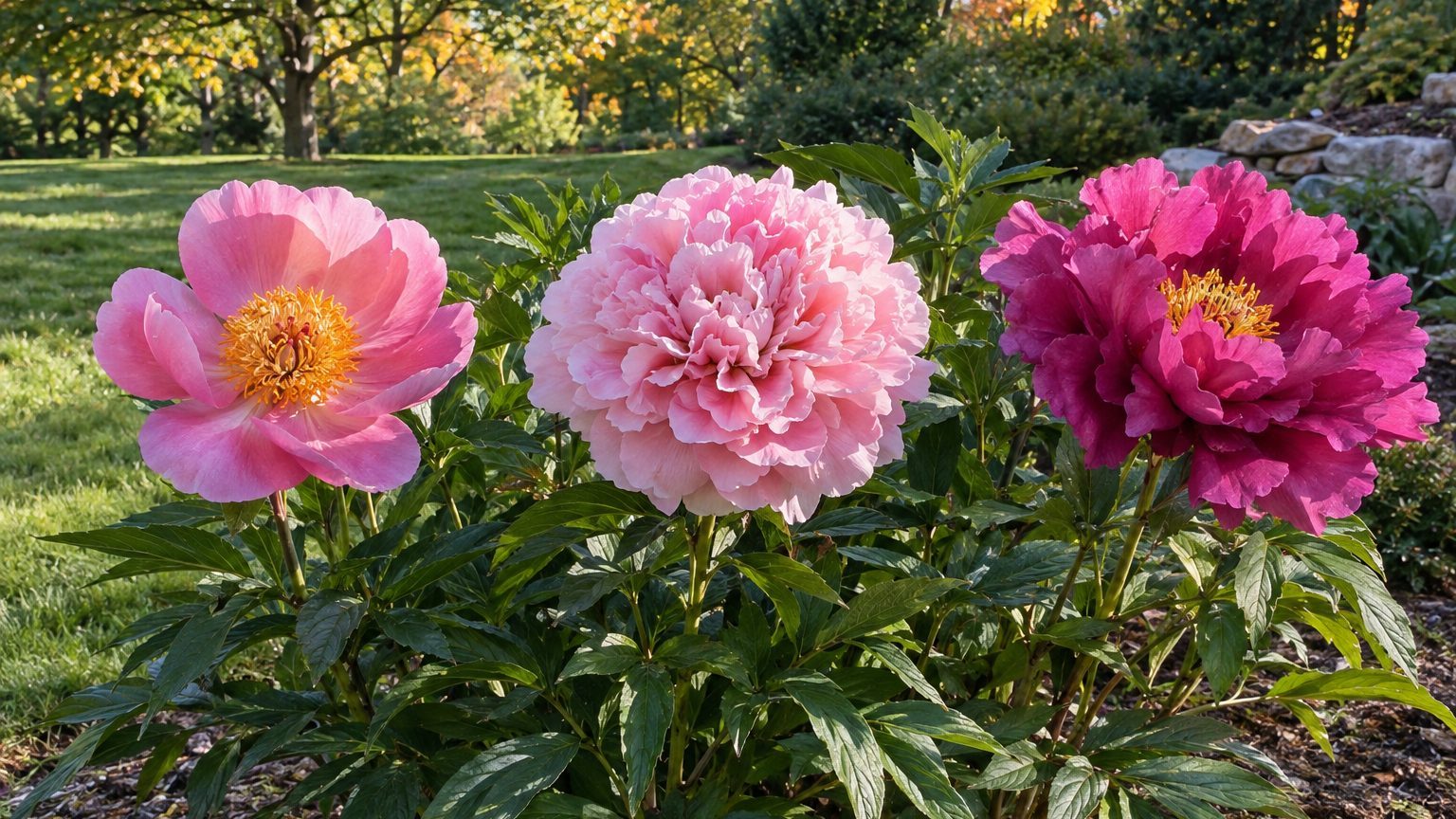
Peony shoots push up red through cold soil in spring, and the flowers open in Yukon well after peonies elsewhere have finished. Herbaceous peonies are a practical choice for a Yukon yard, while tree peonies keep exposed woody stems through winter. The cold that defines the territory is what makes them flower.
Best Peonies to Grow in Yukon

Herbaceous peonies fit Yukon because they need a cold winter rest to flower. Whitehorse sits in Canadian hardiness zone 1b, a rating that does not convert to a USDA zone. Peonies may flower poorly in mild-winter climates, while Yukon’s cold provides the winter rest they need.
Herbaceous Peonies

This is the classic garden peony, and the type to start with. It dies back to the soil each year, so only the roots face the deep cold. The cold rest it needs for flower buds is built into a Yukon winter.
Give it a spot where the crown can sit with its eyes near the soil surface. A newly planted or transplanted peony may not bloom the first spring, which is normal.
Late-Blooming Cultivars

Peonies in the far north bloom later than peonies elsewhere in North America. Your garden gets color when most of the continent has already finished, which is a real advantage if you like cut flowers late in the summer.
When you shop, ask a local garden centre which cultivars have done well in cold northern gardens.
Tree Peonies
A tree peony keeps its woody stems instead of dying back to the ground. That makes it a showier shrub, but it also leaves those stems standing in the open through a Yukon winter.
Treat it as a trial plant in a sheltered corner rather than the backbone of the bed. The exposed woody stems create winter risk, while an herbaceous peony dies back to the ground.
Yukon — the year and the numbers
- State
- Yukon
- Hardiness zones
- 1b
- Last spring frost
- June 5
- First fall frost
- August 25
- Annual rain
- 10 in
- Lawn zone
- cool-season
- Source
- Environment and Climate Change Canada — Canadian Climate Normals 1981-2010, station WHITEHORSE A · Whitehorse
How to Choose a Peony for a Yukon Garden
For a Yukon garden, match the peony to your habits and the winter exposure of the bed. What remains is matching the plant to your habits, your patience and the kind of winter exposure your bed gets.
Think about how much you want to do each fall, and when you hope for flowers.
| Your situation | What suits it in Yukon | Why |
|---|---|---|
| Long, very cold winter | Herbaceous peony | Only the roots stay in the ground through the cold, and the plant needs that cold rest to flower. |
| Flowers after most peonies are done | Locally proven cultivar | Peonies in the far north open later than elsewhere in North America. |
| Sheltered corner, woody winter structure | Tree peony | It keeps its woody stems instead of dying back each year. |
| New planting you want to see flower soon | Plant in September and wait | A newly planted or transplanted peony may not bloom the first spring. |
Mild-winter peonies, bred for places where the ground barely chills, are the wrong direction for Yukon. Small-space gardens do well with an herbaceous plant, since it comes back from the roots each year and needs no support structure from the previous season.
Which Peonies Suit Different Parts of Yukon
Yukon is large, and a peony bed in town does not live the same season as one far away. Local winter exposure can change the choice, so ask nearby growers what has held up.
- Whitehorse is the reference point for the frost date and hardiness zone. Herbaceous types are a practical starting point, while tree peonies keep their woody stems through winter.
- Northern and upland districts: Seasons here run later than in Whitehorse, so ask local growers about proven cultivars and expect shoots to emerge later. Herbaceous peonies planted in a protected, sunny spot are the sound choice.
Wherever you garden, a sheltered, sunny bed can reduce exposure.
Peony Buying Mistakes to Avoid in Yukon
Planting Too Late in Fall
A peony set in after the ground has frozen has no time to root before winter. Plant or divide in September, so the roots can settle before the cold arrives. If you buy later, ask a local garden center how to care for the plant until it can go into the ground.
Planting Too Deep
A peony planted too deep may bloom poorly or not come up at all. Keep the eyes near the soil surface when you set the root in the hole, even if it feels shallow. A deep plant can look healthy without flowering, which makes the planting depth easy to overlook.
Cutting Back a Tree Peony
Herbaceous peonies get cut back after frost, but a tree peony keeps its woody stems and is never cut to the ground. Treating them alike removes the wood that carries future buds. Check the label before fall cleanup, especially if the tag has been lost.
Where to Get Peony Advice in Yukon
Yukon has no county extension office. Planting and bloom months follow the nearest comparable northern climate, so confirm local timing with a garden centre, a garden society or a territorial gardening group before you buy.
- Agriculture and Agri-Food Canada, reached through Agriculture and Agri-Food Canada, offers general growing information you can read at any time of year.
- A local garden centre can tell you which peony roots arrive for fall planting, so ask a little before September.
- A garden society or gardening group can point you to neighbors whose peonies have come through your kind of winter.
Common Questions
When Do Peonies Bloom in Yukon?
July and August are the usual months, later than elsewhere in North America. Flowers can also open in June in some seasons.
Is June 5 a Safe Last Frost Date in Yukon?
No. At Whitehorse, June 5 is an average, so in one year out of two the last frost falls later. Treat it as the middle of a window, and expect northern and upland gardens to run later still.
Can You Divide Peonies in Yukon?
Yes. Dividing follows the same September window as planting, ahead of the ground freezing. Divided pieces may skip flowering the first spring while they settle.