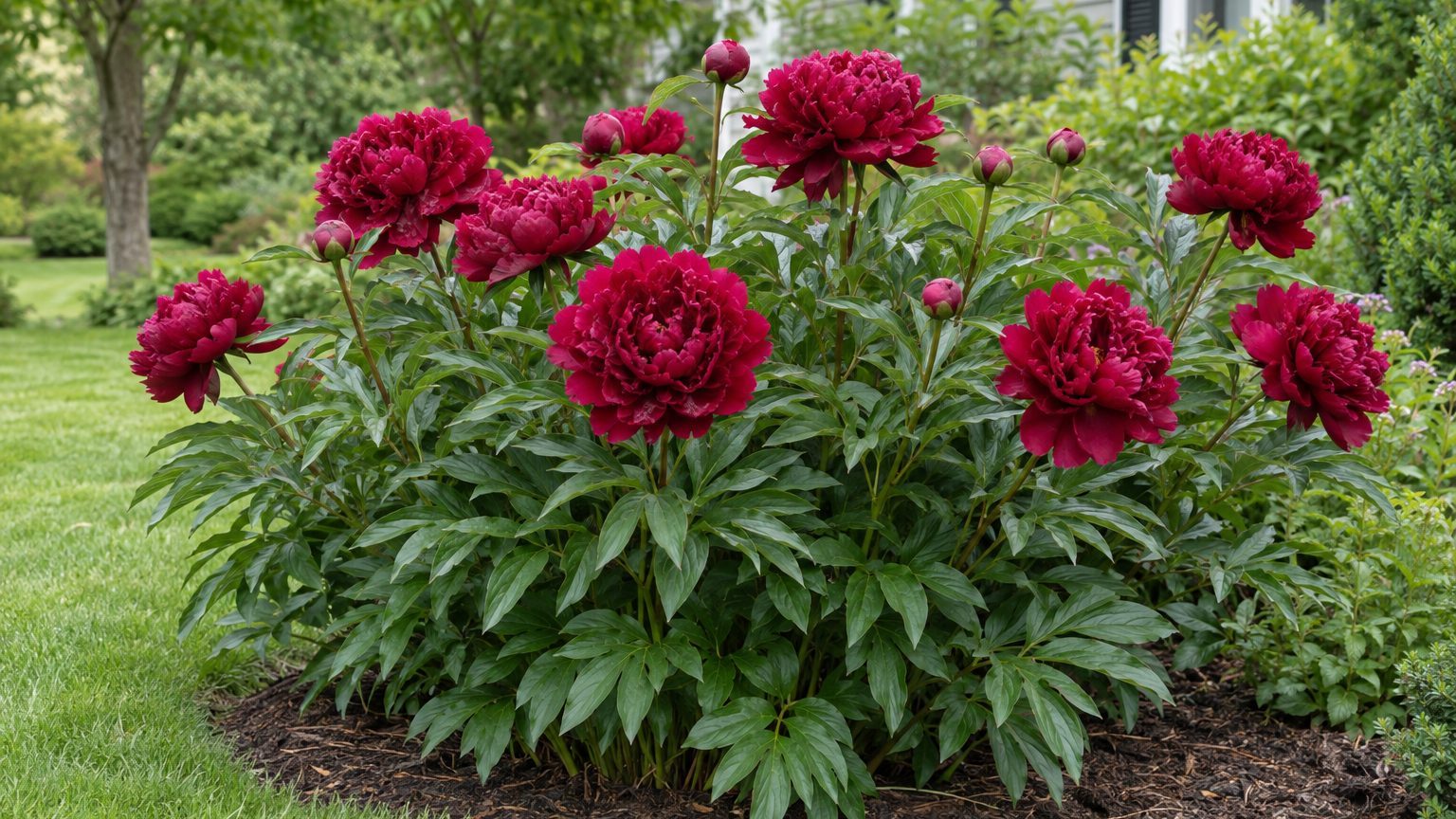
Peony buds swelling red along the stems in late spring mean a bloom is coming, and Karl Rosenfield is a variety that has long been grown for exactly that moment.
What Is the Karl Rosenfield Peony?
Karl Rosenfield is an herbaceous garden peony. It dies back to the ground each winter and sends up fresh shoots in spring, so it behaves like a perennial rather than a shrub.
The flower is usually described as a mid red, and it earned that label in a Kansas cut-flower trial where stems were harvested in mid to late May. A garden listing from North Carolina places it among the pink-flowering peonies, so expect some red-to-pink variation depending on light, soil and the stock you buy.
It also has a record for productivity. In a peony trial in Alaska, it was among the most productive varieties in 2003, a good sign for a plant that has to prove itself every spring.
From the almanac
Peonies in your state
The dates on this page depend on where you live. Your state's page carries its frost dates, its USDA zones and the year laid out month by month.
Northeast
Southeast
- Alabama
- Arkansas
- Delaware
- Florida
- Georgia
- Kentucky
- Louisiana
- Maryland
- Mississippi
- North Carolina
- South Carolina
- Tennessee
- Virginia
- West Virginia
Midwest
Southwest
West
Pacific Northwest
Canada
Where Does the Karl Rosenfield Peony Grow Best?
Herbaceous peonies need a real winter chill to set buds, and this variety follows that rule. Check the zone range on the plant tag before buying, then match it to your region.
- Interior Alaska: Trial plants near Fairbanks flowered between late June and early July, so even a short, cold growing season is enough for Karl Rosenfield to bloom.
- Kansas and the Great Plains: Cold winters suit it, and it has been grown here for cut flowers, with harvest in mid to late May.
- North Carolina: A garden listing includes it among pink peonies for the state. In the Piedmont and mountains, winters are cold enough for buds. Closer to the coast, mild winters and summer heat tend to give fewer flowers.
- Gulf Coast and southern Florida: Winters are generally too warm for peonies to set buds reliably, so expect leaves with few blooms.
The state selector just below this section leads to the page for your state, where the timing for your yard is spelled out.
How to Care for the Karl Rosenfield Peony Through the Year
Spring Growth

Red shoots push up early, and the plant puts on most of its growth before flowering. Keep the crown in full sun and clear away old mulch so the shoots are not buried too deep.
Set a ring or grid of support over the clump while it is still low. Karl Rosenfield carries mid red flowers, and a prop placed early is hidden by the leaves later.
Bloom
Flowering falls in late spring in Kansas and arrives later, from late June to early July, where seasons are short, as in Alaska. Cut stems for the vase when the buds feel ready, and check with your local extension office for the right stage.
Pick in the cool of the morning and leave plenty of foliage on the plant. The leaves feed the roots that make next year’s flowers.
Summer
After the petals drop, snip off the spent flowers but keep the leaves. Water deeply in dry spells so the roots can store energy for the next year.
Give the clump room for air to move through the foliage. Dense, damp leaves are where peony troubles start in humid summers.
Fall Cutting
Once frost blackens or yellows the foliage, cut the stems back. Rake up the cuttings and put them in the trash rather than the compost pile, because leaf diseases can overwinter on old tops.
Winter
Leave the crown alone. The cold is what prepares the buds for spring, and the eyes should sit near the soil surface. In very cold places a light layer of loose mulch over young plants protects them from heaving, and it comes off once growth starts.
Karl Rosenfield Peony Diseases and Weak Points
Like other herbaceous peonies, Karl Rosenfield can have disease problems on buds, stems and leaves, particularly in humid, crowded plantings. Good air flow and clean fall cutting are the main defenses.
Its heavy flowers are the other weak point. A rainstorm can bend the stems to the ground, so a support put up in spring saves the display. Keep the eyes close to the surface when planting.
Is the Karl Rosenfield Peony Right for Your Yard?
This variety suits a sunny spot with room for a wide clump, a cold winter and a willingness to stake. It is a poor match for shade, for heat with mild winters, or for a gardener who wants a plant that needs no support.
- Choose it for a cut-flower bed or a sunny border where red to pink blooms can arrive in late spring, once the plant has settled in.
- Skip it in warm southern yards where winters stay mild, and look for varieties bred for low-chill regions.
- Plant in fall and put the stake in place before the shoots come up in spring.
Common Questions
Is the Karl Rosenfield Peony Red or Pink?
Descriptions vary. Cut-flower growers list it as a mid red, while a garden listing groups it with pink peonies. Light and soil can shift the shade, so judge by the flowers on your own plant.
Can You Grow Karl Rosenfield in a Cold Climate Like Alaska?
Yes. In trials near Fairbanks it flowered from late June to early July and stood out as one of the more productive varieties, so a short, cold season is not a barrier.
Does Karl Rosenfield Make a Good Cut Flower?
It has been evaluated as a fresh-cut variety in Kansas, with stems harvested in mid to late May. Cut in the morning when buds are soft and colored, and leave leaves on the plant.