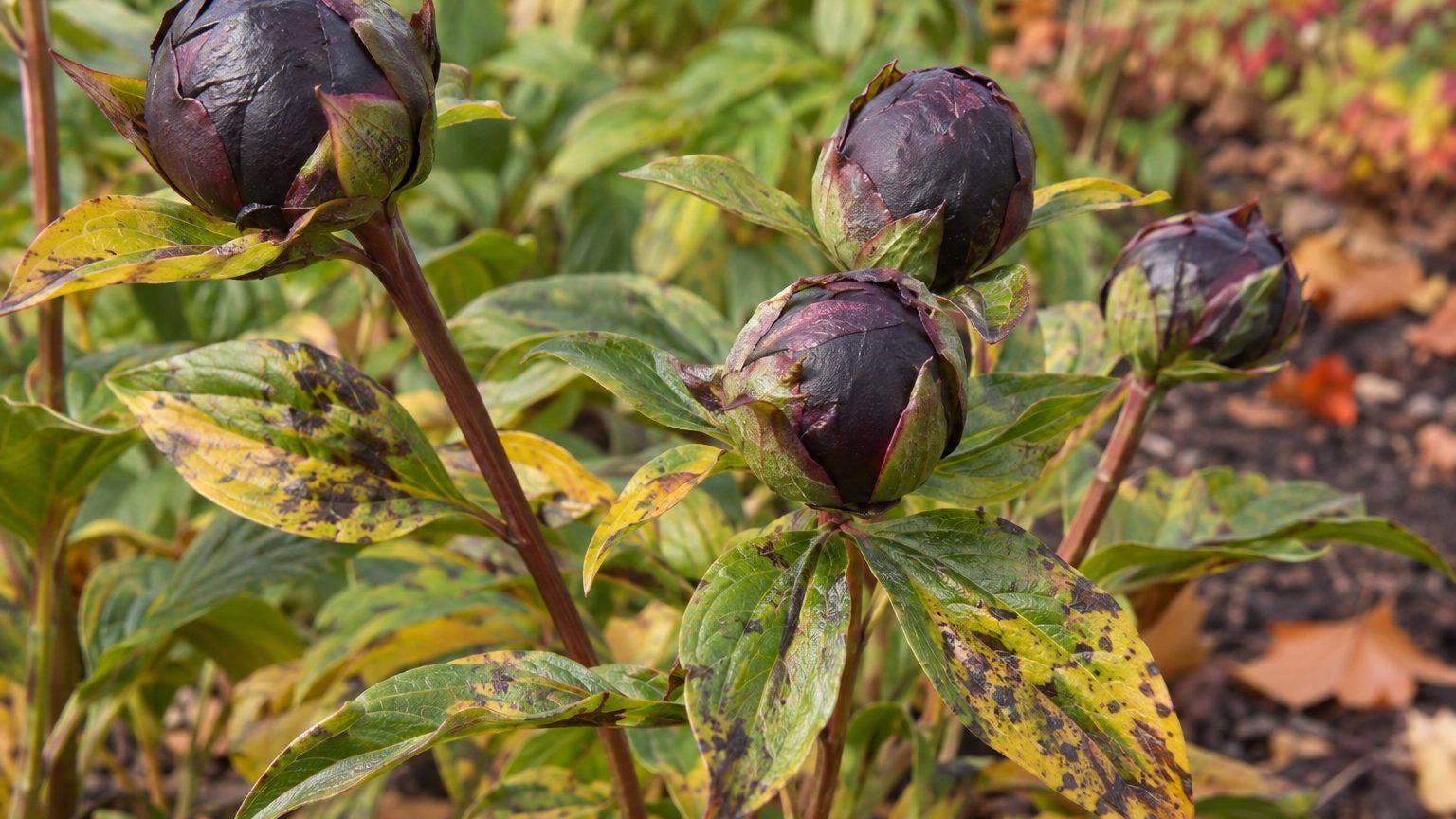
Open a peony bud and find it dark, shriveled and dry instead of swelling toward a bloom, and a common culprit is botrytis blight. It lives on last year’s leftover foliage and spreads in damp weather. Cleanup does most of the work of limiting it.
Peony Buds Turning Black: What You See

The clearest sign is the bud itself, though the same fungus leaves marks elsewhere on the plant.
- Flower buds turn black to brown and never open, and small ones often dry up while larger ones turn brown and may wear a brown spore mass.
- Sometimes the bud is the only part of the plant affected, so the foliage can look perfectly healthy beside a ruined bud.
- In wet weather, fluffy gray spores show up on infected parts, which is the mark of gray mold.
- Stems develop brown or black patches, often with a target-like spot, and cutting into a wilted stem can reveal a brown or blackish rot at its base.
- In Minnesota, new shoots turn black, wilt and die as they emerge in spring, and leaves and petals get black to brown irregular spots.
In Texas, young shoots at any stage, buds included, may suddenly wilt and fall over.
From the almanac
Peonies in your state
The dates on this page depend on where you live. Your state's page carries its frost dates, its USDA zones and the year laid out month by month.
Northeast
Southeast
- Alabama
- Arkansas
- Delaware
- Florida
- Georgia
- Kentucky
- Louisiana
- Maryland
- Mississippi
- North Carolina
- South Carolina
- Tennessee
- Virginia
- West Virginia
Midwest
Southwest
West
Pacific Northwest
Canada
Peony Buds Turning Black or Something Else?
Several peony troubles darken tissue, and they call for different handling. Dark buds alone do not settle it, so check what else is happening on the plant and where the dark tissue sits.
Gray mold also has a simple home test. Sealing a piece of diseased tissue in a plastic bag with moistened paper towels coaxes the mold out and makes the diagnosis much easier.
| Looks like | How to tell them apart |
|---|---|
| Phytophthora blight | Dark brown or black patches turn leathery on stems, leaves and buds, and black lesions several inches long may sit at the base of the stem, causing wilting and death. |
| Leaf blotch (red spot or measles) | Small red spots and blotches show on leaves and stems, and the fungus returns most years once it has appeared in the bed. |
| Bud blast from other causes | Aborted buds fail to open, but botrytis is only one of several possible reasons, so look for gray spores or stem rot before blaming it. |
Botrytis is more likely than phytophthora to cause bud rot, which helps when the buds are the only thing affected.
What Causes Peony Buds Turning Black, and Where It Is Worst
The fungus Botrytis paeoniae, called peony blight, early blight or bud blast, is the usual cause. It overwinters on the surface of decayed peony foliage, and spores later spread by wind, splashing rain or dirty tools.
Wet, rainy conditions that leave free moisture on the plant favor it, as does injured tissue. Cool, rainy weather favors the disease in Texas, while wet weather favors it in California. The fungus also survives on plant debris and as small resting bodies in or on the soil.
It follows wet springs and untidy beds, which means cool, damp seasons can bring it on.
How to Treat Peony Buds Turning Black
Treatment is mostly cleanup, since fungicides help only a little against this disease.
- Remove infected plant material promptly so it cannot produce more spores.
- Remove spent blooms promptly, because good sanitation greatly reduces botrytis problems.
- Keep pruners clean, since spores can travel on tools.
- Consider a fungicide early in the season, when shoots are about six inches tall, because it can help protect the plant at that stage, and spray all parts to wet foliage and soil thoroughly.
Fungicides have limited effectiveness against botrytis.
How to Prevent Peony Buds Turning Black Coming Back
Because the fungus survives on old growth and in the soil, prevention follows the calendar from fall cleanup through spring.
- In California, remove or burn old growth in fall so spores have no leftover foliage to overwinter on.
- Cut stalks below ground level.
- In Minnesota, check emerging shoots in spring for blackening or wilting.
- When shoots reach about six inches tall, apply a protective spray.
- Through bud and bloom season, clip spent blooms promptly and clear debris from around the crowns, especially after rainy spells.
Leaving old foliage in place invites the problem back.
Where This Comes From
These notes are based on plant-disease guidance. Confirm timing and approved products locally before you act.
Common Questions
Will Peony Buds Turning Black Kill the Plant?
Sometimes only the buds are affected. Black lesions at the base of the stem can cause wilting and death, so stem damage is the more serious sign.
Can You Still Get Blooms After Some Buds Turn Black?
Buds that have gone black will not open.
Should You Cut Peonies Back After Botrytis?
Yes. Cut stalks below ground level; in California, remove or burn old growth in fall.