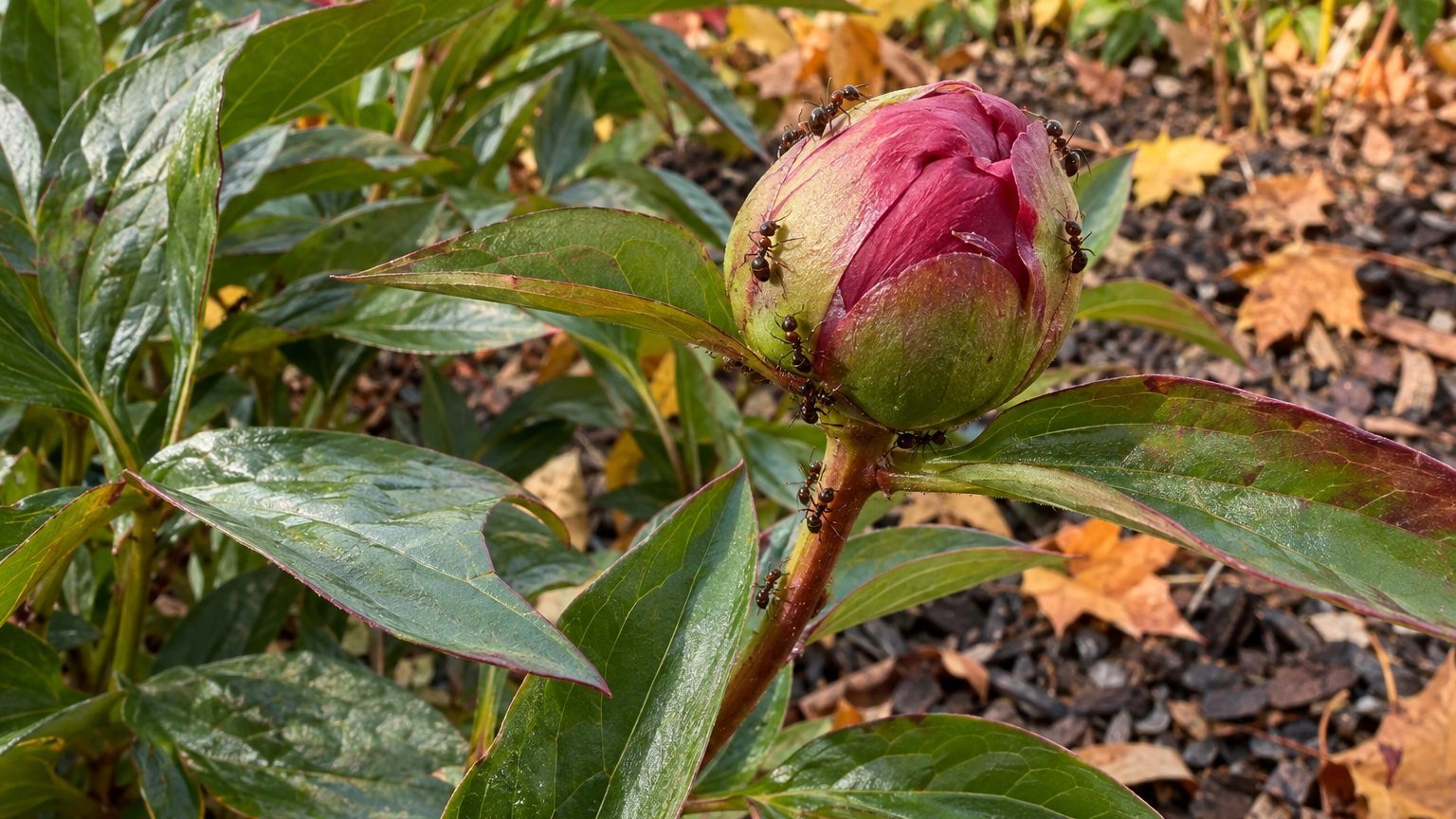
Ants crawling over peony buds as the flowers develop look like trouble, but they are after a sweet, sticky liquid the buds make on their own. The ants cause no damage to the plant. Knowing what you are looking at, and what to leave alone, saves you from reaching for a spray you do not need.
Ants: What You See

The ants show up with the buds, so look closely at the round, tight flower buds before they open.
- Small ants roam over the surface of the spherical buds, often in enough numbers to alarm you at first glance.
- They are black and measure 1/8 to 1/4 inch long.
- The buds feel sticky or look glossy in spots, because a sweet liquid oozes from the outside of each one.
- The activity peaks as the flowers bloom, and in Minnesota that means especially late May.
- Once bloom is complete, the ants leave the flowers and look for food somewhere else.
The buds are the main draw because that is where the nectar is.
From the almanac
Peonies in your state
The dates on this page depend on where you live. Your state's page carries its frost dates, its USDA zones and the year laid out month by month.
Northeast
Southeast
- Alabama
- Arkansas
- Delaware
- Florida
- Georgia
- Kentucky
- Louisiana
- Maryland
- Mississippi
- North Carolina
- South Carolina
- Tennessee
- Virginia
- West Virginia
Midwest
Southwest
West
Pacific Northwest
Canada
Ants or Something Else?
Ants on peony buds are easy to recognize once you have seen them, but other things can be mistaken for them or confused with what they leave behind.
Check the insect itself and where it sits on the bud. Then look at the sticky surface, because the stickiness alone is not a sign of a problem.
| Looks like | How to tell them apart |
|---|---|
| Other flower-feeding insects on the buds | Ants are black and 1/8 to 1/4 inch long, and they roam the bud surface. An insect that looks different and stays put on the bud is not the ant visitor, and ants tend to keep such insects away. |
| Sticky, glossy patches on the buds with no insect in sight | The buds make a sweet liquid on their outside, so the shine is nectar. If ants are on the same bud, they came for it. |
If buds are chewed, misshapen, or failing to open, the ants are not the cause; ask a local garden center for help identifying the problem.
What Causes Ants, and Where It Is Worst
Peony buds have extrafloral nectaries, small structures that secrete nectar on the outside of the bud. That sweet liquid draws ants looking for an early season food source, and it is a major one for them early in the year, as gardeners in Pennsylvania are told.
Sap from the developing buds is part of the draw too. As peony flowers develop, ants may arrive, so this is not a regional quirk.
The timing follows the bloom. In Minnesota the ants are especially present in late May, while the peonies are in flower. Gardeners in Illinois and Kansas describe the same crowds on the buds, and in Kansas it is called common and no cause for concern. Expect them whenever your own peonies reach the bud stage.
How to Treat Ants
The honest treatment is mostly restraint, since the ants cause no damage to the peony.
- Look closely at the buds to confirm black ants and a sticky sheen, so that you know the visitors are the harmless kind.
- Leave the ants where they are, because they take the nectar and the plant loses nothing it needs.
- Skip any spray on the buds, since there is no damage to stop.
- Let the bloom finish, so that the ants move on to another food source on their own.
- Dunk cut flowers upside down in a bucket of plain water before bringing them into the house, so that any hitchhikers wash off.
Knocking ants off with your hands is pointless, because more will return while the buds are producing nectar. The washing step is for the vase and nothing else.
How to Prevent Ants Coming Back
There is nothing to prevent in the usual sense, but a few habits through the season keep the ants from becoming a worry.
- In spring, as the buds swell and form, expect ants to arrive and treat them as part of the show.
- When bloom begins, usually late May in Minnesota, hold off on any control plans, since the crowds are at their peak then.
- Before you cut stems for a vase, plan on a quick dunk in plain water so the ants stay outside.
- Once bloom is complete, expect the ants to be gone from the flowers as they find food elsewhere.
- Next spring, start from the same plan, because the buds will make their nectar again and the ants will follow.
Since the ants are tied to the buds, they return on the plant’s own schedule, whatever you do.
Where This Comes From
Common Questions
Do Peonies Need Ants to Bloom?
No. That is a myth that has persisted for many years, and the blooms are not dependent on ants. The flowers open just fine on their own.
Do Ants Do Anything Useful for Peonies?
Yes, in a small way. The relationship is a mutualism, since the peony feeds the ants and the ants protect the blossoms from other floral-feeding insects.
Are Ants a Sign Something Is Wrong with the Plant?
No. They are drawn to nectar on the buds, so their presence alone does not mean something is wrong.