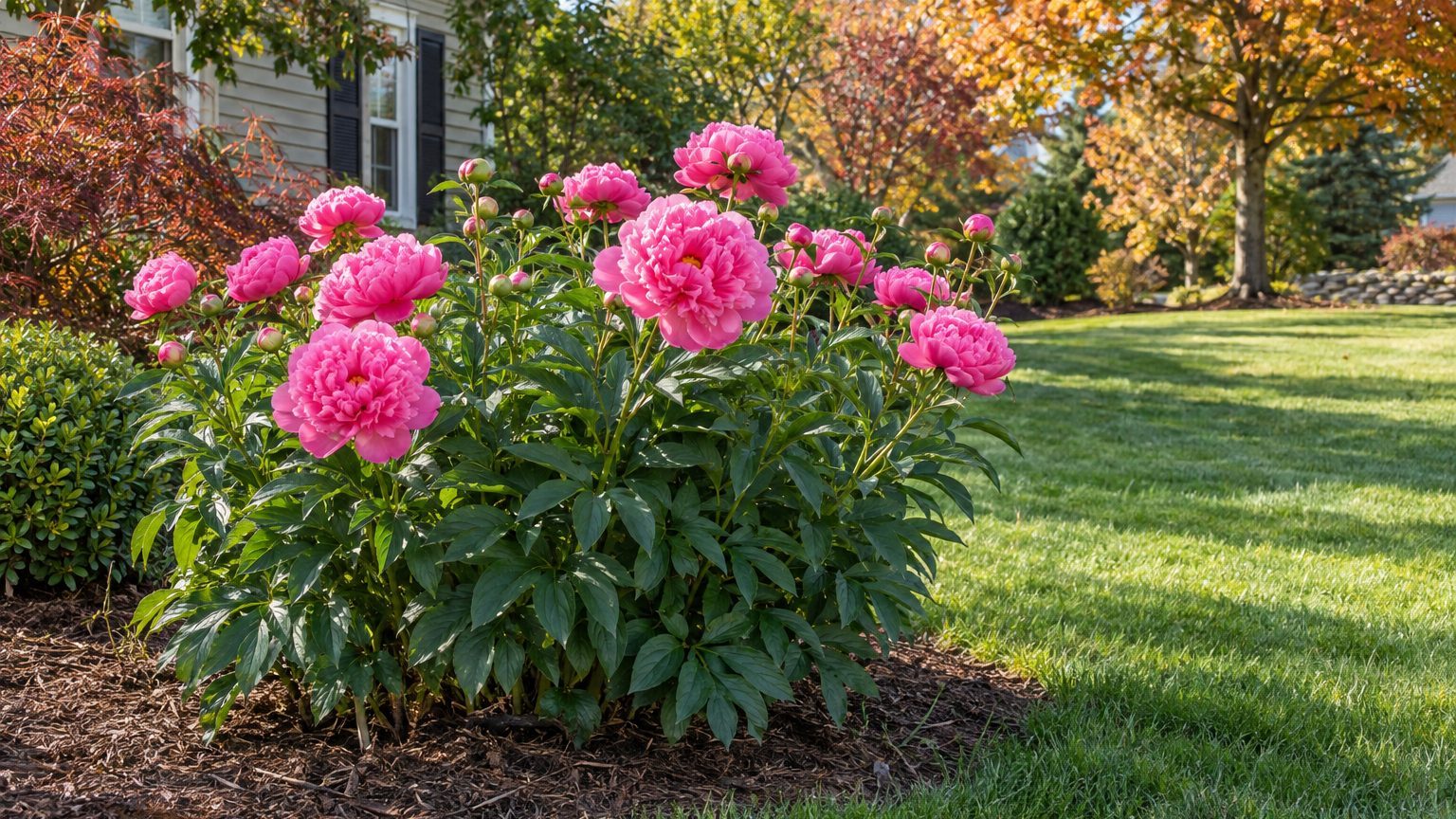
In spring, an Itoh peony sends up stems with deeply cut leaves that look just like a tree peony’s, and by winter those stems are spent and ready to clear. That cycle shapes how tall the plant gets, how it is pruned and what it asks of you through the year.
How Big Do Itoh Peonies Get?
Itoh peonies are mid-sized plants, shorter than a tree peony and close to a typical garden herbaceous peony. In Ohio, they mature around 30 inches tall. In Arkansas, the popular ‘Bartzella’ reaches 3 feet on stout stems that hold the flowers above the foliage.
Type decides most of the difference, and climate adds some. Where summers are long and the soil is rich, a plant can stand a little taller than the same variety in a short season, so plan the planting space with a margin.
Because Itoh peonies are crosses between tree and herbaceous peonies, they carry traits of each. They bring the large blooms and cut foliage of a tree peony on a plant that dies back to the ground each winter.
From the almanac
Peonies in your state
The dates on this page depend on where you live. Your state's page carries its frost dates, its USDA zones and the year laid out month by month.
Northeast
Southeast
- Alabama
- Arkansas
- Delaware
- Florida
- Georgia
- Kentucky
- Louisiana
- Maryland
- Mississippi
- North Carolina
- South Carolina
- Tennessee
- Virginia
- West Virginia
Midwest
Southwest
West
Pacific Northwest
Canada
How Do You Care for Itoh Peonies?
Care follows the plant’s yearly cycle, which is simpler than a tree peony’s because nothing needs to be shaped or carried over as woody framework. These gestures run from the dormant season through bloom and into fall.
- Cut the dead stems back to the ground once the plant has died back for winter, so that old tissue does not sit around the crown and new shoots come up clean in spring.
- Watch the new growth as it emerges in spring and leave it alone.
- Decide on support early in the season, because in Colorado, Itoh and herbaceous peonies are staked before growth gets far; their heavy flowers can hold water and flop over.
- Remove spent flowers as they fade.
- Clear fallen leaves and debris from around the plant when it begins to die back in fall.
Staking is where advice splits. In Ohio, Itoh peonies are described as needing no staking at all, thanks to their strong stems. If the stems stay upright, skip the cage. If rain bends the blooms down in your yard, put a support in early.
How Do Itoh Peonies Differ from Other Peony Types?
Peonies come in four groups that overlap in height and bloom order. In Pennsylvania, the sizes of each group are described side by side. In Connecticut, the groups bloom one after another beginning in late spring.
| What changes | Why it matters |
|---|---|
| Woodland peonies are small, compact plants, standing roughly 1 to 1.5 feet tall with white blooms; they open ahead of every other peony. | A low plant for the front of a bed, and it opens the season before the others |
| Tree peonies reach 3 to 7 feet in height, coming into bloom after the woodland type. | A woody shrub that needs room and keeps its stems through winter |
| Herbaceous peonies grow 2 to 4 feet tall. | Die back each fall, and heavy flowers often need support |
| Intersectional peonies, a group that takes in the Itoh types, reach 2 to 2.5 feet in height. | Short woody stems with tree-like blooms, and they die down to the ground in winter |
For you, that means an Itoh peony fills the end of the peony season, after the others have faded. It also needs less room than a tree peony. Its care matches that of a herbaceous peony: both die back to the ground each fall and produce new growth in spring.
What Mistakes Hurt Itoh Peonies?
Leaving Old Stems Through Winter

Itoh peonies die back each winter, and in Iowa they often do so just like herbaceous peonies. Old stems left standing can hide new shoots. Cut them to the ground in the dormant season and the plant starts fresh.
Pruning Like a Tree Peony

Tree peonies keep woody stems and are shaped lightly. An Itoh has short woody stems that bear new leaves in spring, but some stems are herbaceous and the plant still goes dormant. Cutting it back to the ground in winter is correct, and trimming only the tips leaves dead wood behind.
Skipping Support in a Windy Yard
Some growers never stake an Itoh. In Colorado, though, the advice is to stake early because the large flowers hold rain and tip over. If your yard is exposed, set the support before the stems get tall.
When Should You Cut Back Itoh Peonies?
Cut back once the foliage has collapsed and turned brown after the season ends, when the plant is dormant for winter. That is the sign. The stems are finished and the leaves are limp.
- Your state’s peony page gives the months for cutting back in your climate, so check it in late summer.
- The same page covers planting and dividing windows if you are adding a new plant.
Common Questions
Why Are They Called Itoh Peonies?
They are named for Toichi Itoh, a Japanese plantsman who crossed tree and herbaceous peonies. In North Carolina, the cross is dated to about 1948, and the resulting plants carry the best qualities of both parents.
How Many Flowers Does an Itoh Peony Produce?
In North Carolina, some plants are reported to produce as many as 50 flowers in a growing season, with strong stems and strong disease resistance. In Washington, blooms open over several weeks, which keeps color in the bed well past the first flush.
What Do Itoh Peonies Look Like in Spring?
In Iowa, the tree-peony-like foliage comes first, followed by large, colorful flowers. In Arkansas, ‘Bartzella’ bears 8-inch, double lemon-yellow blooms with a few small red flashes toward the center.
Sources : americanmeadows.com | houzz.com