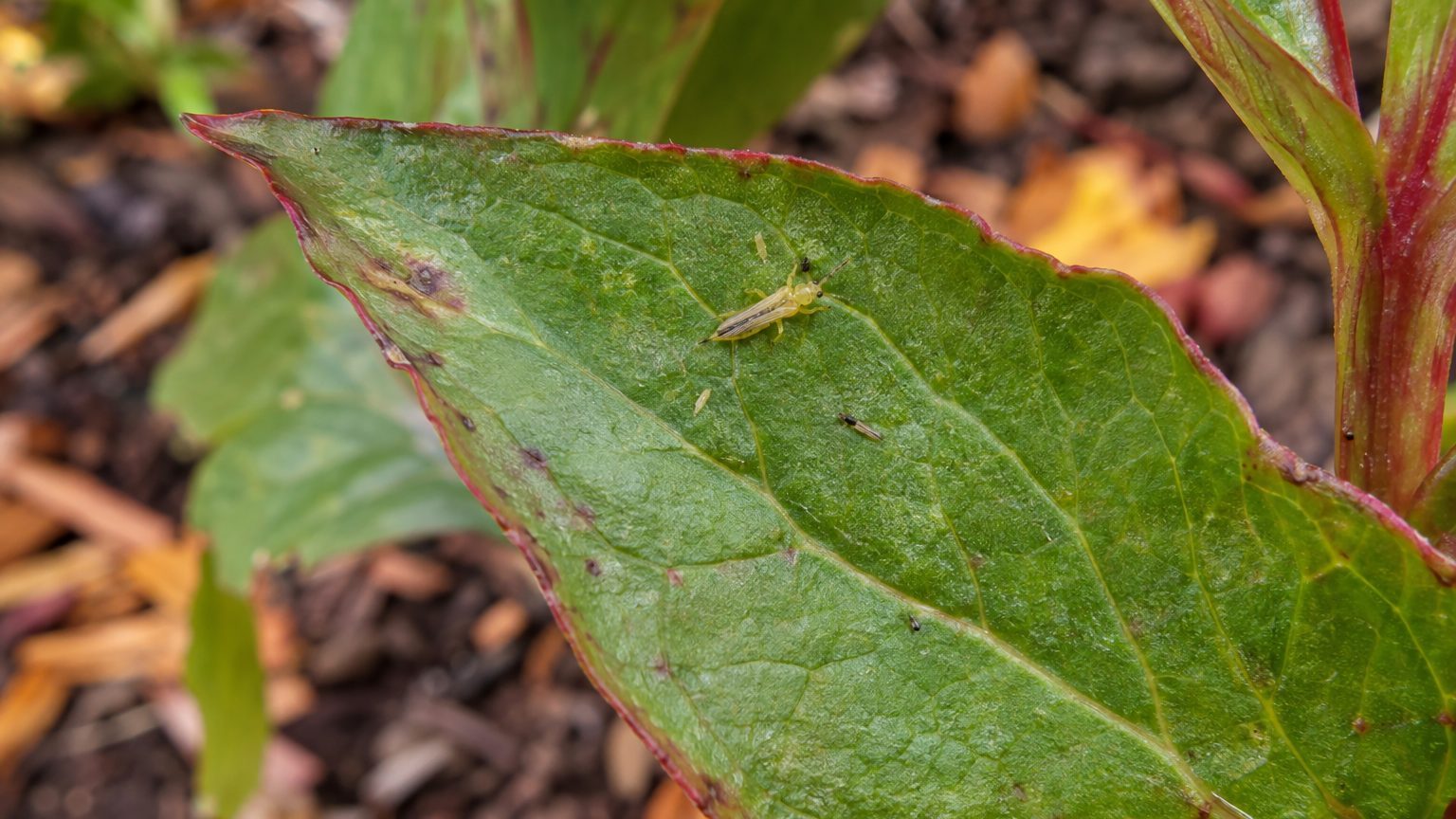
Peony buds swell to a good size in spring, then stay shut or open into lopsided, half-formed flowers. Tiny insects hiding inside the bud are often the cause. Thrips are small enough to miss with a quick look, so the trick is knowing where they hide and what their damage looks like on the plant.
Thrips: What You See

The insect itself is hard to spot, so most gardeners recognize the damage first and then go looking for the culprit.
- The insects are slender and flat with fringed wings, and most adults are under ¹/20-inch long, with colors ranging from light yellow to black.
- They tuck into flower buds, leaf folds and other tight crevices, which is why a glance at the open foliage often shows nothing.
- Inside an opened bloom, look at the thick base of the inner side of the petals, where they tend to gather.
- Buds grow large but only a handful open, and the few blooms that do open are not fully formed, often with one side left underdeveloped.
- Petals and tissue show discoloration, distortion and dead patches where the insects punctured the surface and sucked out the sap.
Egg laying can scar the tissue as well, so damage does not always come from feeding alone.
From the almanac
Peonies in your state
The dates on this page depend on where you live. Your state's page carries its frost dates, its USDA zones and the year laid out month by month.
Northeast
Southeast
- Alabama
- Arkansas
- Delaware
- Florida
- Georgia
- Kentucky
- Louisiana
- Maryland
- Mississippi
- North Carolina
- South Carolina
- Tennessee
- Virginia
- West Virginia
Midwest
Southwest
West
Pacific Northwest
Canada
Thrips or Something Else?
Lopsided blooms and stalled buds can have different causes, and treating the wrong problem leaves the real problem unaddressed. Pull a bud apart and look for the tiny, slender insects inside.
Check the whole plant, not only the bud, before deciding.
| Looks like | How to tell them apart |
|---|---|
| Bud blight from gray mold fungus: buds that turn brown or black and never open | Fungus leaves fuzzy gray growth on the bud or stem and rots the tissue, while thrips leave dry, distorted patches and tiny moving insects inside the bud. |
| Late frost injury: blackened buds or twisted, damaged new shoots | Frost hits many buds and shoots at the same time after a cold night, while thrips damage builds bud by bud and shows insects when the bud is opened. |
Ants crawling over the buds often cause worry, but they are there for the sweet sap the buds produce. Ants on the surface with no distortion underneath point away from thrips.
What Causes Thrips, and Where It Is Worst
Thrips spend the winter mostly at the edges of fields, with fewer inside them, so beds that sit beside tall grass, weedy borders or field margins get visited first. In spring they move in. They are mobile enough to find your peonies from a neighbor’s yard, and the color of the flower or the presence of pollen does not steer where they settle first.
A tight, young bud keeps them out, but they lay eggs on the outside of the bud in protected spots. The immature thrips slip into the bloom as the bud opens, and they feed there as the flower develops.
How many generations you face depends on how warm your growing season is. In Alaska, Southcentral farms will likely see two generations and a partial third during the peony season, while Interior farms will see one and a partial second. Outside Alaska, inspect plants rather than assuming a regional pattern.
Thrips can also carry plant viruses to other plants, which makes them a bigger concern than the sap they drink.
How to Treat Thrips
Treatment starts with removing what you can reach by hand and ends with getting local advice on anything sprayed.
- Inspect the buds and the base of the petals closely, so that you know thrips are the problem before you act.
- Cut off damaged buds and distorted blooms, so that the insects and eggs inside them are removed from the plant.
- Seal the cuttings in a bag and put them in the trash, because tossing them on the compost pile or the ground lets the insects crawl back to your plants.
- Clear weeds and old plant debris around the bed, so that the sheltered edges where thrips overwinter and hide are gone.
- Before applying a treatment, read the label and local rules carefully to make sure it is legal and labeled for peonies.
Established peonies are unlikely to die quickly if you do nothing, but the number of buds and blooms drops markedly, which is the real cost of ignoring thrips. Neighboring plants can be at risk of virus spread too, so acting early protects more than the peonies alone.
How to Prevent Thrips Coming Back
Prevention follows the season, and most of it is housekeeping near the bed.
- In early spring, clear dead leaves, old stems and weeds from the bed and from the edges around it, where thrips spend the winter.
- As the buds form, look inside a few of them and along the leaf folds regularly, so that you catch the first insects before they spread.
- During bloom, remove any bud that looks stunted or lopsided right away and bag it, because the insects inside will move on to the next flower.
- After the season ends, remove and bag dead stems and loose debris.
Keep the grass and weeds around the bed trimmed through the growing season, since thrips favor the margins before they move into the planting.
Where This Comes From
The Sources box below lists the references behind these details on thrips and peonies. Local rules and product labels determine which treatments may be used in your area.
Common Questions
Will Thrips Kill an Established Peony?
Not quickly. An established plant is unlikely to die from thrips, but it will produce far fewer buds and blooms until the problem is dealt with.
Do Thrips Prefer Certain Flower Colors?
No. Where thrips first settle does not depend on flower color or on whether there is pollen, so every color is a possible target.
Can Thrips Get Inside a Closed Bud?
Not in a very young one. Even though they are minute and flat, thrips cannot penetrate a stage 1 bud. They lay eggs on the outside in protected spots, and the young enter as the bud opens.