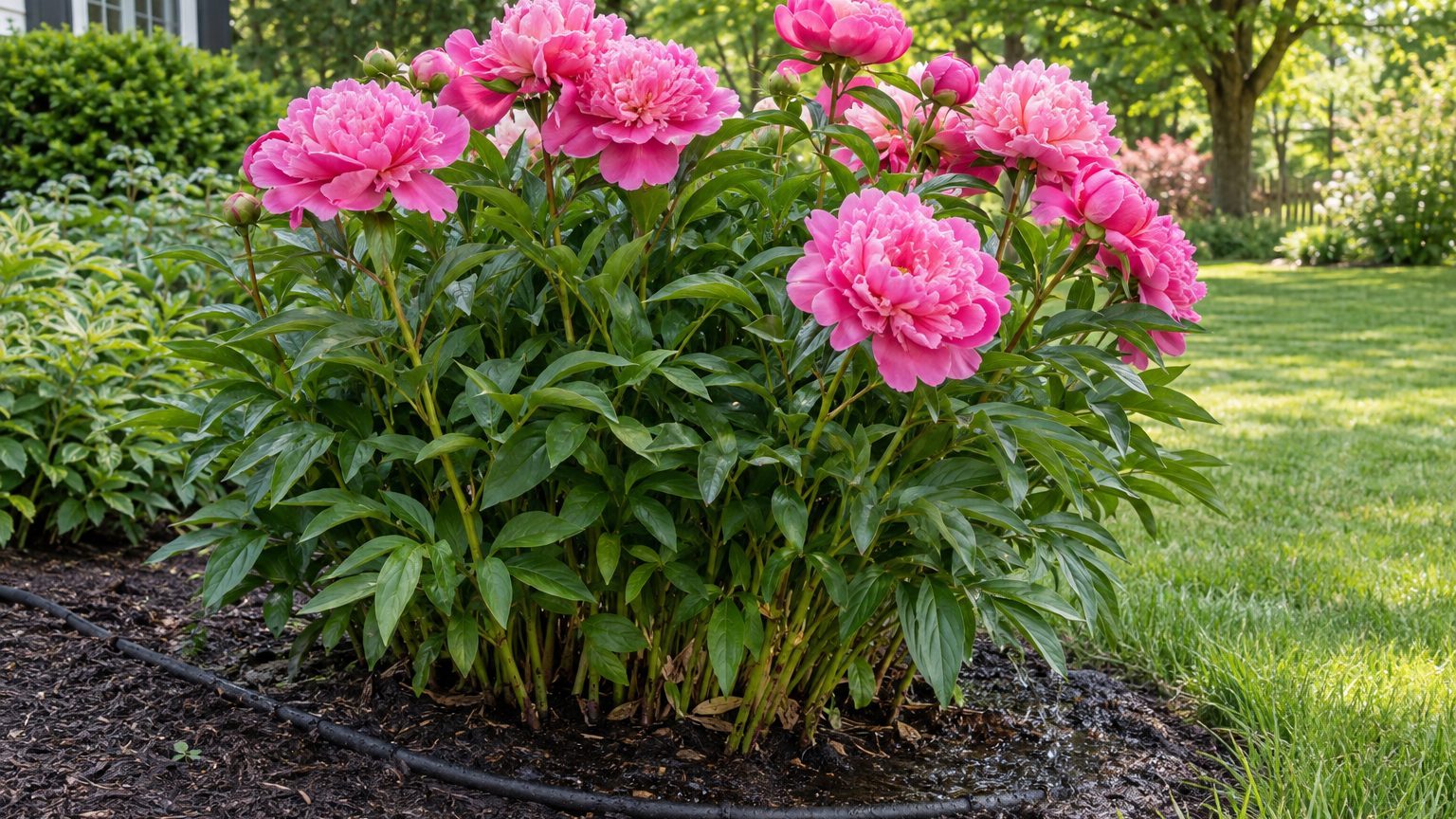
Tall stems and swelling buds in spring are the moment a peony starts drawing hard on the soil. A deep soaking helps it more than a light sprinkle. The rest of the year, the ground around it should drain freely. How much water that means depends on your climate and on the kind of peony.
How Much Water Do Peonies Need?
In Washington, tree peonies should be watered deeply when the soil is dry below the surface. In South Dakota, peonies benefit from regular watering in spring while they grow and form blooms.
Climate and type change the answer. A garden peony in a hot, dry region needs the hose more often than one in a rainy region, and tree peonies and potted peonies follow habits of their own. Sandy soil empties faster than loam, so the same plant can need different care in neighboring yards.
Use the state selector below to find the watering calendar for your state.
From the almanac
Peonies in your state
The dates on this page depend on where you live. Your state's page carries its frost dates, its USDA zones and the year laid out month by month.
Northeast
Southeast
- Alabama
- Arkansas
- Delaware
- Florida
- Georgia
- Kentucky
- Louisiana
- Maryland
- Mississippi
- North Carolina
- South Carolina
- Tennessee
- Virginia
- West Virginia
Midwest
Southwest
West
Pacific Northwest
Canada
How to Water Peonies

A new peony and an established one share most of the routine, and the steps run from the planting spot to the changing seasons.
- In Virginia, avoid sites where water pools; in Washington, keep peonies away from automatic sprinklers that leave soil constantly moist.
- In Illinois, water at least once per week during most of fall if it does not rain.
- Check the soil with a finger or trowel before every watering, because the top can look dry while the root zone is still damp. In Washington, soil can be dry on top and still moist 6-12″ below the surface.
- In Iowa, soak the soil to a depth of 12 inches.
- In Virginia, irrigate overhead in the morning and avoid late-afternoon or evening watering when possible.
- Give peonies a liberal supply while the stems grow and the buds open, then go back to waiting for dry soil, so that the plant gets what it needs without sitting in wet ground. In Kansas, give peonies plenty of water during spring growth and especially while they are in bloom.
Amounts differ from place to place, so treat them as guides. In South Carolina, the advice is to water thoroughly and deeply once every 10 to 14 days. In Utah, growers apply 1 to 2 inches per irrigation. Either way, the finger test in the soil has the last word.
Watering Needs by Peony Type
Garden peonies, tree peonies and peonies in pots do not drink the same way. The difference comes down to when the soil should be allowed to dry and how much the leaves and roots tolerate being wet.
Local advice shows the contrast clearly, and each row reflects guidance written for the place named.
| Peony Type | What changes | Why it matters |
|---|---|---|
| Garden peony | Regular watering through spring growth and bloom | Stems are growing and buds are forming (South Dakota, Kansas) |
| Tree peony | Wait until the soil is dry below the surface, and skip watering if it still holds moisture | Wet leaves invite fungus (Washington) |
| Peony in a container | Avoid wet roots in winter and irrigate in the morning | Dormant roots rot more readily, and late irrigation leaves foliage damp (Virginia) |
Peonies grown for cut flowers in a high tunnel get 1 to 2 inches per irrigation in Utah. Cut stems kept in water or a fresh-keeping liquid should stay there only for a short period.
Peony Watering Mistakes to Avoid
Sprinkling Over the Leaves

In Ohio, avoiding overhead irrigation may help suppress disease. In Ohio, avoid overhead irrigation and use drip irrigation if available.
In Virginia, run overhead irrigation in the morning if it cannot be avoided. Better still, use drip irrigation if available.
Light Daily Sips

A quick splash wets only the top of the soil, which looks damp while the roots below stay thirsty. It also keeps the surface wet in a way that does the plant no favors.
Wait until the soil is dry below the surface, then soak deeply. In Washington, gardeners are told that soil dry for the first 4-6″ plus slightly drooping leaves means it is time to water the roots deeply.
Watering Dormant Plants
A peony cut back for winter looks like it has nothing going on, but the roots are still there and they hate sitting in cold, soggy ground. In Virginia, dormant peonies are more prone to root rots when their roots stay wet.
In Virginia, avoid leaving dormant peonies with wet roots in winter, and make sure water can drain away.
How Often to Water Peonies in Your State
In Washington, water deeply when the soil is dry below the first 4-6″ and the leaves droop slightly. Water when the soil is dry below the surface, and do not water if the soil has moisture.
- The page for your state gives the months when peonies need the most attention where you live, so open it before the spring growth begins.
- Keep checking the soil, since the state page sets the months and conditions in the bed determine the day.
Common Questions
Why Do Peony Leaves Droop in Early Spring?
Droopy leaves on the first warm days often come from an imbalance between the root system and the new leaf growth, not from thirst. This pattern is described for Washington. Dig a finger in: if the soil below the surface is moist, hold off on the hose, and if it is dry down deep, water slowly.
Can Peonies Grow in Heavy Clay?
Heavy clay is a poor choice for peonies. In Connecticut, roots can rot quickly in poorly drained soil. In Indiana, the site must drain well while still holding some moisture, so a loose, well-drained bed beats a soggy one.
Can You Keep Cut Peonies in Water?
Cut stems can stand in water or a fresh-keeping liquid, but wet storage works only for a short period. Once the blooms open, enjoy them in the vase and do not count on them lasting long in storage.
Sources : gardenersworld.com