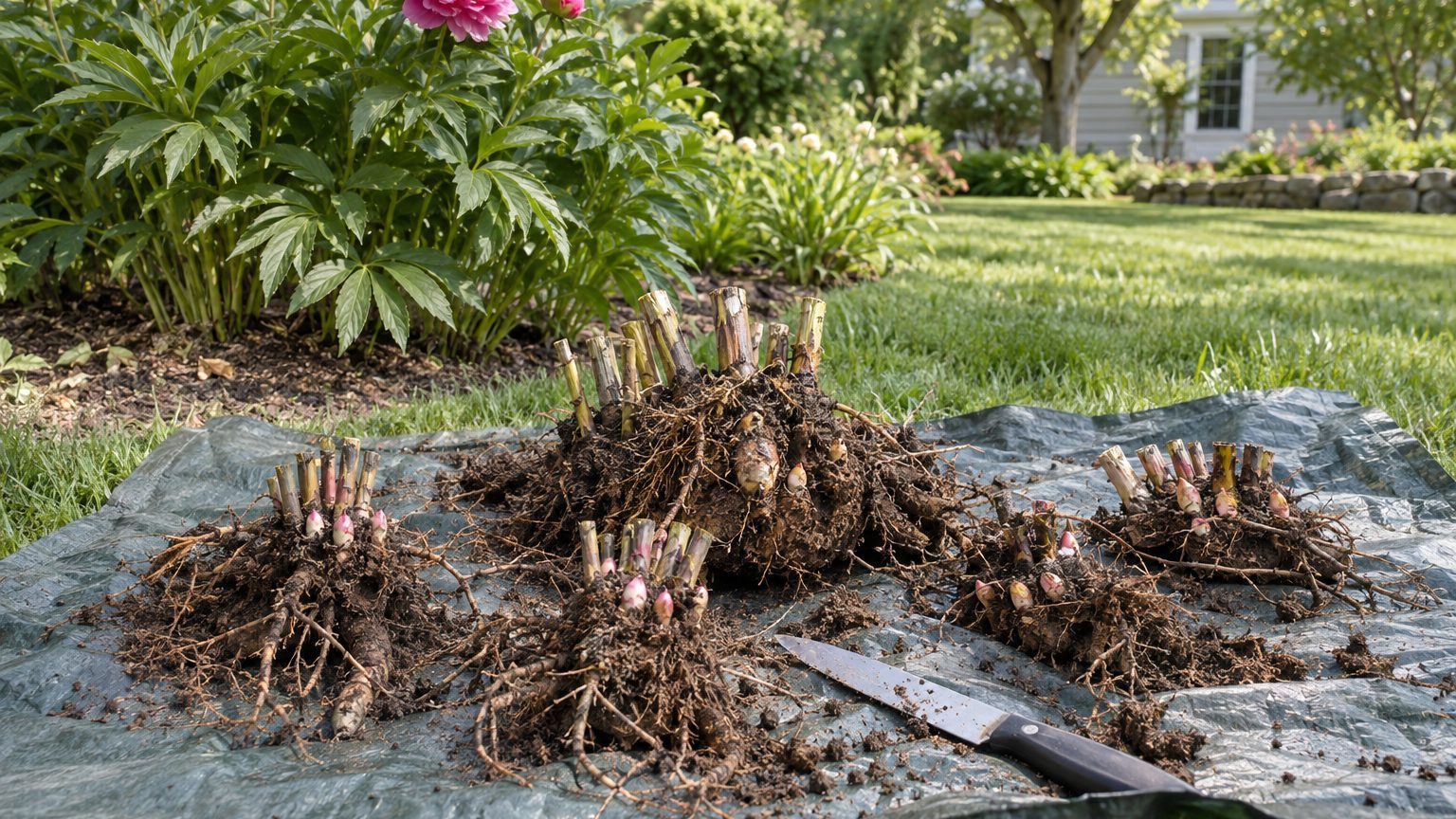
Peony foliage browns and sags as summer winds down, and that is the signal that a clump can be lifted and split. In South Dakota, Wisconsin, Indiana and Kansas, peonies are divided in fall or once the plant is dormant. The details that matter are timing, how many buds each piece carries, and how deep it goes back in the ground.
When Should You Divide Peonies?
In Kansas, lift and divide the roots after the plants go dormant. In Indiana, dormant bare-root peonies are less sensitive to injury and can establish in fall.
The exact months shift with climate. In South Dakota, September to early October is the usual window. Wisconsin gardeners aim for September, while in Indiana bare-root peonies are divided and planted in October. In Kansas, lift and divide the roots after the plants go dormant on September 1.
The state selector just below this section takes you to the page for your state, where the months are set for your climate.
From the almanac
Peonies in your state
The dates on this page depend on where you live. Your state's page carries its frost dates, its USDA zones and the year laid out month by month.
Northeast
Southeast
- Alabama
- Arkansas
- Delaware
- Florida
- Georgia
- Kentucky
- Louisiana
- Maryland
- Mississippi
- North Carolina
- South Carolina
- Tennessee
- Virginia
- West Virginia
Midwest
Southwest
West
Pacific Northwest
Canada
How to Divide a Peony

Dividing is simple work with a spade and a knife, and the order of the steps protects the buds that will become next year’s stems.
- In Kansas, lift and divide the roots after the plants go dormant on September 1.
- Dig wide around the clump and lift it whole, so the thick storage roots come up with as little tearing as possible.
- Rinse off the soil and look for the pink buds, called eyes, which in South Dakota sit one to two inches below the soil surface, because they tell you where each cut can safely go.
- Cut the clump with a clean, sharp knife into sections that each hold 3 to 5 eyes (the Wisconsin advice), so every piece has enough buds to flower and a clean cut that heals without rot.
- Trim the roots on each piece to 4 to 6 inches, as Kansas growers do, which keeps the planting hole manageable and removes damaged ends.
- Replant with the eyes no deeper than 1 inch below the surface, the guidance in South Carolina, so the buds can still push through the soil in spring.
Water the new divisions and leave the soil to settle around the roots. Pick a sunny spot with drainage that suits the plant, because a peony left in the same place for years has already shown you what it likes.
Dividing Method by Peony Type
The right approach depends on the age and form of the plant in your hands. A mature clump, a young plant and a bare-root piece each call for a slightly different decision.
Start by asking whether the plant needs dividing at all, because that question comes before any cutting.
| Peony Type | What changes | Why it matters |
|---|---|---|
| Established garden peony | Division is optional and often unnecessary | In South Carolina, peonies may never need dividing unless you want more plants |
| Young plant under 3 years | Leave it in the ground | In Washington, dividing a plant this young may retard flowering |
| Bare-root division | Plant in fall, in October in Indiana | Dormant, freshly dug roots take less injury and establish before winter |
For you, this means most healthy peonies can simply stay put. Divide when you want more plants. A young peony should be left alone, and divisions that come to you bare-root go in the ground soon after they are cut or purchased.
Peony Division Mistakes to Avoid
Dividing a Young Plant

A peony still finding its footing has little reserve to spare. In Washington, the advice is never to divide a plant under 3 years old, since cutting it may delay flowering.
If you want more plants from a young peony, wait until it is well established and the clump has filled out.
Leaving Too Few Eyes

A division with only a bud or two looks tidy but flowers slowly. In Iowa, divisions with fewer than three buds may take 2 or more years to bloom.
When a cut would leave a thin piece, choose a different spot for the knife, or keep that piece attached to a neighbor. A larger division with several eyes gives you a better plant sooner.
Planting Too Deep
Planting too deeply can keep a peony from flowering. Keep the eyes close to the soil surface.
Set the crown so the eyes sit no deeper than 1 inch below the soil, the standard in South Carolina. If a replanted division sinks, lift it gently and reset it at the right height.
When to Divide Peonies in Your State
The trigger is the plant itself: the foliage browns, dies back and the clump goes dormant. Once you see that, the job is open, and the calendar only decides how soon your climate allows it.
- The state page for your state lists the months for dividing peonies where you live, so check it when the leaves start to fade.
Common Questions
How Often Do Peonies Need to Be Divided?
Rarely. In Washington, garden peonies may grow for 15 to 20 years before they need dividing, so a clump that is still flowering well can be left alone.
How Long Until a Divided Peony Blooms?
In Kentucky, a division takes 2 to 3 years to bloom. Patience is part of the deal, and a piece with plenty of eyes and a strong root system tends to get there sooner.
Why Divide Peonies in Fall Instead of Spring?
In Indiana, dormant plants are less sensitive to injury. In Indiana, plants that establish themselves in fall grow more vigorously in their first growing season.
Sources : edmontonjournal.com | extension.illinois.edu