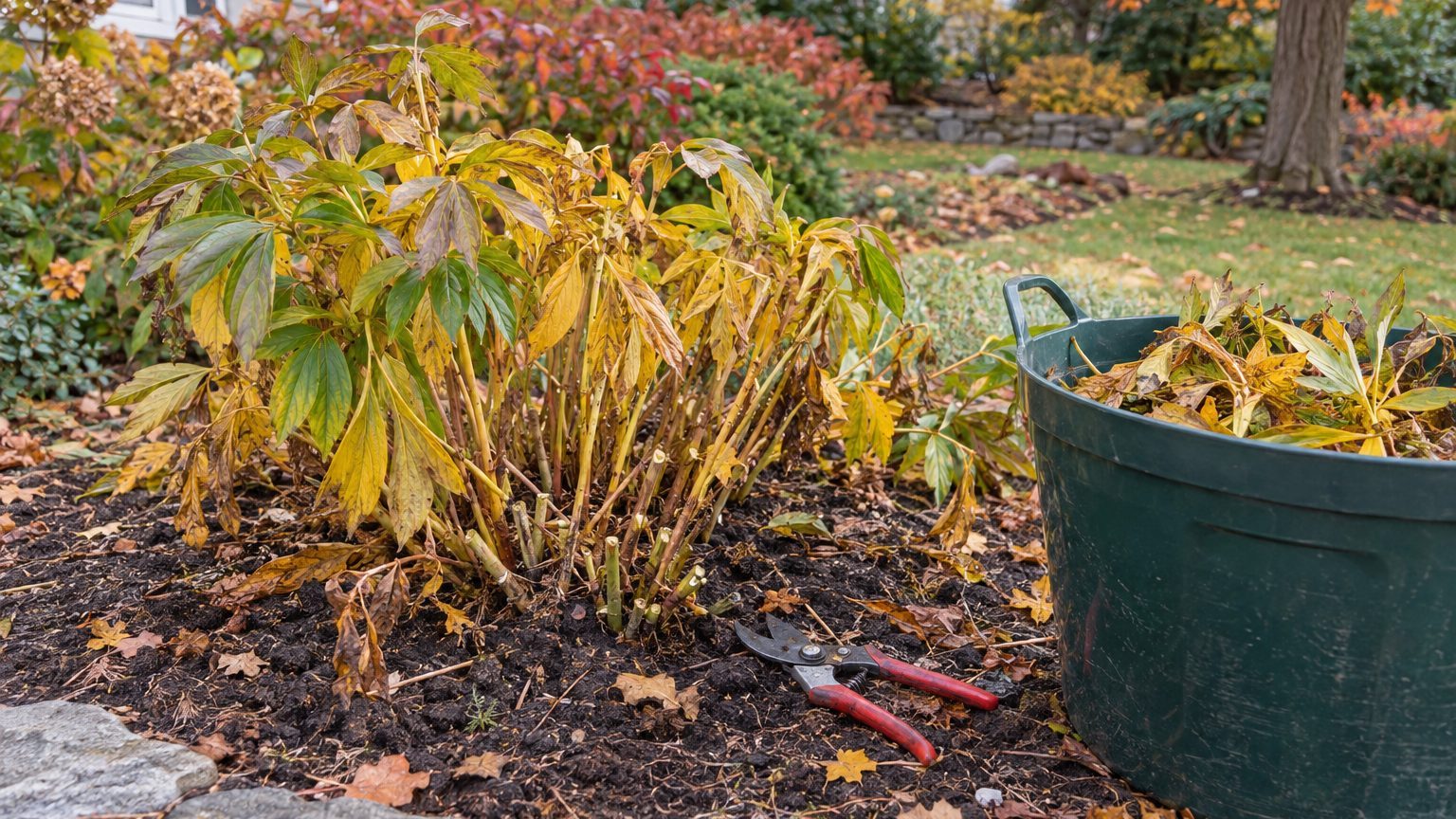
By autumn the peony’s leaves have gone brown and floppy, and the clump looks ready for the cleanup crew. Whether to cut it back now or wait depends on a hard freeze and on what kind of peony you grow.
When Should You Cut Back Peonies?
Garden peonies are herbaceous plants whose stems and leaves die back. Cutting before that takes away leaves still feeding the roots. Tree peonies follow a different rule, since their woody stems stay put.
Climate moves the date. In North Carolina, gardeners cut when foliage dies in fall, while South Carolina guidance calls for cutting dead stems after frost. In Indiana, peonies go dormant in late September or early October, which gives a sense of how the season turns in a cold-winter state.
The state selector shown just under this section leads to the page for your state.
From the almanac
Peonies in your state
The dates on this page depend on where you live. Your state's page carries its frost dates, its USDA zones and the year laid out month by month.
Northeast
Southeast
- Alabama
- Arkansas
- Delaware
- Florida
- Georgia
- Kentucky
- Louisiana
- Maryland
- Mississippi
- North Carolina
- South Carolina
- Tennessee
- Virginia
- West Virginia
Midwest
Southwest
West
Pacific Northwest
Canada
How to Cut Back Peonies

The fall cut is quick, but the order matters, because each step protects the plant from the next problem.
- Wait until the foliage has died back before removing it. In Iowa, the advice is not to cut before the foliage has been destroyed by a hard freeze.
- Cut the stems close to the ground and remove the debris. In Kentucky, the cut sits 1 to 2 inches above the soil. In Connecticut, gardeners cut down to 3” once a hard frost has damaged the leaves.
- Gather every stem and leaf from the clump, including the fallen ones, so the spores that cling to old foliage do not survive the winter beside the crown.
- Pull away any mulch applied during the growing season, because disease can overwinter in it just as it does in fallen leaves.
- In Ohio, lay down fresh mulch for winter to a depth of no more than 2 – 3″.
Some gardeners prefer to leave the cleanup for spring, and in Iowa that is an accepted choice, since the old stems and leaves can come off after fall frost or in spring. In Wisconsin, removing peony foliage in fall helps reduce potential disease development.
Cutting Back by Peony Type
Most peonies in home yards are the herbaceous kind, and they get the full cutback. The less common tree peonies are a different plant, with stems that act like those of a deciduous shrub.
Check the base of your plant before you reach for the shears. Stems that are soft, green and die back each year mean cut. Stems that are woody and stay on the plant through winter mean leave them alone.
| Peony Type | What changes | Why it matters |
|---|---|---|
| Herbaceous peony | Stems and leaves are cut down to the soil surface after frost kills the foliage | Removing old foliage reduces disease that would carry over to the next season |
| Tree peony | Not cut to the ground in fall. In Washington, pruning for shape and health is preferably done after flowering | The woody stems are permanent, so cutting them down removes the framework of the plant |
If you are not sure which kind you have, the stems tell the story. A clump that sends up fresh red shoots from the ground each spring is herbaceous. A plant with bare, woody branches standing all winter is a tree peony, and it keeps those branches. In Washington, pruning for form and health is preferably done after flowering.
Peony Cutback Mistakes to Avoid
Cutting Too Early

Green leaves are still working, and cutting them while they are healthy cuts short the plant’s work for the season. Foliage often looks tired long before a freeze, but tired is not dead.
If the leaves turn unsightly in summer, Kentucky guidance is to wait until late August or September before trimming them. Elsewhere, follow local guidance on when to cut back the foliage.
Cutting Tree Peonies to the Ground

A gardener who treats every peony the same may cut a tree peony down like its herbaceous cousins. That removes woody growth the plant took years to build, and the shrub has to start over from what is left.
Leave the stems standing through fall. In Washington, pruning for form and health is preferably done after flowering.
Composting Diseased Foliage
Peony debris can carry disease, and recommendations about composting it vary by location. Advice varies on this point. In Wisconsin, the debris is destroyed rather than composted, and in South Carolina the stems stay out of the compost pile.
Indiana takes a gentler line, saying plant debris can be composted unless disease was present. In Kansas, shed leaves go into the compost pile. If your peonies had leaf spots or mold this season, do not compost the debris.
When to Cut Back Peonies in Your State
The sign to watch for is foliage that frost has blackened or collapsed, with stems gone limp and brown. That is the signal to bring out the pruners, and the calendar months for your area come from the state page.
- The page for your state gives the months when cutting back usually happens, so look it up before the first hard freeze is in the forecast.
- The page also helps you plan the rest of the fall peony jobs around your own climate, so you are not guessing at dates.
Common Questions
Does Cutting Peony Stems for Bouquets Hurt the Plant?
It can if you take too many. In Alaska, research notes that harvesting more than ten stems could affect the next year’s crop. Cut a few, and leave plenty of foliage to feed the roots.
What Should You Do If Peony Leaves Look Ragged in Summer?
Leave them until the season winds down if you can. In Kentucky, the advice for unsightly foliage is to wait until late August or September, and then cut the leaves 1 to 2 inches above the soil and discard them.
Can You Move or Divide Peonies at Cutback Time?
Yes, the timing overlaps. In Kansas, foliage can be cut back at the end of August, and plants are divided or moved from September until the ground freezes. Cutting the foliage first makes the clump easier to lift and handle.
Sources : naturehills.com | salisburygreenhouse.com