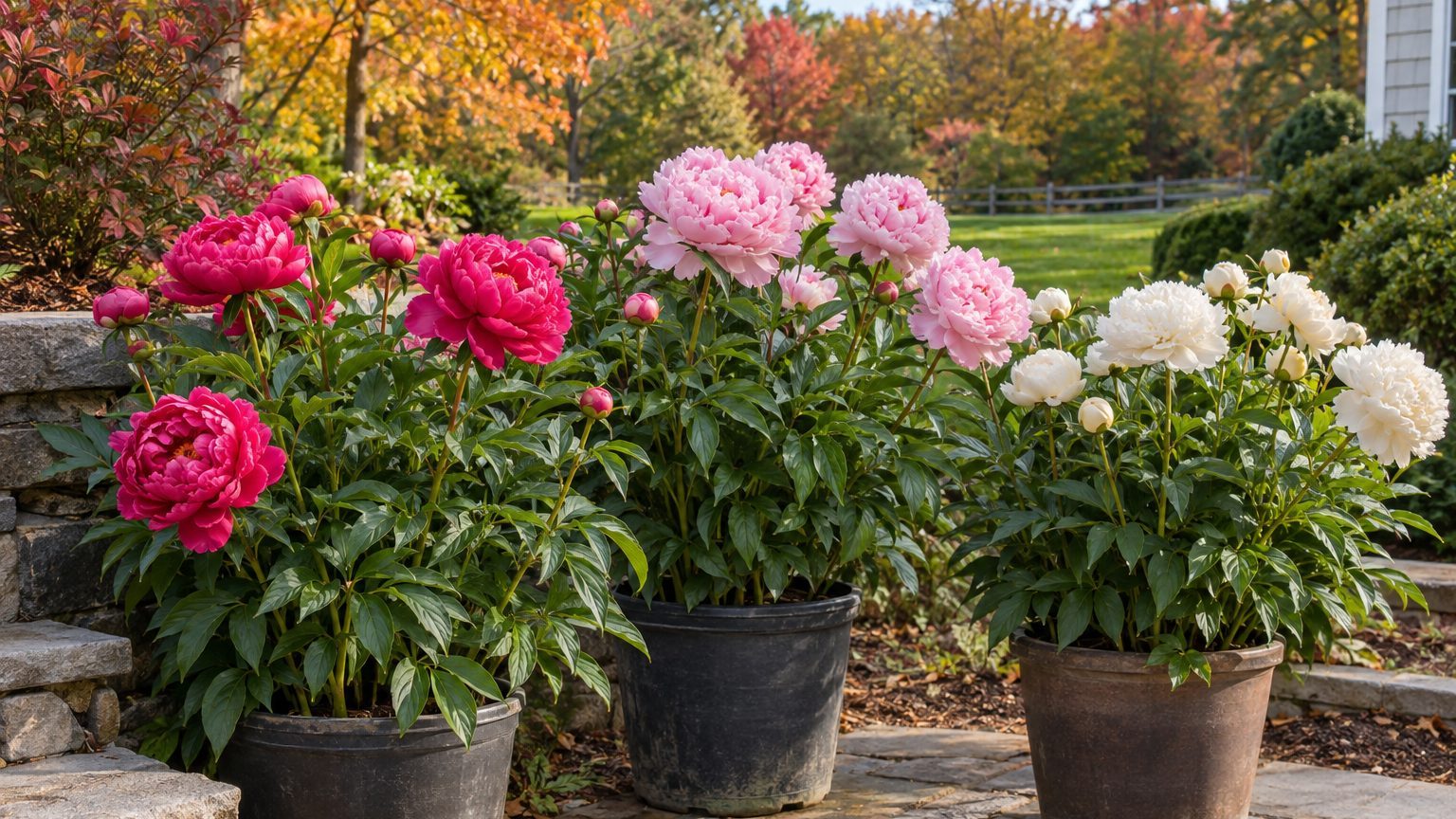
A peony that blooms heavily each spring and one that sulks for years can look identical on the nursery bench. What separates them is how well the plant matches your winter cold, your sun and your soil. Choosing a peony starts with your zone, your yard and the kind of plant you want, and the type you buy changes the answer.
Which Peony Is Right for Your Yard?
The right peony is one whose winter-cold needs match your winters, planted in a sunny, well-drained spot with room to grow. In North Carolina, peonies can grow in zones 3–8 and do best in zones 5–7.
Winter cold is an important part of the choice. In Connecticut, peonies need a minimum of 6 weeks of temperatures below 40°F to flower.
In the lower South that chill often falls short. There, early-blooming, single or Japanese cultivars are the ones that perform well in South Carolina. The state selector just below this section leads to the page for your state.
From the almanac
Peonies in your state
The dates on this page depend on where you live. Your state's page carries its frost dates, its USDA zones and the year laid out month by month.
Northeast
Southeast
- Alabama
- Arkansas
- Delaware
- Florida
- Georgia
- Kentucky
- Louisiana
- Maryland
- Mississippi
- North Carolina
- South Carolina
- Tennessee
- Virginia
- West Virginia
Midwest
Southwest
West
Pacific Northwest
Canada
How to Choose a Peony

Start with winter cold, because a peony that fails on winter cold cannot be rescued by good soil.
- Look up your USDA hardiness zone, so that you know early whether your yard sits inside the range peonies grow in or at the warm end, where winter chill gets thin.
- Compare your typical winter with the cold peonies need, because without it the plant makes leaves but few flowers. In Connecticut, where zones run from 7a to 5b, this is not generally a problem, while a mild lower-South winter can fall short.
- Choose a sunny spot, since low light decreases flowering. In Utah, choose a location with at least 6 to 8 hours of direct sunlight.
- Test the soil before you buy, so the plant is not set into the wrong chemistry. In Washington, peonies grow best at a pH of 6.0–7.0, and in South Carolina the preferred range is 6.5 to 7.0. Then check drainage, because peony roots die in saturated soil and clay that stays wet is best avoided.
- Read the tag for mature height and spread, and look at bloom time, so the plant has room when full grown. Choosing varieties that open at different times stretches the show across the season.
- Buy recognized named cultivars, so that quality is more certain than with an unlabeled division. In Iowa, spring is often the best time to plant container-grown peonies.
None of these steps takes long, and all of them happen before money is spent. A hardiness map, a soil test kit and careful observation of afternoon shadows can help settle the decision.
Choosing a Peony by Peony Type
Peonies are not interchangeable. Bloom time, chill needs and planting habits shift from one kind to the next, and those shifts matter at the edges of the growing range.
In the South, choose by season and chill. In the North, choose by bloom time and the length of show you want.
| Peony Type | What changes | Why it matters |
|---|---|---|
| Early-blooming cultivars | Flowers open before hot weather sets in | They do well in the South, as in South Carolina, because the blooms finish before the heat arrives |
| Single or Japanese cultivars | Flower form is simpler than a full double | They are the best performers in South Carolina |
| Low-chill types | Need less winter cold to flower | In warm areas of North Carolina, plant them with crowns no more than one inch deep and skip winter mulch, which can act like an insulating blanket |
| Earlier and later bloomers | Flowering runs from the end of April to early June in Pennsylvania, and from early June to early July in South Dakota | Mixing bloom times in the same bed stretches the season, since each plant flowers for only a short spell |
For a warm-climate yard, prioritize low-chill, early, simple-flowered cultivars. For a colder yard, bloom time matters a great deal, and a mix of early and later plants keeps flowers in the bed far longer than a single variety can.
Peony Buying Mistakes to Avoid
Ignoring Winter Chill

Peonies often do not perform well in the lower South because the winters do not chill them enough. The cost is a healthy-looking plant that makes foliage year after year with few or no flowers.
Before buying, ask the nursery whether a variety suits your winter, and in a mild climate lean toward the low-chill and early types.
Planting in Soggy Clay

Heavy clay that holds water is a quiet killer, because peony roots die in saturated soil. The plant may look fine for a season, then decline as the roots rot below ground.
Pick a spot where water drains away after rain, or choose a slightly raised area of the yard. Moving a planting site before you dig costs nothing, and replacing a lost plant does.
Skipping Named Cultivars
A division from a neighbor or an unlabeled bargain bag may perform well, but you have no record of its bloom time, size or quality. In Indiana, recognized named cultivars offer more assurance of plant hardiness and quality.
Look for a label with the variety name, then match it to your zone, sun and the bloom window you want.
Best Peonies for Your State
Match the cultivar’s chill needs and bloom time to your state’s growing conditions. Planting and bloom months differ from state to state, and each state’s months sit on that state’s page.
- In Iowa, spring is often the best time to plant container-grown peonies.
- In South Carolina, early-blooming cultivars can finish flowering before hot weather arrives.
Common Questions
How Long Does a Peony Bloom?
In North Carolina, each plant blooms for about two weeks in late spring to early summer. Planting varieties with staggered bloom times is what stretches the show beyond that.
How Big Are Peony Flowers?
In South Dakota, peony flowers range from about three to eight inches wide, depending on the species and cultivar. Check the tag if you want a large, showy bloom or a smaller one.
How Many Peony Varieties Are There to Choose From?
Thousands of garden varieties are grown worldwide, and only about 100 are used as cut flowers. If you want armloads for the vase, ask a nursery which varieties are grown for cutting.
Sources : rhs.org.uk