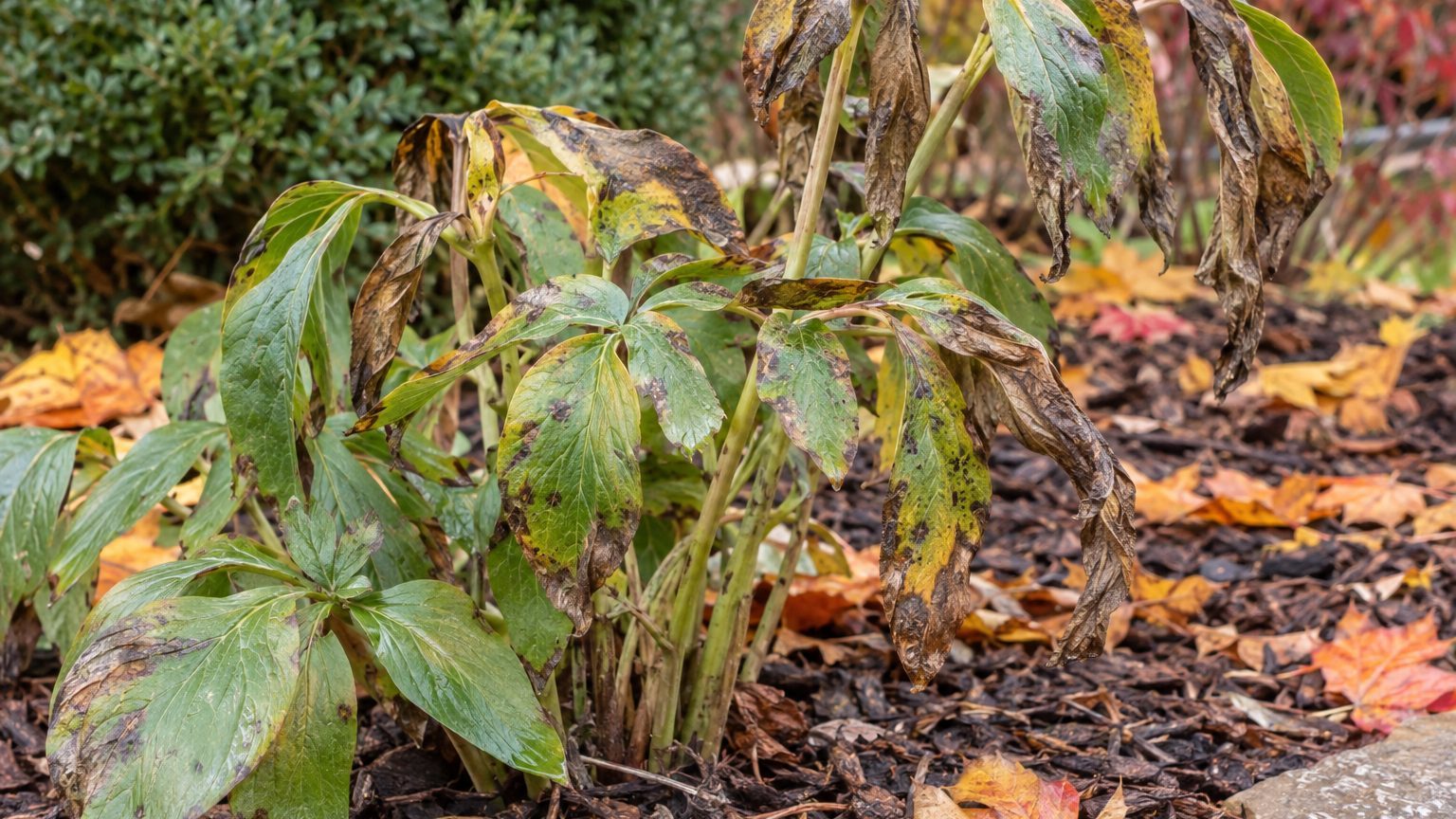
Wilting stems, browned buds, and a sagging clump can point to verticillium wilt or botrytis blight, so start by checking the stem base. Telling the two apart decides whether the plant can be saved.
Peony Wilting: What You See

The signs that point to the cause are the ones at the base of the stem, so start there and work upward.
- Cut a wilting stem in half near the base and look for brown banding inside, which is the sign that separates a soil disease from a surface one.
- Young shoots, even ones still growing, suddenly wilt and fall over, and a brown or blackish rot shows at the base of the stem.
- The stem bases are covered in grey mould and the plant collapses at soil level.
- Small buds turn black and dry up, while larger buds turn brown and may carry a brown spore mass.
- Brown blotches can appear on the leaves later in the season; leaf blotch can also cause small red spots.
Buds that brown and never open are a common sight in cool, rainy weather.
From the almanac
Peonies in your state
The dates on this page depend on where you live. Your state's page carries its frost dates, its USDA zones and the year laid out month by month.
Northeast
Southeast
- Alabama
- Arkansas
- Delaware
- Florida
- Georgia
- Kentucky
- Louisiana
- Maryland
- Mississippi
- North Carolina
- South Carolina
- Tennessee
- Virginia
- West Virginia
Midwest
Southwest
West
Pacific Northwest
Canada
Peony Wilting or Something Else?
Not every sad peony is diseased. Plants that bloom poorly or hold buds that stay shut can look unwell without any fungus at work, so the cause is worth confirming before you dig anything out.
Leaf blotch also marks peonies with spots, but it leaves the stem base alone.
| Looks like | How to tell them apart |
|---|---|
| Verticillium wilt | Stems wilt, and a cut near the base shows brown banding inside. The fungus lives in the soil. |
| Botrytis blight | Shoots discolor at the base and fall over, with grey mould on the stem bases and brown buds that fail to open in cool, rainy weather. |
| Leaf blotch | Also called red spot or measles. Blotches on leaves and stems and small red spots appear, and the fungus returns each year from plant debris. |
Buds that fail to open with no rot at all can come from a late freeze, other extreme weather, insects, or a plant that is undernourished. In Washington, too little sun, planting too deep, too much fertilizer, clumps that need dividing, or foliage removed too early in July or August are also named as reasons for missing blooms.
What Causes Peony Wilting, and Where It Is Worst
Verticillium wilt and botrytis blight can both cause peony stems to wilt. Verticillium wilt lives in the soil and is fairly common, so it can turn up in almost any bed. It may arrive in compost, though that is impossible to prove.
Botrytis blight, caused by the fungus Botrytis paeoniae, attacks stems, leaves, and flower buds. It is most common in cool, rainy weather, and tree peonies in particular can be hit during wet springs.
The fungus survives winter as hardened bodies in diseased tissue, and leaf blotch overwinters on plant debris. Wet springs can favor botrytis, especially on tree peonies.
How to Treat Peony Wilting
Treatment depends on which disease you have, so confirm it with a stem cut first and handle the plant in this order.
- Cut a wilting stem in half near the base and look for brown banding, so that you know whether the soil disease is the cause.
- Remove the whole plant if the banding is there, because nothing else can be done for verticillium wilt and leaving it keeps the fungus in the bed.
- Replant something other than a peony in that spot, so that the same fungus does not attack again.
- Prune out and destroy infected stems and buds if the problem is grey mould, so that the hardened fungal bodies cannot carry the disease through winter.
- Clear fallen leaves and plant debris from around the clump, since leaf blotch overwinters there.
- Use only a fungicide labeled for peonies where you live.
Fungicides for leaf blotch only protect leaves that are not yet infected, so they have to go on early and often rather than after the disease shows up. Check the label and your local rules before using any.
How to Prevent Peony Wilting Coming Back
Prevention follows the season, and most of it is housekeeping that denies the fungus a place to winter.
- Check emerging shoots for discolored bases, and remove infected tissue before it can carry the fungus through winter.
- During cool, rainy stretches in spring, watch buds closely, since that is the weather when botrytis is most active.
- In Washington, leave the foliage in place through summer, because removing it in July or August can cost you flowers the next year.
- Cut back and destroy diseased stems and leaves so the fungus has no debris to overwinter on.
- When replanting after verticillium, choose a different plant for that spot and be careful with compost of unknown origin.
Giving peonies enough sun and dividing oversized clumps can help prevent missing blooms.
Where This Comes From
Confirm the disease before choosing a treatment.
Common Questions
Can You Save a Peony with Verticillium Wilt?
No cure is known for it. The plant is removed, and a different kind of plant goes in that spot.
Why Do Peony Buds Turn Brown and Not Open?
Botrytis blight is a frequent cause in cool, rainy weather. Late freezes, insects, and poor nutrition can also leave buds that stay closed.
Will Peony Wilting Return Every Year?
Botrytis can overwinter in diseased tissue, and leaf blotch tends to return from plant debris. Removing that debris makes a recurrence less likely.