A peony clump that once sent up red shoots can leave a patch of bare soil in spring, or leaf out fully and never form a bud. The cause is usually something you can change, and it often sits right at the crown, where depth, shade and recent digging all play a part.
Peonies Not Coming Up in Spring: What You See

The signs show up at the crown and on the stems, and they depend on whether anything breaks the surface at all.
- Bare soil where the clump stood, while neighboring perennials are already leafing out, often points to a crown buried too deep.
- Healthy green foliage with no flower buds anywhere on the stems is a common sight on peonies in too much shade.
- In Washington, buds that swell but never open may point to a late freeze or other extreme weather.
- A clump that was planted, moved or split only a year or two ago may leaf out and then skip flowers.
- A crowded clump with few flowers may need to be divided.
Where you see the problem on the plant, and in which spring, narrows the cause quickly.
From the almanac
Peonies in your state
The dates on this page depend on where you live. Your state's page carries its frost dates, its USDA zones and the year laid out month by month.
Northeast
Southeast
- Alabama
- Arkansas
- Delaware
- Florida
- Georgia
- Kentucky
- Louisiana
- Maryland
- Mississippi
- North Carolina
- South Carolina
- Tennessee
- Virginia
- West Virginia
Midwest
Southwest
West
Pacific Northwest
Canada
Peonies Not Coming Up in Spring or Something Else?
Some spring problems look like a failing peony but have a different cause. Leaf spotting and frost-struck buds are the usual ones, and each leaves a clue on the plant itself.
| Looks like | How to tell them apart |
|---|---|
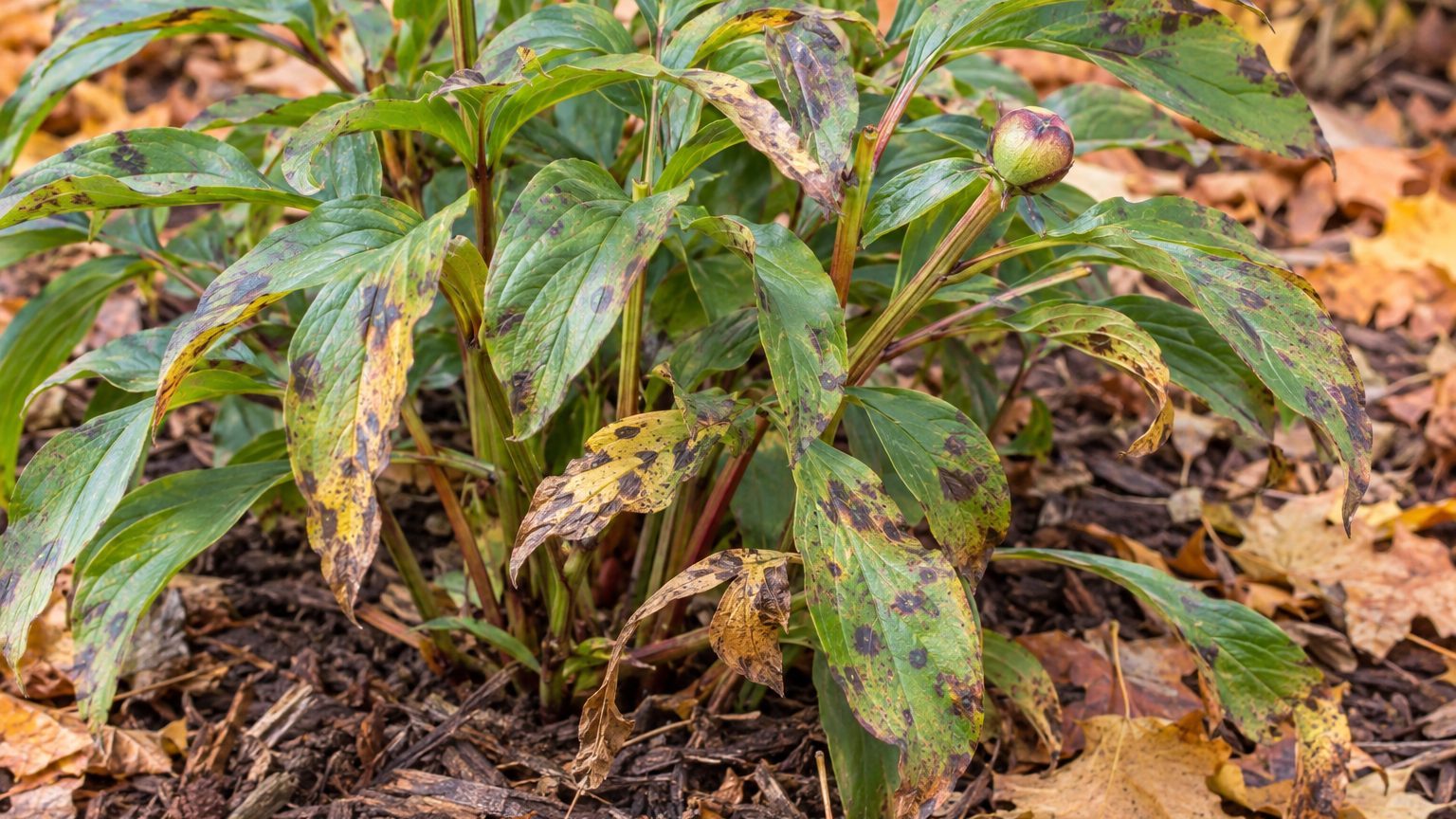
| Peony leaf blotch (also called measles or stem spot) | Leaf spots are glossy and purplish-brown on top and chestnut-brown underneath, mostly along the margins of the outer leaves, and they follow warm, humid weather. |
| Frost or weather damage to buds | In Washington, buds may stay shut after a late freeze or other extreme weather; fungal disease, insects, and poor nutrition are other possibilities. |
Powdery mildew and other fungal diseases can also spoil a peony, which is why water should reach the base of the plant rather than the leaves. Insects and poor nutrition are other reasons that buds fail to open.
What Causes Peonies Not Coming Up in Spring, and Where It Is Worst
Planting too deep is the cause that comes up again and again. The topmost buds, called eyes, should not sit under more than 2 inches of soil, and a deeper crown may bloom poorly or fail to come up at all. A crown set too shallow can lose its eyes to frost.
Soil piled around the stems over the years does the same damage slowly. Indiana advice warns against mounding soil up around the plants during the growing season, since that leaves the crowns deeply covered and the plant without blooms.
Light is the next factor. Peonies need at least 4-6 hours of direct sun to bloom well, and Iowa advice sets the target at six hours of direct sun a day for a transplanted clump.
Other causes are plants that are too young, overcrowded, recently divided, or short of fertilizer. In Washington, too much fertilizer and cutting the foliage off in July or August are among the reasons for no buds. These checks can reveal several common causes, but local growing conditions still matter.
How to Treat Peonies Not Coming Up in Spring
Start with the crown and work outward to light, feeding and water.
- Brush the soil back from the crown and check that the eyes sit no deeper than 2 inches, so that you know whether depth is the problem.
- Lift and replant a clump that is too deep, setting it so the eyes are no more than 2 inches below the surface, because shallow planting lets the shoots reach the air.
- In Illinois, move a shaded clump in fall to a sunny location; in Iowa, choose a site with at least six hours of direct sun each day.
- In Iowa, avoid dividing a crowded clump in late summer, because peonies moved or divided then rarely bloom well the following spring.
- Feed shortly after bloom is finished with a balanced slow release plant food, so the plant has what it needs to set buds for the next year.
- Water at the base of the plant with 1 inch a week, or up to 2 inches in a drought, which keeps the foliage dry and the roots supplied.
Expect some patience. In Arkansas, a moved or divided peony may skip blooming the next spring but should flower the following year.
How to Prevent Peonies Not Coming Up in Spring Coming Back
A few jobs tied to the season keep the crown at the right depth and the plant well fed.
- Keep the eyes no deeper than 2 inches and pull back any soil or mulch that has crept over the crown.
- Keep soil from mounding around the stems during the growing season, and water at the base rather than over the leaves.
- Shortly after the blooms finish, give the plant its balanced slow release feeding so it can build next year’s buds.
- In July and August, leave the foliage in place, since cutting it off early is a known reason for no buds in Washington.
- Clean up last season’s growth. In Illinois, move peonies in fall. In Iowa, avoid moving or dividing them in late summer.
Full sun and proper planting depth address two common causes, but buds can still fail for other reasons.
Where This Comes From
This guidance brings together the main checks for crown depth, sunlight, water, feeding, and recent disturbance.
Local growing conditions can affect timing, so consider your climate before you dig.
Common Questions
How Long Does a New Peony Take to Bloom?
A peony planted in the last year or two often needs 2-3 years to establish and flower, so a quiet first spring is not a reason to dig it up.
Will a Divided Peony Bloom the Next Spring?
Often not. In Arkansas, advice is that disturbed peonies may skip blooming the next spring but should bounce back and bloom the year after.
Can Too Much Fertilizer Keep Peonies from Setting Buds?
Yes. Too much fertilizer is among the reasons for no buds, so feed only after bloom and use a balanced slow release food.