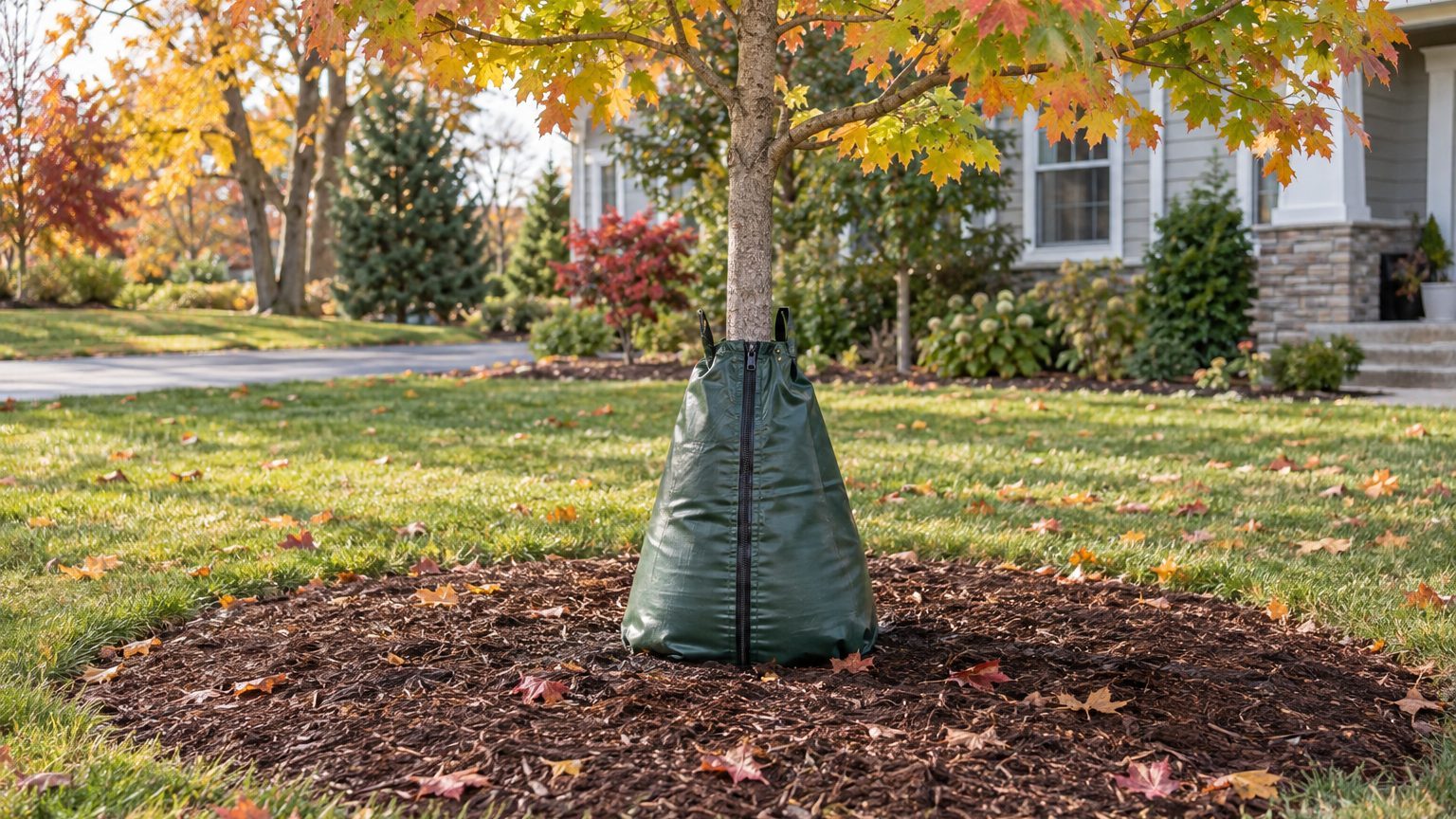
A freshly planted tree sits in a small ball of soil, and that ball dries out long before the surrounding ground does. Watering newly planted trees comes down to keeping that root ball damp while roots reach outward, which takes a good soaking at planting, frequent watering at first, then a gradual stretch between drinks.
How Much Water Does a New Tree Need?
A common guide in Pennsylvania is about 2 gallons for every inch of trunk diameter, so a tree with a 3-inch trunk gets 6 gallons.
Tree type and climate move that number. Small seedlings in the cool North get far less than a large balled tree, and trees in hot, humid country are watered more often early on than trees where summers stay mild.
The state selector just below this section leads to the page for your state, where the months that matter for your area are laid out.
From the almanac
Trees in your state
The dates on this page depend on where you live. Your state's page carries its frost dates, its USDA zones and the year laid out month by month.
Northeast
Southeast
- Alabama
- Arkansas
- Delaware
- Florida
- Georgia
- Kentucky
- Louisiana
- Maryland
- Mississippi
- North Carolina
- South Carolina
- Tennessee
- Virginia
- West Virginia
Midwest
Southwest
West
Pacific Northwest
Canada
How to Water a Newly Planted Tree

Order matters here, because the first weeks decide how fast roots leave the root ball and grab the native soil.
- Soak the root ball and the hole right after planting, so that air pockets collapse and soil settles tight against the roots.
- Water often during the first weeks, since the roots are still confined to the ball. In Florida, a newly planted lemon tree is watered at planting and every other day for the first week or so. In North Carolina, trees planted in fall are watered every 2–3 days for the first 2–3 weeks unless heavy rain does the job.
- Apply the water slowly across the top of the root ball, so it soaks down instead of running off. A two-inch caliper tree takes 20 to 40 gallons spread evenly over the ball each time it is watered.
- Check the soil before you water again, because the top 2 to 3 inches of the root ball should stay moist. Push a finger or a trowel in. Damp means wait, dry means water.
- Settle into a weekly rhythm after the first month. In Kansas, a weekly soaking of about 10 gallons carries spring and summer plantings on most sites.
- Keep going in winter when it stays dry and above freezing. Where winters are mild, as in North Carolina, that means a drink every 2–3 weeks, and in Kansas it means a monthly soaking if less than an inch of rain or about 10 inches of snow has fallen.
How long you keep this up depends on trunk size. Trees in Florida need extra water until established, which takes 3-4 months for each inch of trunk caliper, so a thick-trunked tree stays on your watering list far longer than a slender one.
Watering by Tree Type
Size and kind of planting change the routine more than most people expect. Seedlings are small and shallow rooted, while balled trees and fruit trees carry bigger root systems and ask for bigger drinks.
Local guides give different amounts for different plantings, and the differences follow the tree and the climate where the advice was written.
| Tree Type | What changes | Why it matters |
|---|---|---|
| Seedlings in the cool North | 5 gallons per week in the growing season without timely rain, then 10 gallons every other week for the following two years | Small roots need steady moisture, and the rhythm eases as they spread |
| Fruit and nut trees in the Pacific Northwest | About 3 to 5 gallons per tree every week | A modest, regular drink suits young trees in a mild, cool climate |
| Citrus in hot, humid country | Water at planting and every other day for the first week or so, then 1 to 2 times a week for the first couple of months | Frequent early watering keeps a small root ball from drying out in heat |
| Larger balled trees | Based on trunk size, with 2 gallons per inch of trunk diameter at each watering | A bigger trunk means a bigger root ball to keep moist |
For you, that means matching the dose to your tree rather than copying a neighbor’s hose routine. Measure the trunk, note the climate you garden in, and scale the gallons to fit. Peaches in Utah, once established, move to irrigation every 7 to 14 days that reaches 18 to 24 inches deep, a pattern a young tree grows toward.
Tree Watering Mistakes to Avoid
Shallow Sprinkling
A quick spray wets the surface and leaves the root ball dry underneath. Roots then stay near the top, where they dry out fastest. Water slowly and long enough to soak the whole ball, using the gallon guide for your tree’s trunk size.
Watering on a Fixed Schedule
Rain, heat and soil type change what a tree needs from one week to the next. Sticking to the calendar can drown roots after a wet spell or leave them thirsty in a dry one. Check the top 2 to 3 inches of the root ball first, and water only when it feels dry.
Stopping Too Soon
A tree that looks settled after a season is often still building roots. Florida guidance runs 3-4 months for each inch of trunk caliper, and a larger tree takes longer than people expect. Keep watering through dry spells, including mild winter stretches, until the tree has had its full establishment period.
How Often to Water New Trees in Your State
The sign that triggers watering is dry soil in the top few inches of the root ball, and the months to watch shift with where you live. The right timing depends on your local climate.
- Use the state selector to reach your state’s page, where you will find the months to water.
- Go there before planting day, then check the root ball with a finger each time you head out with the hose.
Common Questions
Should You Water a New Tree When It Rains?
Skip the hose after a soaking rain, but check the root ball a day or two later. A light shower often wets only the surface, and the ball can still be dry underneath.
Can You Overwater a Newly Planted Tree?
Yes. Soil that stays soggy starves roots of air. Wilting leaves paired with wet, heavy soil around the root ball point to too much water, while wilting leaves with dry soil point to too little.
Does a New Tree Need Water in Winter?
It can. When conditions are dry and the ground is not frozen, a soaking helps roots stay hydrated. Frozen ground is the signal to wait.