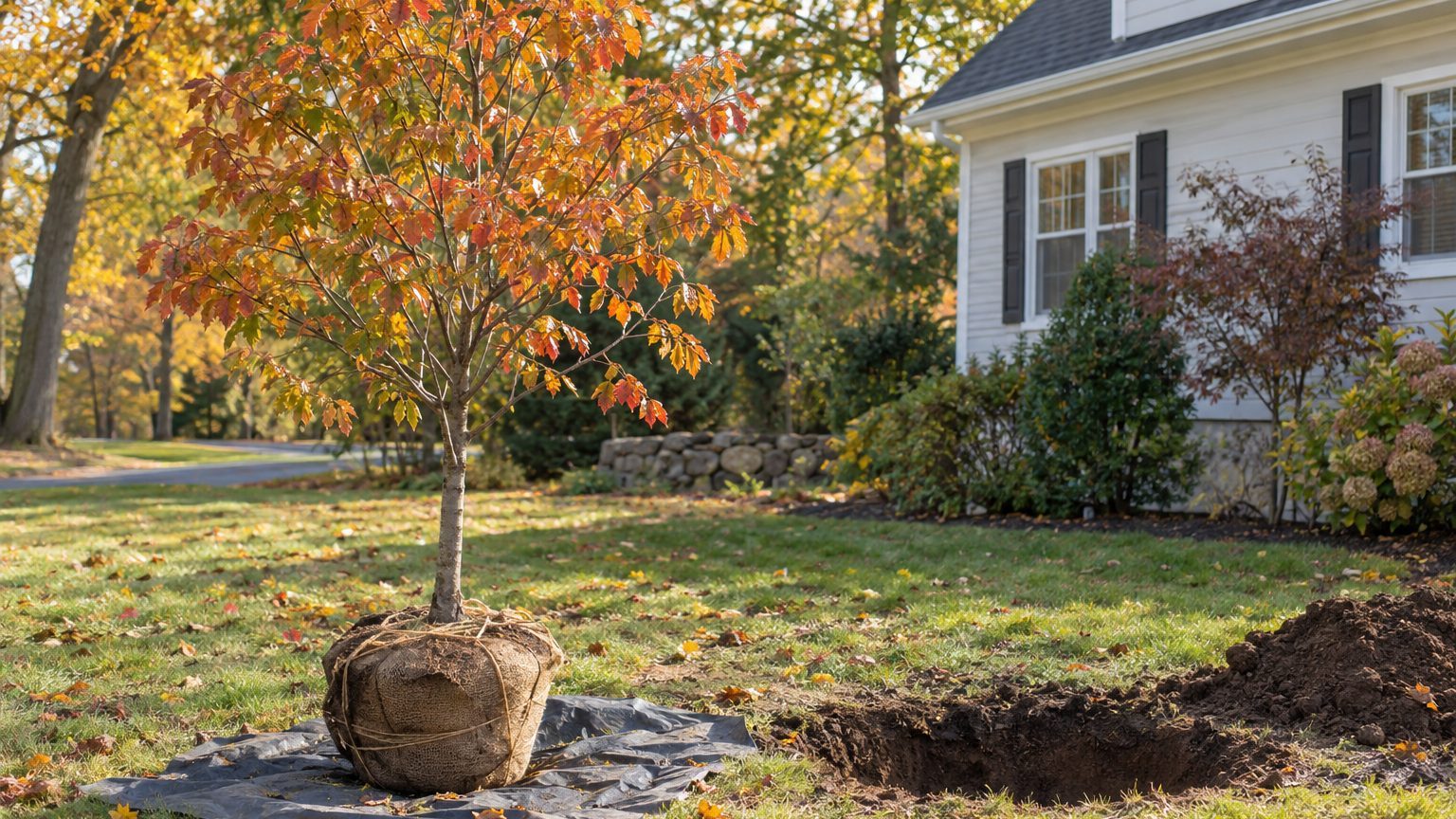
A young tree that has outgrown its spot or stands too close to the house can often be moved, and the move goes best while the tree is dormant and the ground can be worked. The page covers timing, root ball size, and the care that softens transplant shock.
When Can You Move a Tree?
Move a tree while it is dormant, which means late fall after the leaves drop or early spring before the buds swell, as long as the soil is not frozen or waterlogged. Roots can then settle in without feeding a full canopy.
The exact months shift with climate and with the kind of tree. Where winters are mild, the dormant window opens earlier and stays open longer, while cold regions wait for the soil to thaw.
The state selector just below this section leads to the page for your state, where the months for your area are laid out.
From the almanac
Trees in your state
The dates on this page depend on where you live. Your state's page carries its frost dates, its USDA zones and the year laid out month by month.
Northeast
Southeast
- Alabama
- Arkansas
- Delaware
- Florida
- Georgia
- Kentucky
- Louisiana
- Maryland
- Mississippi
- North Carolina
- South Carolina
- Tennessee
- Virginia
- West Virginia
Midwest
Southwest
West
Pacific Northwest
Canada
How to Transplant a Tree

Transplant shock comes from lost roots, so the work is mostly about keeping as many roots as possible and keeping them moist until they grow again.
- Measure the trunk about 6 inches above the ground, so that you can size the root ball to the tree.
- Dig a root ball of about 10 to 12 inches in diameter for every inch of trunk diameter, which is the guide for cooler states such as Nebraska and Utah, so that enough feeder roots travel with the tree.
- Cut any tap root cleanly and leave it no shorter than about 18 inches, a guide from Mississippi, because it will regrow and anchor the tree.
- Move the tree with its soil attached whenever the trunk is thicker than an inch, and always with evergreens, so that the roots never dry out in the air.
- Dig the new hole two or three inches shallower than the height of the soil ball, so that the root flare sits at or slightly above the surrounding ground.
- Widen the hole well beyond the ball, since loosened soil lets new roots spread, and water the tree in thoroughly.
In Alaska, the advice is a hole five times the width of the root ball, or at least 2 feet wider on all sides. Keep mulch a few inches back from the trunk, and keep the soil evenly moist while the roots re-establish.
Transplanting by Tree Type
Size and kind of tree change how much root you need to carry. A small bare-root tree is light and easy, while a large shade tree needs a heavy ball of soil and often a crew.
Evergreens ask for more care than leafy trees because they keep their foliage through the move and cannot be moved bare.
| Tree Type | What changes | Why it matters |
|---|---|---|
| Bare-root deciduous tree | Trunk caliper under 2 inches | Larger trees lose too many roots when dug without soil |
| Bare-root evergreen | Under 2 feet tall | Evergreens keep their needles, so only very small ones survive bare roots |
| Broadleaf and narrowleaf evergreens | Always moved with the soil attached | Roots stay moist while the foliage keeps losing water |
| A tree whose trunk measures more than 1 inch across | Moved with a soil ball | Keeps the root system intact during the move |
| Tree 6 inches or more in caliper | For every inch of caliper, plan on 10 inches of root ball, so a 7 inch tree needs a 70 inch ball. | The ball becomes very heavy, which usually calls for professional equipment |
For most yards, that means small trees are a weekend job and large ones are a hire. A 3 inch tree needs a root ball of at least 30 to 36 inches in width, so check the size before you commit.
Tree Transplanting Mistakes to Avoid
Digging a Root Ball Too Small
A ball that is too small leaves most of the feeder roots behind, and the tree starves above ground while the roots rebuild. Measure the trunk first and dig to the size that matches, about 10 to 12 inches of ball per inch of trunk.
Planting Too Deep
A hole that is too deep lets the ball settle and buries the root flare, which invites rot at the base of the trunk. Dig the hole two or three inches shallower than the soil ball, and set the flare level with the ground or just above it.
Letting the Roots Dry Out
Roots exposed to sun and wind dry quickly, and dry roots do not recover. Keep the ball wrapped and covered while it travels, replant soon after digging, and water the tree in well so the soil settles around the roots.
When to Transplant Trees in Your State
The sign to act is dormancy: the leaves are down or the buds have not yet opened, and the soil is soft enough to dig. Each state page gives the months that match its climate.
- Open your state page to see the dormant months for your area, so you can plan the move ahead.
- Check the soil before you start, and dig on a day when it crumbles in your hand instead of sticking in clumps.
Common Questions
Can You Transplant a Tree in Summer?
Summer heat pulls water from the leaves faster than cut roots can replace it, so moving a tree then stresses it hard. Wait for dormancy, or keep a container-grown tree shaded and watered if the move cannot wait.
How Do You Know If a Transplanted Tree Is Struggling?
Look for leaves that wilt or scorch at the edges, and check the soil a few inches down. If the leaves droop while the soil is dry, the roots need water. If the soil is soggy and the leaves still droop, drainage is the likelier problem.
Should You Cut the Tap Root When Moving a Tree?
Yes, you may cut it, since it will regrow. In Mississippi, the advice is to leave it no shorter than about 18 inches so the tree keeps a strong anchor.