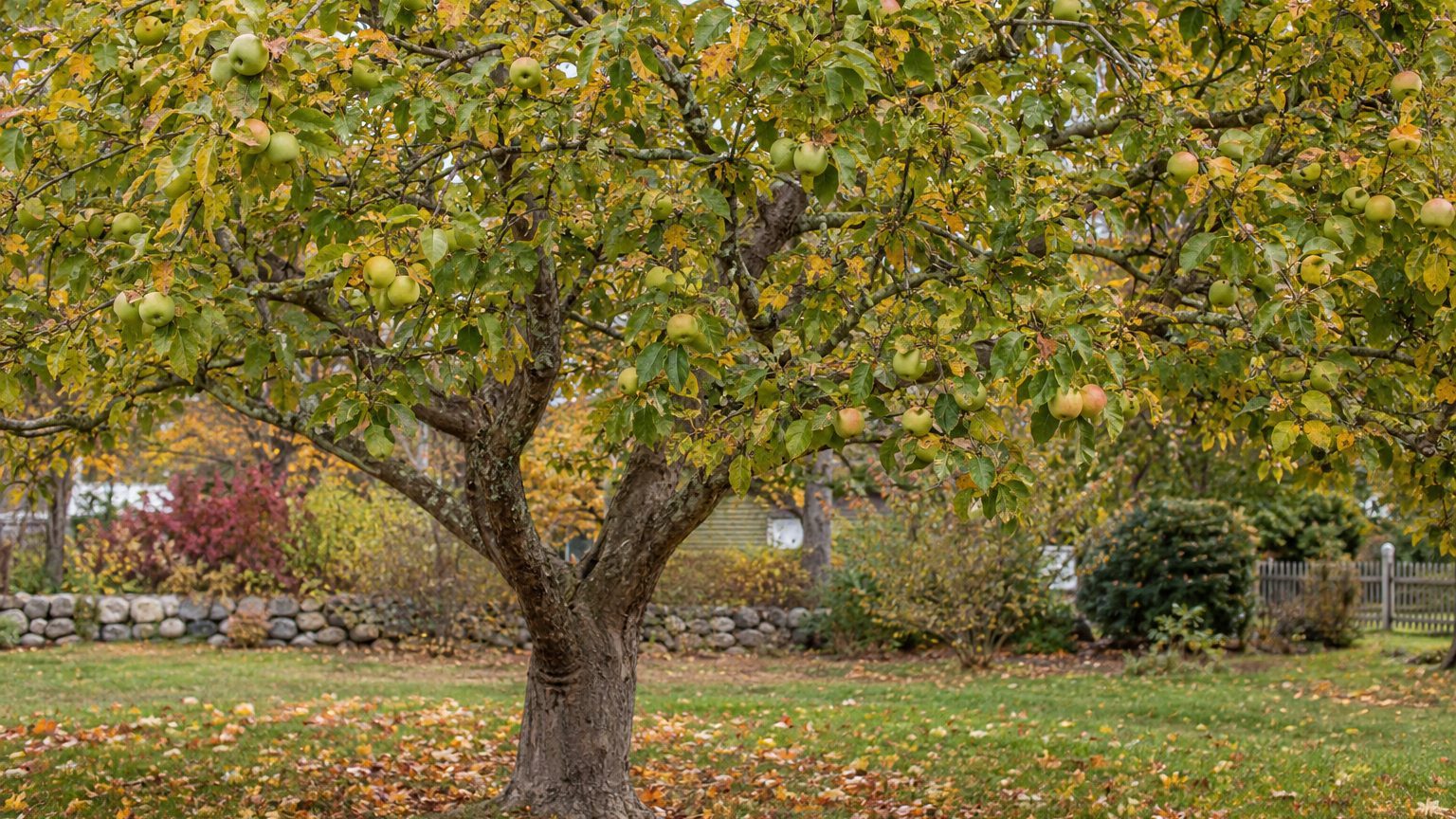
Branches bowed under a heavy crop of small apples or peaches are a sign the tree set more fruit than it can finish. Pulling off some of the young fruit by hand in spring leaves the rest room to grow bigger, sweeter and easier to pick. Apples and peaches follow similar rules, with different spacing.
Why Should You Thin Fruit?
Thinning makes sense for nearly every apple, pear, peach, nectarine, plum and apricot tree, because a tree that sets a full crop spreads its energy across too many fruits. Stone fruits and pome fruits need different spacing, and local climate shifts the timing.
Heavy loads also hurt the tree itself. On young trees, a crop that is too large has been observed to cause limb decline, limb death and stunted growth, so a young tree should carry very little fruit.
The timing depends on your climate, and the state selector just below this section leads you to the page for your state.
From the almanac
Trees in your state
The dates on this page depend on where you live. Your state's page carries its frost dates, its USDA zones and the year laid out month by month.
Northeast
Southeast
- Alabama
- Arkansas
- Delaware
- Florida
- Georgia
- Kentucky
- Louisiana
- Maryland
- Mississippi
- North Carolina
- South Carolina
- Tennessee
- Virginia
- West Virginia
Midwest
Southwest
West
Pacific Northwest
Canada
How to Thin Apples and Peaches

Start when the fruit is small and work branch by branch, using the size of the young fruit as your signal, with spacing that depends on the fruit.
- Check the size of the fruit before you thin so you act at the right time: peaches and other stone fruits are ready at ¾ to 1 inch across, and apples and pears are ready at ½ to 1 inch.
- Remove fruit by hand, snapping or pinching it off at the stem, so that you do not tear the branch or damage the fruit you want to keep.
- Reduce apples and pears to one fruit per cluster, so that the remaining apple has no neighbor pressing against it.
- Space apples about 6 to 8 inches apart along the branch, so that each one has room to swell.
- Space peaches wider than apples, and pick the spacing by how heavily the tree set: in Oregon 6 to 10 inches is common, while in Pennsylvania 8 to 12 inches is used.
- Remove the smallest, misshapen or damaged fruit first, and keep the largest, so that the remaining crop is the best the branch can produce.
A simple field test for peaches is the size of a quarter, which arrives about three to four weeks after bloom. Where the tree was pruned lightly and carries many fruiting shoots, lean toward the wider spacing of at least 8 inches between fruit.
Thinning by Tree Type
Stone fruits and pome fruits do not share one rule. Peaches and nectarines need the widest gaps, while apples and pears are thinned by cluster first and then by distance.
Plums and apricots sit between the two in spacing, since their fruit is smaller than a peach.
| Tree Type | What changes | Why it matters |
|---|---|---|
| Apples and pears | One fruit per cluster, clusters 6 to 8 inches apart | Fruit in a cluster crowds its neighbors, so the survivor sizes up |
| Peaches and nectarines | 3 to 5 inches in one desert guide, 8 to 10 inches in a Pennsylvania guide | Wider gaps give larger fruit, and the right gap depends on how many set |
| Plums | Set the fruits 4 to 6 inches apart, and break up any clusters. | Small fruit still needs space, and clusters rub and shade each other |
| Apricots | Leave 2 to 4 inches of space along each branch. | Small fruit can sit closer than peaches without crowding |
For you, this means walking the tree with the fruit type in mind rather than one spacing for the whole yard. A peach and an apple growing side by side get different gaps, and the plum or apricot gets tighter ones.
Fruit Thinning Mistakes to Avoid
Thinning Too Late
Fruit left on the branch past the early window has already drained the tree, and removing it later helps less. In Oregon the work is usually done within the first 20 days after petal fall, and in Pennsylvania within about 2 to 4 weeks after bloom. Watch the fruit size and start while it is still small.
Leaving Clusters Intact
Skipping the cluster step leaves several apples or plums pressed together, and they stay small and can crowd the branch. Take each cluster down to one fruit, then check the distance to the next. For plums, break the clusters up by hand as you space them.
Letting Young Trees Fruit Heavily
A young tree that carries a full crop can stunt or lose limbs. Where trees are young, limit the fruit to one per tree or major limb. The tree puts that energy into growing the structure that will carry bigger crops in later years.
When to Thin Fruit in Your State
The sign to watch is the fruit itself. When the young fruit reaches the size of the tip of your finger, or about the size of a quarter on peaches, it is time to start. Calendar months shift with climate, so each state has its own window.
- Open your state’s page to find the months that fit your local spring.
- Check it before bloom, so you know when to start walking the branches.
- Go out when the fruit reaches finger-tip size, and thin one branch at a time.
Common Questions
Can You Thin Fruit Too Much?
Yes, though it is rare for a home tree. Stick to the spacing for your fruit, and when a tree set very few fruits, the wider end of the range is not needed.
Do You Need Tools to Thin Apples and Peaches?
Hands are enough. Pinching or snapping off young fruit near the stem works well, and it avoids tearing the spur or branch that will bear fruit again.
Should You Thin Fruit That Has Dropped on Its Own?
Natural drop happens early and removes some of the crop, but it rarely thins enough. Walk the branches after it ends, then space the fruit that is left.