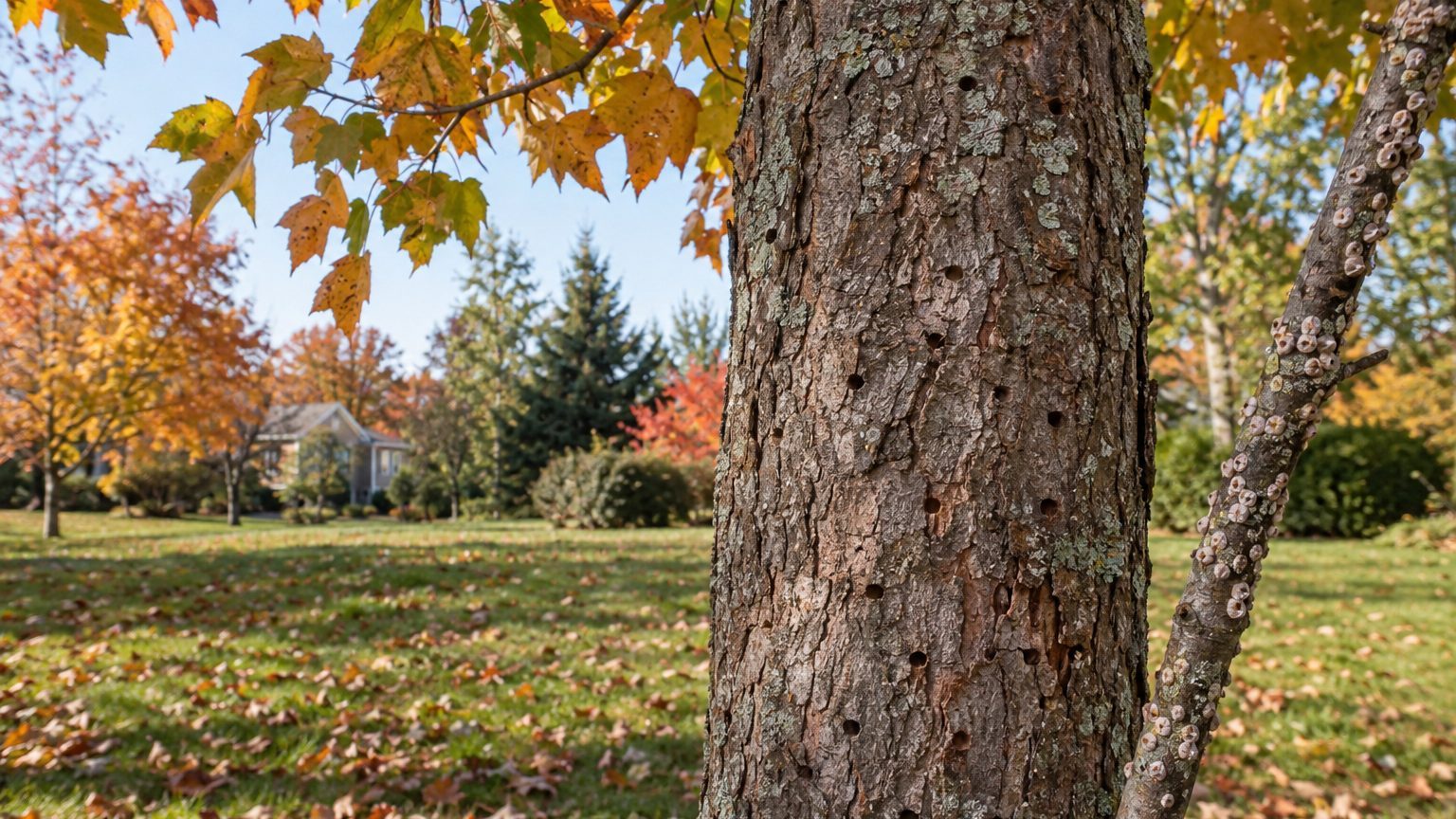
Tiny holes at the base of a trunk, sticky leaves, or ragged foliage hanging in silk tents all point to insects feeding on a tree. Borers, scale and caterpillars are the three groups most yards meet, and each one shows up at a different point in the season. Matching the sign to the pest tells you which job to do and when.
Which Insects Damage Trees?
Across the country, three groups do most of the damage: borers that tunnel under the bark, scale insects and aphids that suck sap, and caterpillars that eat leaves. Which one you meet depends on the kind of tree and on the climate, since fruit trees, shade trees and citrus each attract their own set.
Borers are the ones that kill. The peach tree borer, a white worm about 1 inch long, works under the bark and below the soil line, and it often injures or kills the tree. Young citrus is different, because trees 3 years old or more can withstand the leaf damage from citrus leafminer.
The state selector just below this section takes you to the page for your own state.
From the almanac
Trees in your state
The dates on this page depend on where you live. Your state's page carries its frost dates, its USDA zones and the year laid out month by month.
Northeast
Southeast
- Alabama
- Arkansas
- Delaware
- Florida
- Georgia
- Kentucky
- Louisiana
- Maryland
- Mississippi
- North Carolina
- South Carolina
- Tennessee
- Virginia
- West Virginia
Midwest
Southwest
West
Pacific Northwest
Canada
How to Find and Control Tree Pests

Pests arrive in a rough order through the year, so the gestures that work follow the same order, starting with a close look at the bark and ending with protecting the trunk.
- Walk around each trunk and check the base for gum, sawdust-like frass or small holes, so that borers working below the soil line are caught before they girdle the tree.
- Look for bagworm bags on evergreens and pick them off by hand, because each bag holds up to 300 eggs that spent the winter inside it.
- Watch the bark on warm sunny days, since adult pear psylla start moving around once temperatures turn mild, and that is the cue to act on them.
- Knock aphids off with a stiff spray of water every 2-3 days until their numbers decline, so that soft new growth is protected without any chemical.
- Treat scale with insecticidal soap or horticultural oil, using a 1% oil mix for a minor or moderate infestation, so that the crawlers are smothered while the tree is spared.
- Water deeply, giving established trees 2-4 inches of water a month, so that a stressed tree does not become the easy target borers look for.
Where a moderate scale problem is stubborn, the soap or oil can be repeated every 5 to 7 days. For fruit trees in the warm, humid Southeast, a complete fruit tree spray goes on every 14-21 days from post-bloom up to three weeks before harvest. Apple maggot larvae are white, legless and headless, and quite small even when mature, so you will rarely see them before the fruit is already damaged.
Tree Pests by Tree Type
The pest list changes with the tree. Fruit trees draw borers, maggots and psylla, while evergreens carry bagworms and young citrus deals with leafminers.
Each kind of tree also has its own weak point, the trunk base, the leaves or the fruit, and that is where to look first.
| Tree Type | What changes | Why it matters |
|---|---|---|
| Peach | Borer larva about 1 inch long feeds under bark and below the soil line | The tree can be injured or killed, so check the trunk base |
| Apple | Maggot larvae feed inside the fruit | The pest lives inside the fruit, so it is hard to spot |
| Citrus | Trees 3 years old or more tolerate leafminer damage to leaves | Only young trees need close protection |
| Pear | Adult psylla move on the bark on warm sunny days | Warm sunny days signal the time to treat |
| Evergreens | Bagworm eggs overwinter, up to 300 per bag | Removing bags in winter stops the next generation |
For you, this means scouting the part of the tree each pest uses. Check trunks on peaches, fruit on apples, bark on pears and bags on evergreens, and leave mature citrus alone over a few chewed leaves.
Tree Pest Control Mistakes to Avoid
Leaving Wraps on Too Long
Tar paper, building paper, magazine sheets and aluminum foil can shield a trunk, but left on, they trap moisture and shelter insects against the bark. Take them off in early spring, as growers in Virginia advise, so the bark can breathe.
Ignoring Wild Hosts Nearby
Disease and pests move in from wild trees at the edge of your property. Black knot control in New Hampshire calls for a border at least 600 feet wide free of wild hosts, which shows how far the source can be from the tree you are fighting for.
Mistaking Animal Damage for Insects
Gnawed bark and girdled stems often come from voles, which can kill trees as large as 3-4 inches in diameter. A shelter at least 12-18 inches high, staked tightly to the ground, stops them, so look for chew marks before reaching for a spray.
Tree Pests in Your State
The sign that triggers action is the first damage you can see: gum or frass at the trunk base, sticky leaves, or bags and silk tents in the branches. Each state has its own months for acting on these signs.
- Your state page lists the months when borers, scale and caterpillars usually appear where you live.
- Check it before the season starts, then walk your trees when those months arrive.
Common Questions
How Can You Tell Borer Damage from Scale?
Borers leave holes and gum at the trunk base, often with weak top growth. Scale shows up as small bumps on twigs with sticky leaves below.
Can an Emerald Ash Borer Reach the West?
Yes. It was found in Forest Grove, Oregon, in June of 2022, and had not previously been found west of Colorado.
Do Tree Shelters Keep Pests Away?
They help against voles and deer. In Pennsylvania, short shelters 18-24 inches high may attract fewer wasps than traditional 4-foot ones and so help avoid bear damage. In Alaska, a wire fence at least 8 feet high protects an orchard better over the long term.