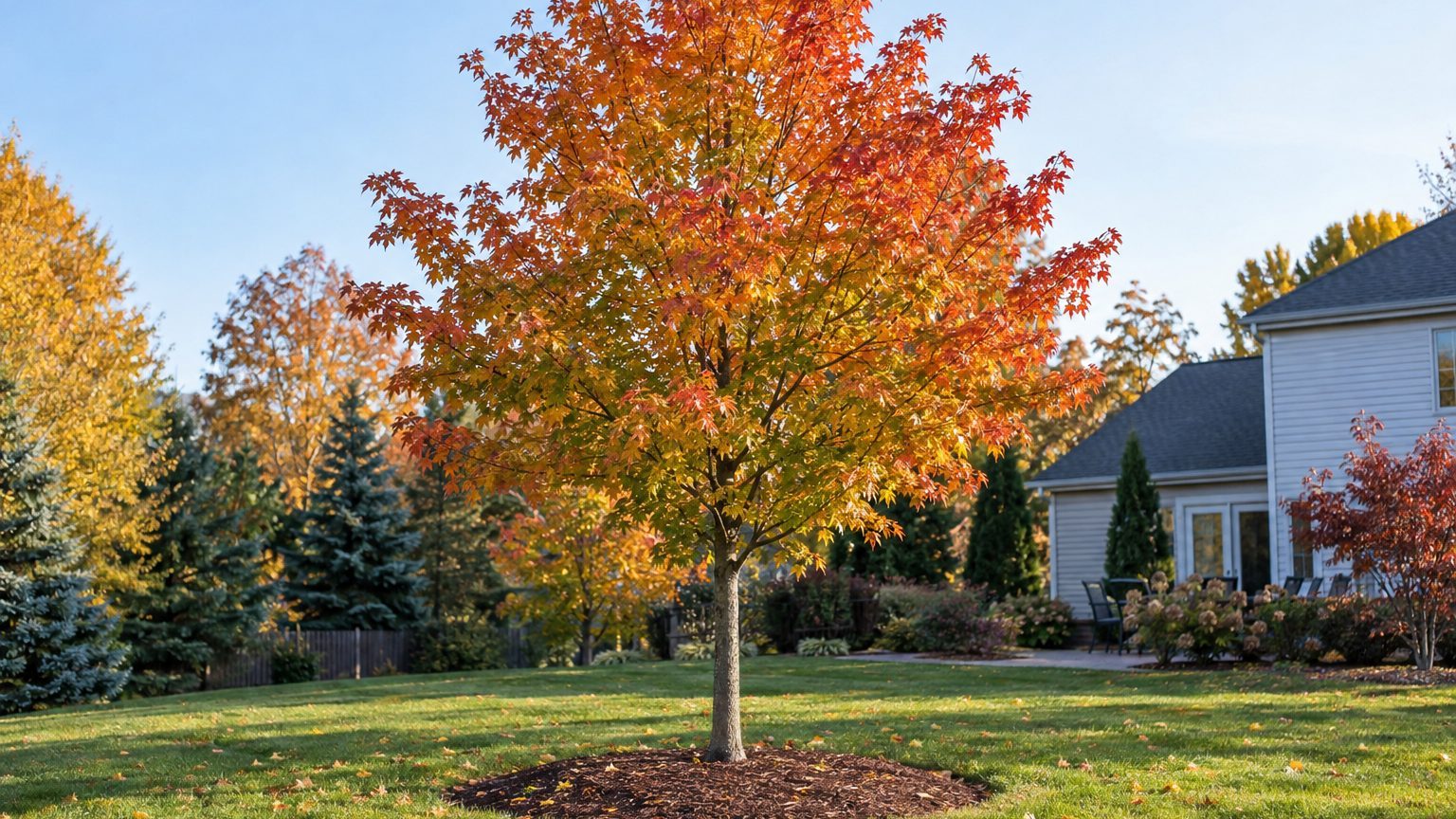
A young shade tree that fills in over a few summers feels like a bargain, and often it is, until a heavy limb drops in a storm or the tree fades early. Fast-growing shade trees trade speed for brittle wood and a shorter life. The type you plant decides how much of that trade you accept.
Which Shade Trees Grow Fastest?
Fast growing is often defined as a tree that matures in 20 to 30 years, and the trees that fit that description grow quickly enough to cast useful shade within a few seasons. How fast yours gets there depends mostly on the type of tree and the climate around it.
Some fast growers are tall and narrow, others spread wide, and a few are short-lived. Soil, water and the length of the warm season set the pace for each. A tree in rich soil with regular water outruns the same tree in a dry, compacted corner.
The state selector just below this section leads to the page for your state, where the planting months and local care are laid out.
From the almanac
Trees in your state
The dates on this page depend on where you live. Your state's page carries its frost dates, its USDA zones and the year laid out month by month.
Northeast
Southeast
- Alabama
- Arkansas
- Delaware
- Florida
- Georgia
- Kentucky
- Louisiana
- Maryland
- Mississippi
- North Carolina
- South Carolina
- Tennessee
- Virginia
- West Virginia
Midwest
Southwest
West
Pacific Northwest
Canada
How to Choose a Fast-Growing Tree That Lasts

Choosing well starts before you buy, and the steps run in a clear order.
- Decide what the tree is for, such as afternoon shade on a patio or a screen from the street, so that you match the tree to the job instead of to the fastest growth rate on the tag.
- Pair a quick grower with a slower, longer-lived tree, so that the fast one gives shade while the other matures and takes over.
- Before you dig, check how wide the tree will be at maturity and place the hole well away from the house; a baldcypress, for example, spreads 40–50 ft wide and needs that same distance from underground structures.
- Plant in spring where the ground thaws, timing it near Arbor Day in Indiana, so that roots can settle before summer heat arrives.
- Prune young trees on a regular schedule, so that the branching develops a sound structure before the wood gets heavy.
Speed has a price in lifespan. A good tree in a suburban neighborhood typically lives 30 to 50 years, and trees bought for speed often fall short of that. Planting a long-lived neighbor alongside makes sure the yard is never left bare when the fast one gives out.
Growth Rate by Tree Type
Trees sold as fast growers do not all behave alike. Some race upward, some spread wide, and a few burn out early. Even oaks, which have a slow reputation, can surprise you.
Size at maturity matters as much as speed, because a tree that grows quickly also ends up big.
| Tree Type | What changes | Why it matters |
|---|---|---|
| Very fast shade tree | In just 3 years it can reach 30 feet. | Shade arrives while you are still enjoying the yard |
| Wide, spreading fast grower | Reaches 60′ tall by 60′ wide | It needs room on every side, not just overhead |
| Tall, upright fast grower | Reaches 75′ tall by 45′ wide, taller than wide | It suits a spot where height is welcome and width is limited |
| Oaks | Chinquapin and red oaks grow more than 2′ per year, and other trees can put on as much as two feet per year when conditions are good. | They offer quick growth with long-term benefits |
| Short-lived trees | A Bradford pear quits before 20 years, and a willow lasts less than 50 years | You will be replacing them sooner and caring for them more |
For most yards, this means the fastest tree is rarely the best fit. An oak that keeps pace with the quick growers while living far longer gives you the shade sooner and spares you a replacement later.
Fast-Growing Tree Mistakes to Avoid
Planting Beside the House
Fast-growing trees and trees with weak, narrow crotch angles drop limbs more easily. A tree planted right beside the roofline puts that risk over your shingles and windows. Set these trees well away from houses and other buildings, and favor trees with strong branch attachment where limbs could land on something you care about.
Planting Near Sheds and Power Lines
Short-lived trees need more maintenance as they age, and when one fails it takes whatever is under it. Sheds, power lines and fences sit in the danger zone. Keep these trees in open ground and save the spots near structures for longer-lived species.
Skipping Early Pruning
A very fast-growing tree can need annual pruning for the first 10 years to develop good structure. Left alone, it grows tight, crowded branching that splits under snow or wind. Begin shaping the tree when it is young, while cuts are small and heal quickly.
Fast-Growing Trees in Your State
The sign to plant is soil you can dig and a tree that is still dormant or just starting to grow, before summer heat sets in. Planting months vary from state to state, and each state’s page lays them out.
- The state page gives the planting months for your area, so check it before you buy a tree.
- It also covers local care, which is worth reading before the tree goes in the ground.
Common Questions
Why Do Trees in Yards Die Sooner than Trees in the Woods?
Yard trees grow in highly manipulated landscapes, with compacted soil, mower and trimmer nicks, and changed drainage. Trees in their natural habitat tend to live much longer lives, so a yard tree starts at a disadvantage whatever its species.
What Is a Weak Crotch Angle?
It is a tight V where two branches meet, often with bark pinched in the joint. A branch that joins at a wider angle holds better, so look for that when you choose a tree and when you prune.
How Can You Tell a Fast-Growing Tree Has Outgrown Its Spot?
Branches that scrape the roof or reach toward utility wires are one sign, and roots lifting a walk or driveway near the trunk are another. Together they point to a tree that needs a pro’s look, or a different tree next time.