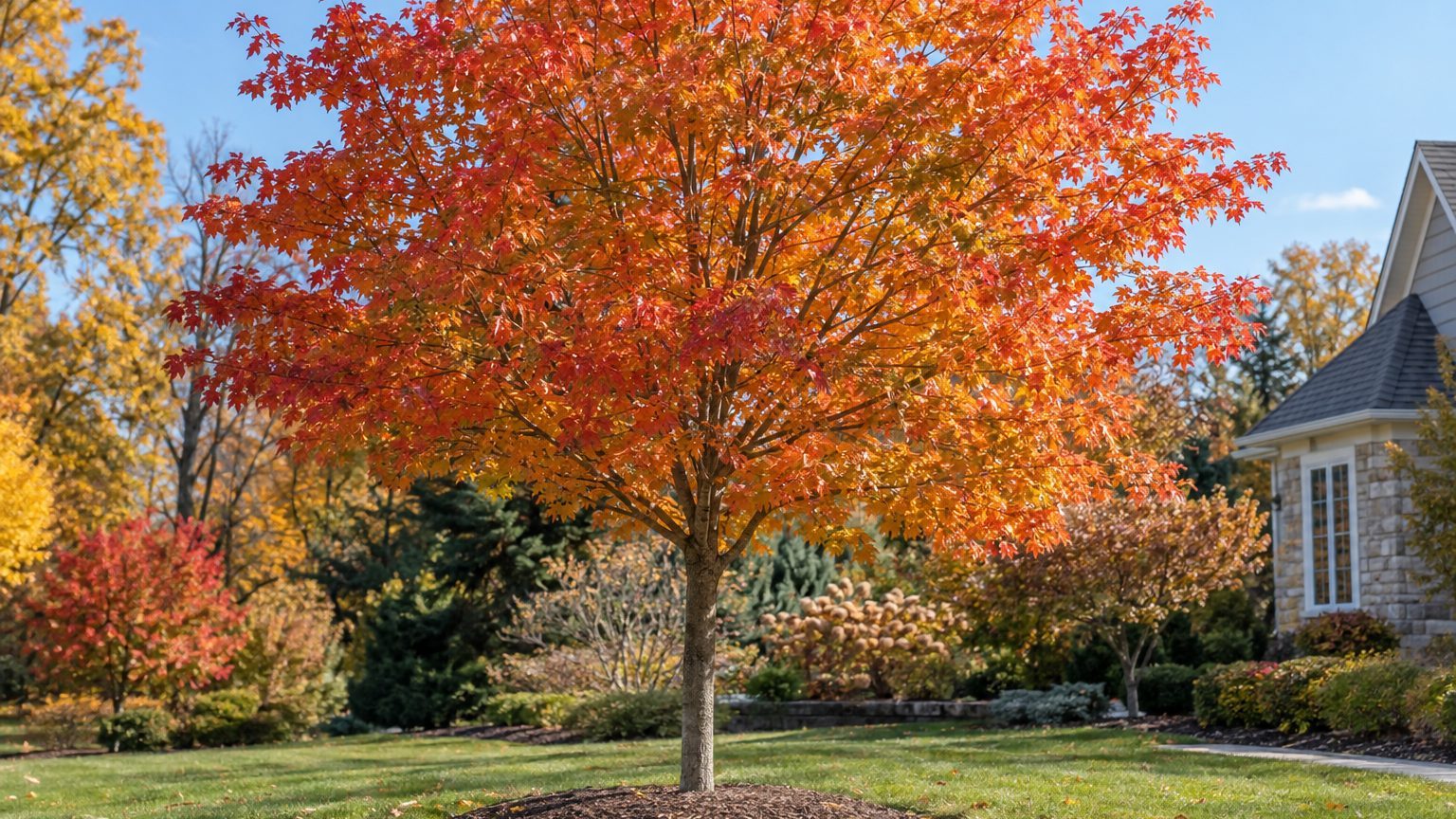
A tree you plant in a small hole today becomes a roof, a shadow and a root system within a few decades, so the choosing matters more than the digging. Start with the size the tree reaches at maturity, then match it to the sun, the soil, the winter cold and the space around your house.
Which Tree Is Right for Your Yard?
The right tree is the one whose full-grown size fits your space and whose needs match your sun, soil and winter lows. A large shade tree and a small fruit tree ask for very different things, and climate decides which species will live through your coldest nights.
Fruit trees add their own demands. In cold-winter areas, avoid planting a peach in a spot that gets bitterly cold in winter, whereas a nut tree grower in a milder part of the Northeast deals with minimums that never fall very far below zero.
The state selector just below this section leads to the page for your state, where the planting months and local conditions are laid out.
From the almanac
Trees in your state
The dates on this page depend on where you live. Your state's page carries its frost dates, its USDA zones and the year laid out month by month.
Northeast
Southeast
- Alabama
- Arkansas
- Delaware
- Florida
- Georgia
- Kentucky
- Louisiana
- Maryland
- Mississippi
- North Carolina
- South Carolina
- Tennessee
- Virginia
- West Virginia
Midwest
Southwest
West
Pacific Northwest
Canada
How to Choose a Healthy Tree at the Nursery

Good choosing happens in a sequence, starting at home with a tape measure and ending at the garden center with the tree in front of you.
- Look up before anything else, so that overhead wires never end up inside a mature crown. Where wires run across a property, large shade trees stay at least 25 feet away, and a tree planted directly under them should finish under 30 feet tall.
- Measure the distance to the house and to neighboring trees, so the crown has room without crowding walls or roofs. A shade tree sits 15 to 20 feet from the foundation where it is planted in Arkansas, while lemon trees in Florida want 15 to 25 feet or more from buildings and other trees.
- Check the sun, because fruit trees do best in full sun with good air movement. Watch the spot through a day and skip corners that sit in shade for most of it.
- Test the soil depth with a spade or probe, so roots have somewhere to go. Fruit trees do well in soil at least 4 feet deep in California, while Oregon guidance asks for rooting to at least 3 feet, and well-drained ground with 18 inches above any ledge or hardpan suits fruit trees in Maine.
- Confirm the winter hardiness of the species against your lowest winter temperatures, so a hard freeze does not undo years of growth.
- Inspect the root ball at the nursery, because a tree with a well-sized ball recovers faster after planting. For a tree, allow 12 inches of root ball width for every inch of trunk diameter, measured 6 inches above the root flare.
Call 811 before any digging so buried utilities stay untouched. If a septic field sits nearby, keep trees at least 5 to 10 feet from its edge, and more where you can manage it.
Choosing a Tree by Tree Type
Tree types differ in how much room they need and how much cold they take. Size is the first thing to sort out, because it sets the distance from the house and from the wires.
Soil and climate come next. Some species wait on warm winters, others on well-drained ground, and the facts below cover the types that have clear numbers.
| Tree Type | What changes | Why it matters |
|---|---|---|
| Large shade tree | Stays 25 feet from overhead wires and 15 to 20 feet from the foundation | Branches and roots grow into lines and walls as the tree matures |
| Medium or small tree near lines | Medium trees sit 15 to 20 feet to the side of electric lines, large trees 30 feet, and trees under distribution lines stay 25 feet or less | A mature height kept low avoids constant cutting by the utility |
| Lemon | Full sun, 15 to 25 feet or more from buildings and other trees | Fruiting wood needs sun and air on every side |
| Jackfruit | 25 to 30 feet from other trees and structures if little pruning is planned | Unpruned crowns grow very wide |
| Peach | A south-facing site with a gentle slope, and not a spot that gets bitterly cold in winter | Cold and slope decide whether buds survive and whether you can work the ground |
For you, this means picking the tree type last, after the site is measured. Plums, nut trees and other fruit trees follow the same logic: full sun, deep and well-drained soil, and winter lows the species can take.
Tree Buying Mistakes to Avoid
Planting a Big Tree Under Wires
A small sapling hides how tall it will get, and high voltage lines usually run on poles 30 to 35 feet tall. A large tree beneath them ends up cut back by the utility, which leaves a lopsided crown.
Choose a species that stays under 30 feet where it must go under wires, or move the large tree 25 feet away from them.
Crowding the House
A tree set too close to the foundation sends branches onto the roof and roots toward the walls. Spacing is easy to fix before planting and hard to fix after.
Place shade trees 15 to 20 feet or more from the foundation, and give fruit trees like jackfruit even more room when pruning is minimal.
Ignoring Soil and Cold
A tree in shallow or soggy ground struggles, and a species rated below your winter lows can lose its buds. Both problems come from skipping the homework.
Test the soil depth first, and sample the soil 6 to 8 inches deep every two to three years where fruit trees are growing, as is advised by local gardening experts.
Best Trees to Plant in Your State
The sign that it is time to plant is soil you can work and a tree that is dormant or ready to root. The planting months for each state sit on that state’s page.
- Open your state page to see the planting months that suit your climate.
- Go during the dormant season or when the ground is workable, with your site measurements in hand.
Common Questions
How Far Should a Tree Be from Your House?
For a shade tree, 15 to 20 feet from the foundation is a common guide in Arkansas. Larger or wide-spreading trees need more room.
Can You Plant a Tree Near a Septic System?
Keep trees at least 5 to 10 feet from the septic field edge, as advised in Nebraska, and farther if you can. Roots search out moisture.
What Size Root Ball Should a Nursery Tree Have?
Pick a root ball that is 12 inches across for every inch of trunk diameter, measured 6 inches above the root flare. A ball that small for the trunk means roots were cut away.