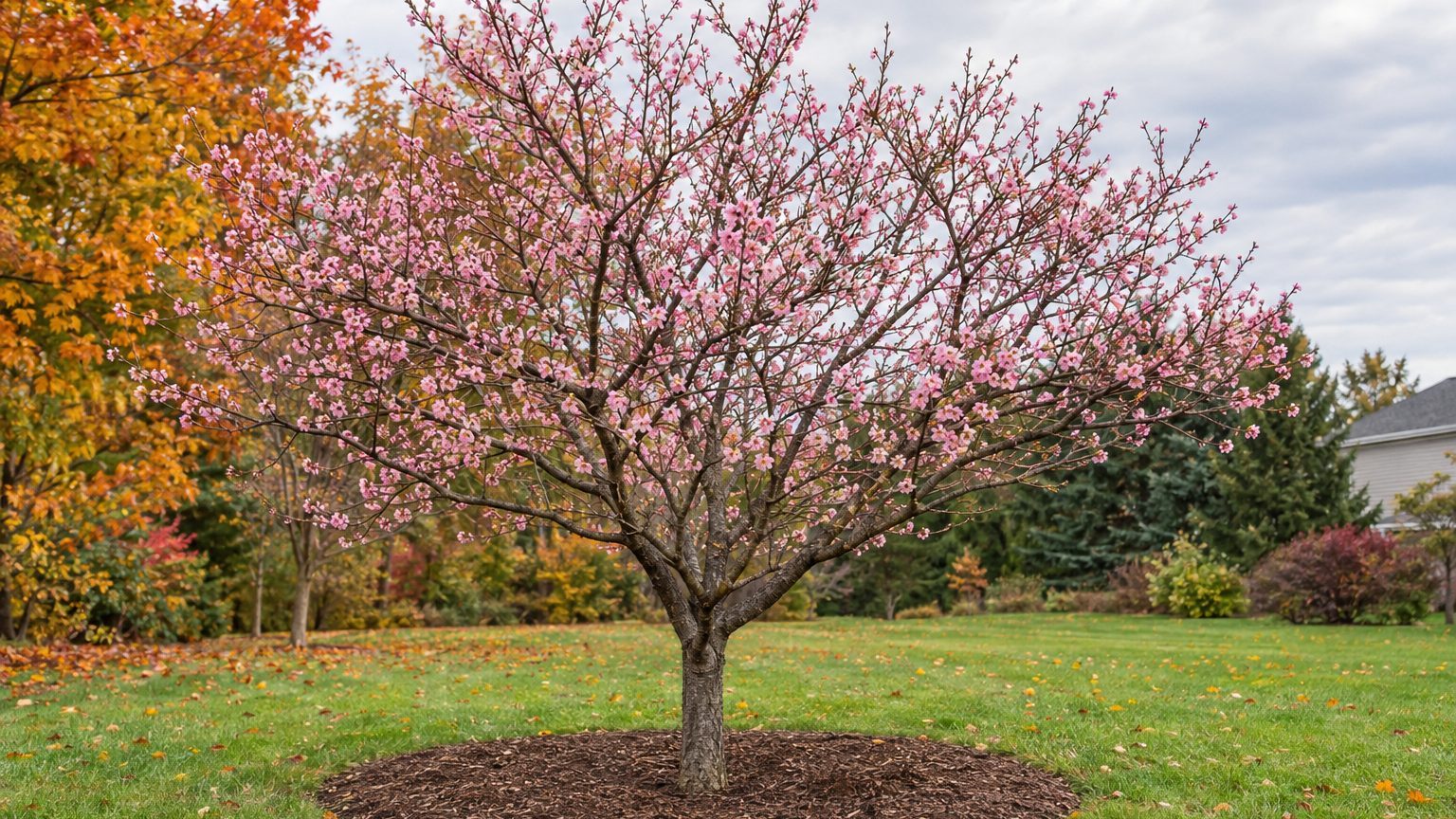
Fruit trees that drop their leaves in fall are not simply resting through winter. They are counting cold, and the count decides whether buds open evenly in spring or sputter. Chill hours are that count, and knowing the number for your yard tells you which apple, peach or plum to plant.
What Are Chill Hours?
In Nevada guidance, chill hours are counted while a dormant fruit tree experiences temperatures between 32 and 45 degrees Fahrenheit. Each kind of tree, and each variety, needs a certain total before it will bloom normally and set fruit. Mild winters supply fewer hours than cold ones.
Cold winters generally provide more chill than mild winters. Where winters are mild, such as Florida or the low desert of Arizona, the total falls short for many trees, and the choice of variety matters far more.
The state selector just below this section takes you to the page for your state.
From the almanac
Trees in your state
The dates on this page depend on where you live. Your state's page carries its frost dates, its USDA zones and the year laid out month by month.
Northeast
Southeast
- Alabama
- Arkansas
- Delaware
- Florida
- Georgia
- Kentucky
- Louisiana
- Maryland
- Mississippi
- North Carolina
- South Carolina
- Tennessee
- Virginia
- West Virginia
Midwest
Southwest
West
Pacific Northwest
Canada
How to Match a Fruit Tree to Your Chill Hours

Matching a tree to your winter takes a few steps, done in this order before you buy.
- Use the definition supplied with your local chill-hour figure, so the rating on the tag and the total for your yard are calculated on the same basis.
- Find out how much winter cold your area usually gets from your county extension office, since a local figure beats a guess from the next state over.
- Look at the total built up by January 1st, which gives a useful picture of the winter so far, as peach growers in Florida do.
- Choose varieties that need fewer hours than your winter delivers. In the Arizona low desert, where most areas average 300 to 400 chilling hours per year, varieties needing less than 400 hours give a full crop almost every year.
- Check the variety label for its rating, and pass on any tree that asks for more cold than your yard provides, because it will bloom poorly no matter how well you care for it.
- In the Arizona low desert, favor early-maturing, self-pollinating varieties when space is limited.
Georgia growers sort peaches into three bands. Low chill means under 600 hours, moderate runs 600 to 750 hours, and high means 750 to 900 hours. A rating on a tag fits into one of those bands, which makes comparing varieties much easier.
Chill Needs by Tree Type
Apples and peaches both count cold, but they are not equally easy to place in a mild climate. Some apple varieties do well on about 300 to 400 hours below 45 degrees, which suits North and north-central Florida.
Peaches vary even more from variety to variety, so the label on the individual tree counts for more than the fruit type alone.
| Tree Type | What changes | Why it matters |
|---|---|---|
| Apple | Some varieties need about 300 to 400 hours below 45 degrees | They can fruit in North and north-central Florida |
| Peach, low chill | One Florida variety, ‘FloridaCrest’, needs 350 chill hours | It suits North Florida winters |
| Peach, Texas Zest series | Needs range from 500 to 600 chilling units, depending on the variety. | Choose the one that fits your winter |
| Peach, White Delight series | White Delight One and White Delight Two need 550 hours; White Delight Three and White Delight Four need about 700 hours. | Variety within one series changes the fit |
For you, this means reading the rating on the exact variety, not the tree type. Peaches from the same series can have different chill requirements, enough to separate a good crop from a poor one in a mild winter. Plums, pears and other deciduous fruit trees follow the same principle, so check each label against your local winter.
Chill Hour Mistakes to Avoid
Buying a Tree That Needs Too Much Cold
A tree rated for more hours than your winter supplies may leaf out late, bloom late and set little fruit. Fruit that does form can be small and misshapen, a problem growers call buttoning. Check the rating before buying and choose a lower-chill variety.
Counting Warm Winter Days
Only cool hours count. In Florida guidance, chilling hours accumulate when temperatures drop below 45 degrees. Judge a winter by its cold hours, not by how long it lasts, and ask your county extension office for the typical local count.
Trusting Another State’s Number
A chill figure written for one place applies only there. The low desert of Arizona averages 300 to 400 hours, while the Verde Valley, at 3,000 to 4,500 ft, sits in a different climate. Use figures from your own area, and let local growers guide the final pick.
Chill Hours in Your State
The sign to act on is a variety label that asks for more cold than your winters give. When you see that, pick a lower-chill tree. Each state page covers the months for planting and dormant-season care in that state.
- Open your state page to see when to plant and when to prune dormant fruit trees where you live.
- Visit it before you shop for trees, in the months when bare-root stock is sold.
Common Questions
How Do You Find Out How Many Chill Hours Your Yard Gets?
Your county extension office can give the typical winter total for your area. Local orchards and garden centers often know it too, since they choose varieties to match.
Can a High-Chill Tree Grow in a Mild-Winter Area?
It can grow, but it may leaf out and flower late, set less fruit and give lower-quality fruit. Low-chill varieties are the safer choice where winters are mild.
Do Nut Trees Need Chill Hours Too?
Yes. California guidance says deciduous fruit and nut trees need a certain number of hours below 45°F to produce, so check the rating before planting.