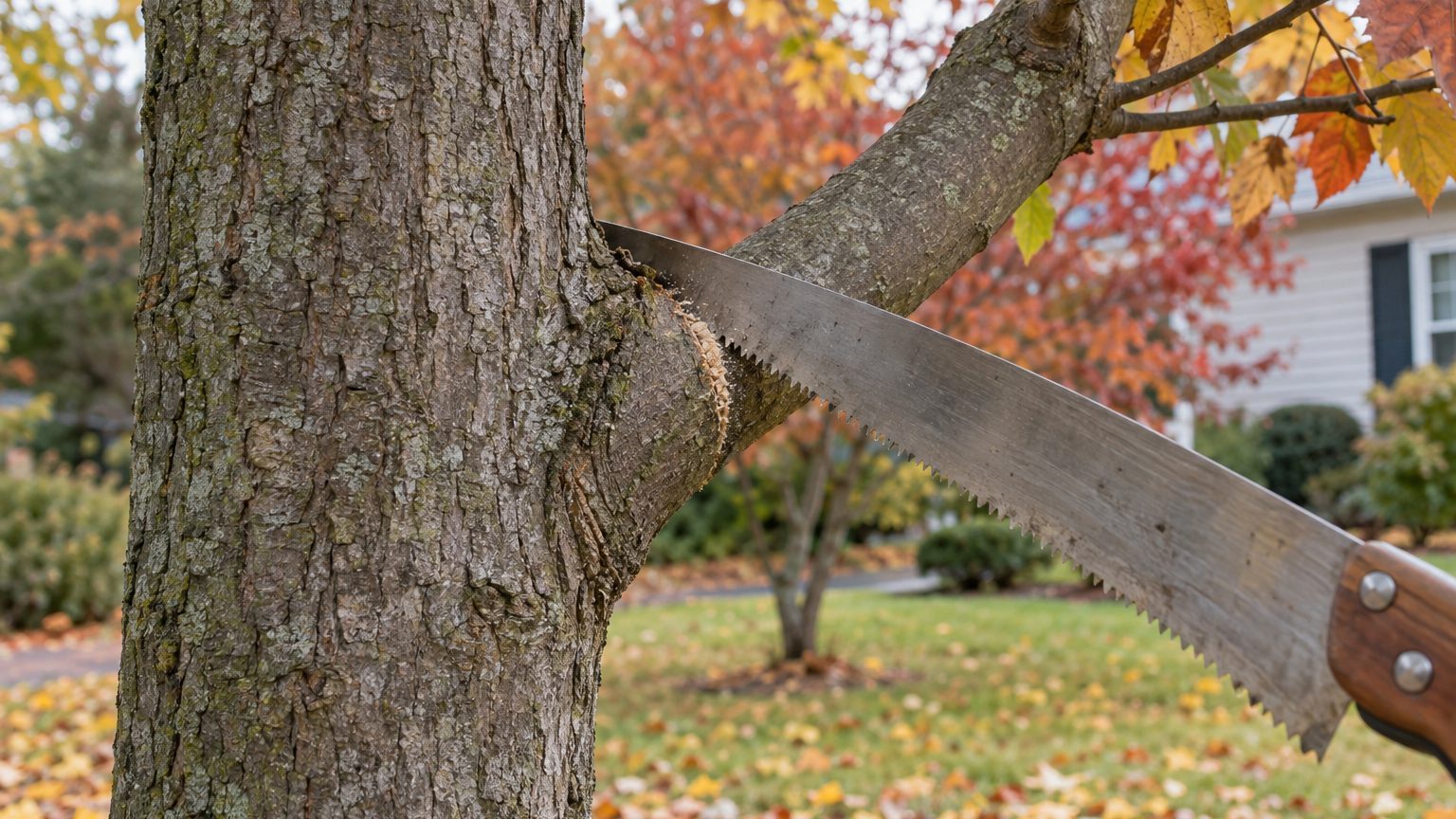
Bare branches in winter and a crown that has crowded itself by midsummer both tell you a tree needs attention. Shade and ornamental trees are pruned in the dormant season or just after their flowers fade, and fruit trees while dormant.
When Is the Best Time to Prune Trees?
For most shade and fruit trees, the dormant season, after the hardest cold has passed and before buds open, is the usual window. Flowering trees follow their bloom instead. Climate matters too, since a cold winter calls for waiting longer than a mild one.
Bloom time sorts the flowering kinds. Where summers are hot and humid, trees that flower before June 1 are pruned right after they bloom, while those that flower after June 1 can be pruned just before spring growth. In Colorado, crabapples should be finished by June 1, because next spring’s flower buds start forming in June and July.
The state selector just below this section leads to the page for your state, with the months that fit your climate.
From the almanac
Trees in your state
The dates on this page depend on where you live. Your state's page carries its frost dates, its USDA zones and the year laid out month by month.
Northeast
Southeast
- Alabama
- Arkansas
- Delaware
- Florida
- Georgia
- Kentucky
- Louisiana
- Maryland
- Mississippi
- North Carolina
- South Carolina
- Tennessee
- Virginia
- West Virginia
Midwest
Southwest
West
Pacific Northwest
Canada
How to Prune a Tree Branch

Work in the order below, and a branch comes off cleanly without tearing bark or leaving a stub that rots.
- Choose the season by the tree: dormant for most shade trees, just after bloom for spring flowerers, so that you do not cut away this year’s or next year’s flowers.
- Make your first cut on the underside of the branch, a short way out from the trunk, so the branch’s weight can’t rip a strip of bark down the trunk as it falls.
- Make a second cut from the top, a little farther out, to drop the limb, so that the heavy part is gone before the final cut.
- Cut the remaining stub back at the branch collar, the slightly swollen ring where branch meets trunk, so that the tree can seal the wound itself.
- Follow the natural slope of the collar, which usually sits at a slight angle, and don’t cut a new bevel where there isn’t one, so the wound stays small.
- Be gentle with a young tree, since removing more than 25% of its canopy in one year deprives it of leaf area.
Some trees, such as maples and birches, bleed sap heavily when cut in late winter. The flow looks alarming but does little harm, and pruning after the leaves have fully opened avoids it. Oaks need separate care. Prune them while dormant and keep fresh wounds to a minimum, because a cut during the growing season can let in the fungus behind oak wilt. If leaves turn brown and drop in summer, ask your county extension office before you cut more.
Pruning by Tree Type
Shade trees, fruit trees and spring bloomers do not share a calendar. What each tree does with its buds decides when the saw is safe.
Spacing matters as much as timing. Strong side branches, called scaffolds, need room to grow without crowding the ones above and below them.
| Tree Type | What changes | Why it matters |
|---|---|---|
| Large shade trees | Leave roughly 18 to 24 inches between scaffold branches. | Wide spacing leaves room for heavy limbs to thicken |
| Small ornamental and fruit trees | Scaffold branches 8 to 12 inches apart | Smaller trees carry lighter limbs, so they can sit closer |
| Young apples and stone fruits | Wait until after February 1 in Virginia | Early cuts raise the chance of winter injury |
| Spring-flowering trees | Prune after bloom, finished by June 1 for crabapples in Colorado | Next year’s flower buds form in June and July |
| Summer-flowering trees | Prune just before spring growth | Flowers come on new growth, so late winter cuts cost nothing |
For you, that means checking when a tree flowers before picking a month. A tree that blooms in April and a tree that blooms in July need opposite timing. Walnuts grown for lumber are a special case: side branches come off while they are still small, which keeps the lower trunk clean and free of knots for a good length.
Tree Pruning Mistakes to Avoid
Cutting Too Much at Once
Removing a large share of a young tree’s canopy cuts the leaves that feed it. Hold each year’s cuts to under 25% of the canopy, and spread larger corrections over several seasons.
Pruning Late in Summer
Cuts made close to fall frost push out soft new growth that has no time to harden. In places with hot, humid summers, avoid pruning within 10 weeks of the first hard frost. Wait for the dormant season instead.
Working Near Power Lines
A branch that touches or leans toward a utility line is a job for a professional. Never prune anywhere near a power line yourself; leave that work to a professional. For clearance over walks and roads, permanent branches should sit at least 8 feet high over a sidewalk and 14 feet over a street.
When to Prune Trees in Your State
The sign that triggers the job is the tree itself: buds still closed on a dormant tree, or petals just dropped on a spring bloomer. The months for each state are on that state’s page.
- Open your state page when the leaves have fallen and you want the dormant-season window.
- Check it again in late spring if your tree flowers early, so you can cut just after the bloom.
Common Questions
How Far from the Trunk Should You Make the First Cut?
Make this cut on the underside of the branch, a short way out from the trunk. It acts as a stop, so the bark cannot tear downward when the limb drops.
Do Young Fruit Trees Need Pruning at Planting?
Yes. When planting a bare-root tree, cut it back to 24 to 28 inches above the ground, which encourages the first side branches to grow low and strong.
How Soon Do Fruit Trees Need Regular Pruning?
Pruning is needed every year while the trees are dormant in winter, and it encourages new growth. A newly planted tree can take up to 3 years before the first harvest.