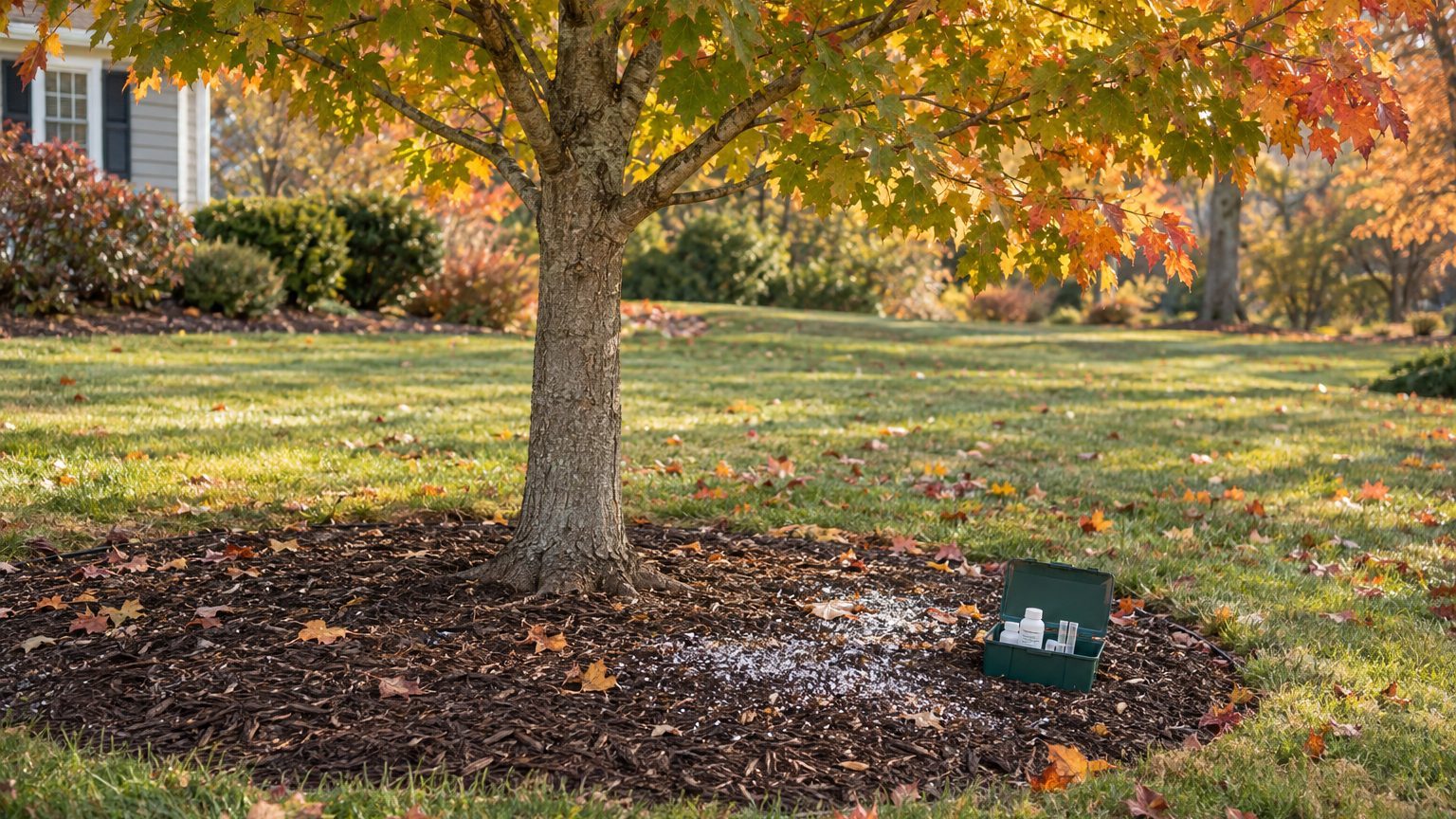
A tree that leafs out green and puts on a good flush of new shoots each spring usually needs no help from a fertilizer bag. Fertilizing trees pays off when growth lags, when the soil is poor, or when a young tree is still settling in.
Do Trees Need Fertilizer?
Often not. A established shade tree in decent soil gets by on what the ground already holds, and extra nitrogen can push soft growth the tree does not need. Young trees, fruit trees and trees in thin or sandy soil are the ones that respond.
Shoot growth is the clearest guide. Where peaches are grown in Utah, a tree that puts on more than 24 inches of new shoot in a year should get no nitrogen at all. Slow growth points the other way.
Climate shifts the schedule too, since feeding follows the growing season. The state selector just below this section leads to the page for your state.
From the almanac
Trees in your state
The dates on this page depend on where you live. Your state's page carries its frost dates, its USDA zones and the year laid out month by month.
Northeast
Southeast
- Alabama
- Arkansas
- Delaware
- Florida
- Georgia
- Kentucky
- Louisiana
- Maryland
- Mississippi
- North Carolina
- South Carolina
- Tennessee
- Virginia
- West Virginia
Midwest
Southwest
West
Pacific Northwest
Canada
How to Fertilize a Tree

Start with the ground, then the calendar, then the measuring cup. Each step below protects the roots from too much or too little.
- Take a soil sample 6 to 8 inches below the surface, so that the test reflects the layer where feeder roots actually work.
- Check last year’s shoot growth against what is normal for the tree’s age, so that you feed only when growth is short. In Pennsylvania, bearing fruit trees should average 12 to 18 inches a year, while young nonbearing trees should average 18 to 30 inches.
- Pick the window: early spring, 4 to 6 weeks before bud break, or late fall after the leaves drop and while the soil is still cool but not frozen, so that roots can take up nitrogen when they are active. That timing was written for Colorado shade trees.
- Measure the dose by area for shade trees. In Colorado, an application should not exceed 0.1 pounds of nitrogen per 100 square feet of planting hole area, which keeps salts from burning roots.
- Halve the dose for small trees under 6 inches in trunk diameter, so that a thin root system is not overloaded. That adjustment comes from Oregon.
- Spread the fertilizer in a circle around the tree. In Virginia, nitrate fertilizer goes on once a young tree is established and growing, about 8 to 10 inches out from the trunk, so that granules never touch the bark.
Water the area afterward so the nutrients move down toward the roots. Newly planted trees are a special case: in zones 4 and 5, establishment lasts about one year for each inch of trunk caliper measured 6 inches above the ground, and a tree still in that phase is busy rebuilding roots, not chasing top growth.
Fertilizing Needs by Tree Type
Fruit trees are fed on a schedule tied to age, while shade trees are fed only when the soil or the growth says so. Within fruit trees, age sets both the dose and the growth you should expect.
Mature peach trees in Ohio, ages 4 to 10 years, get a bigger dose than trees in their second and third years.
| Tree Type | What changes | Why it matters |
|---|---|---|
| Shade trees | Fertilize in early spring or late fall, using no more than 0.1 pounds of nitrogen per 100 square feet. | Light feeding avoids root burn and forced soft growth |
| Young apple trees (1 to 3 years) | About ½ cup of ammonium sulfate (20-0-0) each late winter or early spring | Feeding gives young roots fuel as shoots start |
| Older apple trees | Growth target of 8 to 12 inches a year after seven years in the ground, versus 12 to 15 for younger trees | Slower growth is normal with age, so it is not a signal to add more |
| Young peach trees (2 to 3 years) | In Ohio, put down ¾ pound of 10-10-10 in March, then the same amount again in May. | Two feedings match the spring and early summer growth push |
| Mature peach trees (4 to 10 years) | In Ohio, spread 1 to 2 pounds of 10-10-10 in March, then repeat the application in May. | Bigger trees carry more wood and crop to support |
| Warm-climate fruit trees | Every 8 weeks in the first year, then 2 to 3 times from bloom to just after harvest and pruning | Year-round growth in Florida-type climates means steady feeding |
Sweet cherry follows the same growth logic. In Illinois, nonbearing trees should grow 22 to 36 inches a year and mature trees about 8 inches, so a young cherry that stalls well short of that is the one worth feeding.
Tree Fertilizing Mistakes to Avoid
Feeding a Tree That Is Already Growing Fast
Extra nitrogen on a vigorous tree makes long, soft shoots. For a peach in Utah, growth past 24 inches means skipping nitrogen. Measure last year’s shoots first and hold back when they are long.
Guessing the Dose
Too much fertilizer burns roots, and too little does nothing. A rule used in many commercial apple orchards in Virginia is about ¼ pound of a 16% nitrogen fertilizer, or its equivalent, for each year of the tree’s age since planting. Scale the amount to the tree’s age and the planting area instead of pouring on a handful.
Fertilizing Without a Soil Test
Spring feeding by habit can add nutrients the soil already has. A sample taken 6 to 8 inches down shows what is missing. Feed only for those gaps, and your county extension office can read the results with you.
When to Fertilize Trees in Your State
The sign to act on is the tree itself: buds still tight in early spring, or leaves dropped in late fall while the soil is not yet frozen. Shoot length from the previous year tells you whether to feed at all. Months differ by state, and each state page gives its own.
- Check your state’s page in late winter.
- Measure last year’s shoots on a young or fruiting tree before opening a bag, and go again after leaf drop in fall.
Common Questions
Can You Fertilize a Tree in Summer?
Fruit trees in long-season climates such as Florida can take feedings from bloom through right after harvest. Elsewhere, stick to the spring and late fall windows so new growth hardens before frost.
How Do You Tell If a Tree Is Growing Enough?
Measure the new shoots from the tip back to last year’s bud scars. Compare that length with the numbers for the tree’s age. A tree on target needs no extra feeding.
Should You Fertilize a Newly Planted Tree?
A tree still in its establishment phase is rebuilding roots first. Wait until it is growing steadily, then apply a light dose in a circle away from the trunk.