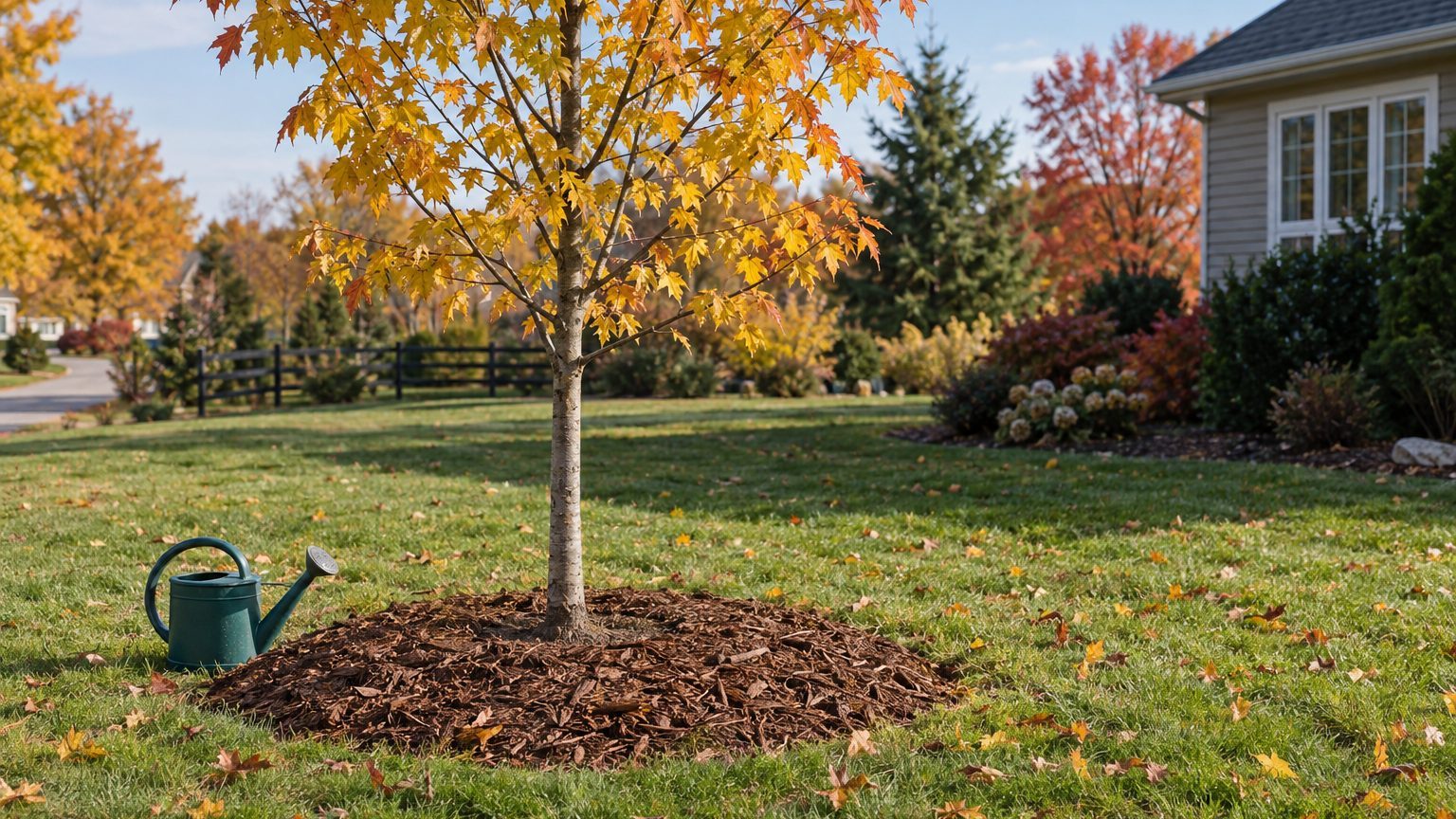
Leaves turn, the air cools, and the soil underneath stays warm, which is exactly what a newly planted tree wants. Fall planting can work because roots keep growing after shoot growth stops. A few trees still do better in spring, and the soil sets the final cutoff.
Is Fall a Good Time to Plant Trees?
Often, but the answer depends on the tree and the local winter climate. In Georgia, fall is the preferred planting season even though most planting and transplanting happens in spring. The exceptions come from the type of tree and the winter climate.
Once the air cools below the soil temperature, shoot growth stops and roots keep developing until the soil dips below 40℉. That stretch of root growth gives the tree a head start before the next summer’s heat arrives.
Planting in summer is the harder path. In Nevada, trees set out when temperatures reach the 90s F and above often drop their leaves from transplant shock and may not recover. The state selector just below this section leads to the page for your state.
From the almanac
Trees in your state
The dates on this page depend on where you live. Your state's page carries its frost dates, its USDA zones and the year laid out month by month.
Northeast
Southeast
- Alabama
- Arkansas
- Delaware
- Florida
- Georgia
- Kentucky
- Louisiana
- Maryland
- Mississippi
- North Carolina
- South Carolina
- Tennessee
- Virginia
- West Virginia
Midwest
Southwest
West
Pacific Northwest
Canada
How to Plant a Tree in the Fall

Fall planting rewards a steady order of work, from picking the day to watering the tree until the ground freezes.
- Plant while the soil is still workable and not frozen, so that roots can grow out into the surrounding ground before winter.
- Choose a tree with shallow, fibrous roots when you have a choice, because those recover faster than trees with large, thick taproots.
- Dig a wide hole and set the tree so the root flare sits at ground level, so that the trunk does not stay buried and stay damp.
- Backfill with the soil you dug out and firm it gently, so that air pockets do not leave roots dry.
- Spread mulch over the planting area, keeping it back from the trunk, so that the soil holds moisture and stays steadier through cold snaps.
- Water deeply and regularly until the ground freezes, so that the roots keep drinking while the top is dormant.
Timing depends on where you live. In northern New Hampshire, mid-August through October is usually best for seedlings, while in Maryland, fall, winter and early spring all work as long as the soil is not frozen. In parts of Nevada, the fall and early winter months are preferred. Kansas orchard advice pushes fall planting until after November 1.
Fall Planting by Tree Type
Root structure decides most of the answer. Trees with fleshy roots and some slow-to-establish species prefer spring, while those with shallow, fibrous roots handle fall well.
Bare-root trees follow their own rule, since they are sold dormant without soil around the roots.
| Tree Type | What changes | Why it matters |
|---|---|---|
| Shallow, fibrous roots | Good choice for fall planting | They recover faster than trees with thick taproots |
| Fleshy roots (dogwoods, magnolias, willow oaks, tulip poplar, yellowwood) | In Maryland, plant or transplant in spring. | Fleshy roots are slower to settle when planted before winter |
| Bare-root trees | In Indiana, plant in late winter or early spring while dormant. | They go in without soil, so they need to be dormant when moved |
| Slow-to-establish trees (Eastern Hemlock) | In Maine, transplant best in spring. | They need the full growing season to settle in |
If you are unsure about a particular tree, check whether it is on the spring list before buying it in fall. Dogwood and magnolia are common yard trees, so that check saves many plantings. In New Hampshire, plants with shallow, fibrous roots are usually the best choices for fall planting.
Fall Planting Mistakes to Avoid
Planting Too Early in Hot Weather
In Nevada, a tree planted while days still reach the 90s F and above can lose its leaves from transplant shock and may not bounce back. Wait until the heat breaks and the air cools, then plant.
Planting a Spring Tree in Fall
In Maryland, dogwoods, magnolias, willow oaks, tulip poplar, and yellowwood transplant best in spring; in Maine, Eastern Hemlock does too. A fall planting can leave them struggling, so hold them until spring and choose fibrous-rooted trees now.
Planting Bare-Root Trees in Fall
In Indiana, bare-root trees should go in only in late winter or early spring while still dormant. If one arrives in fall, do not leave it sitting out. Choose a tree that local guidance recommends for fall instead, and order bare-root stock for spring.
Letting the Roots Dry Out Before Freeze-Up
Roots keep working until the soil gets cold, so a dry fall can stall them. Water deeply and regularly until the ground freezes.
When to Plant Trees in Your State This Fall
The sign to act on is the cooling air with soil that is still workable and not frozen. Leaves dropping and cool nights mean the roots have time to settle. Months differ by state, and each state’s page gives its own.
- Use the state selector to reach your state page and see its planting months.
- Go there before buying, so the tree and the timing match.
Common Questions
Can You Plant a Tree in Winter?
In Maryland, yes, as long as the soil is not frozen. In mild climates such as Maryland’s, fall, winter and early spring all suit trees and shrubs.
What Happens to Roots After the Leaves Drop?
Roots keep growing while the soil stays warmer than the air, until it falls below 40℉. That is why a tree planted in fall can be ready for spring.
Do Fall-Planted Trees Need Staking?
Staking depends on the tree and the site. A tree that stands on its own after planting usually does not need it. If it leans or rocks in wind, a local extension office can advise on support.