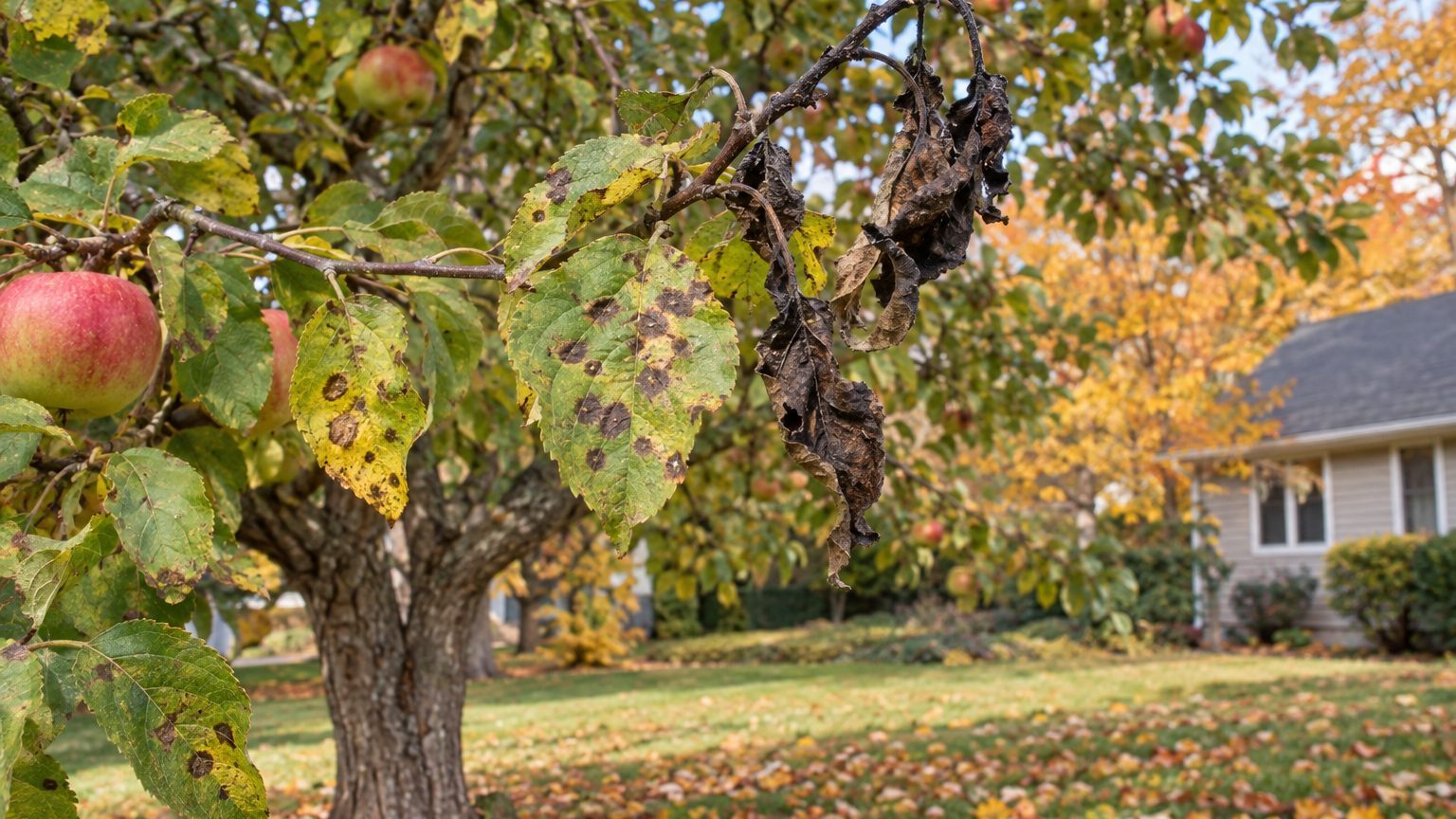
Spots on leaves in summer, sunken patches on bark, and branch tips that wilt and curl like a shepherd’s crook are the signs most homeowners see first. Each one points to a different kind of tree disease, and each calls for a different move.
How Do You Recognize a Tree Disease?
Look for a change that does not match an insect or a watering mistake: spots on leaves, dead patches on bark, or shoots that die back. The rule holds across the country, but what you see depends on the tree type and on climate, since warm, humid weather speeds many diseases.
Plain sight can mislead. Many plant diseases leave no obvious sign and are easy to confuse with over- or under-watering, so check the soil moisture before you blame a fungus or bacterium.
The state selector shown just under this section takes you to the page for your state.
From the almanac
Trees in your state
The dates on this page depend on where you live. Your state's page carries its frost dates, its USDA zones and the year laid out month by month.
Northeast
Southeast
- Alabama
- Arkansas
- Delaware
- Florida
- Georgia
- Kentucky
- Louisiana
- Maryland
- Mississippi
- North Carolina
- South Carolina
- Tennessee
- Virginia
- West Virginia
Midwest
Southwest
West
Pacific Northwest
Canada
How to Prevent Tree Diseases

Prevention follows the tree’s year, starting with the cut you make in winter and ending with the cleanup you do after leaves drop.
- Prune out diseased wood in late winter while the tree is dormant, so that spores and bacteria are removed before spring growth. In New Hampshire, that means finishing before April 1.
- Cut well below the damage, about 12 to 18 inches under any sign of infected tissue, so that no hidden infection stays in the branch you leave behind.
- Prune crabapples, pears and other rose family trees in early spring, because that timing lowers the chance of spreading fire blight.
- Remove nearby pear trees if you grow apples, since fire blight moves between them, and take out cankered areas at winter pruning.
- Keep water and mulch off the trunk base, so that the bark stays dry enough to resist foot rot and similar trunk problems.
- Rake and remove fallen leaves in autumn, which cuts the spores waiting for next year, though it will not end a leaf spot problem.
Skip late summer and fall pruning. Cuts made then can die back at the wound, and fresh wounds give disease an easy way in.
Tree Diseases by Tree Type
The same symptom means different things on different trees. A blackened shoot on a pear is a fire blight warning, while a sunken, dead patch on a stem is a canker.
Some trees also fail for reasons you cannot see above ground, so the tree type tells you where to look.
| Tree Type | What changes | Why it matters |
|---|---|---|
| Apple and crabapple | Disease spreads fast in rainy spring weather above 60 °F during bloom | Bloom time is when to watch the tree closely |
| Pear | Fire blight resistance varies by cultivar, with ratings such as 9.5 versus 4.2 | A resistant cultivar loses far less growth to infection |
| Plum and cherry | Black knot is cut out in late winter, before April 1 in New Hampshire | Removing the knots before spring stops new spread |
| Lemon | Foot rot is avoided with resistant rootstock and a dry trunk | Wet bark and piled mulch invite the disease |
| English walnut | Trees on black walnut roots can die at age 15 to 25 or older from blackline | The failure comes from the graft union, not from care |
Oaks, such as white oak, can show powdery mildew in summer. Check which group your tree belongs to before you choose a pruning date.
Tree Disease Mistakes to Avoid
Pruning Fire Blight at the Wrong Time
Late summer and fall cuts can die back at the wound and leave an opening for infection. Do the work while the tree is dormant, and cut 12 to 18 inches below the diseased tissue.
Painting Wounds and Wrapping Trunks
Exterior paints may contain antimicrobial agents that harm the tree, so leave them off. If you use flexible tree wrap on a young tree for winter, take it off in spring so it does not shelter pests.
Ignoring Fallen Leaves
Leaf spot fungi that stay on the leaves overwinter in the litter. Raking and removing foliage in fall cuts the spores for next year, though it will not end the disease.
Tree Diseases in Your State
The sign that calls for action is new dead wood, a sunken patch on bark, or shoots that wilt and blacken in warm, humid weather. The right month to cut depends on where you live.
- Pruning months depend on your climate, so confirm the right timing for your area before you pick up the saw.
- Your county extension office can confirm a diagnosis when the symptoms are unclear, so call before you cut a large limb.
Common Questions
What Is a Canker on a Tree?
A canker is a dead, often sunken area on a branch or trunk. Look for bark that is discolored or cracked, with healthy bark around it. Cut out affected branches well below the damage.
Can Fire Blight Spread from One Tree to Another?
Yes. Bacteria move quickly in young, soft tissue in warm, humid weather, and fire blight passes between apples and pears. Removing infected branches and nearby pear trees lowers the risk to an apple planting.
How Far Should You Stay from a Black Walnut?
In New Jersey, the toxic zone extends an average of 50 to 60 feet from a mature tree. Plant other trees outside that distance, because wilting nearby can come from the walnut itself rather than from disease.