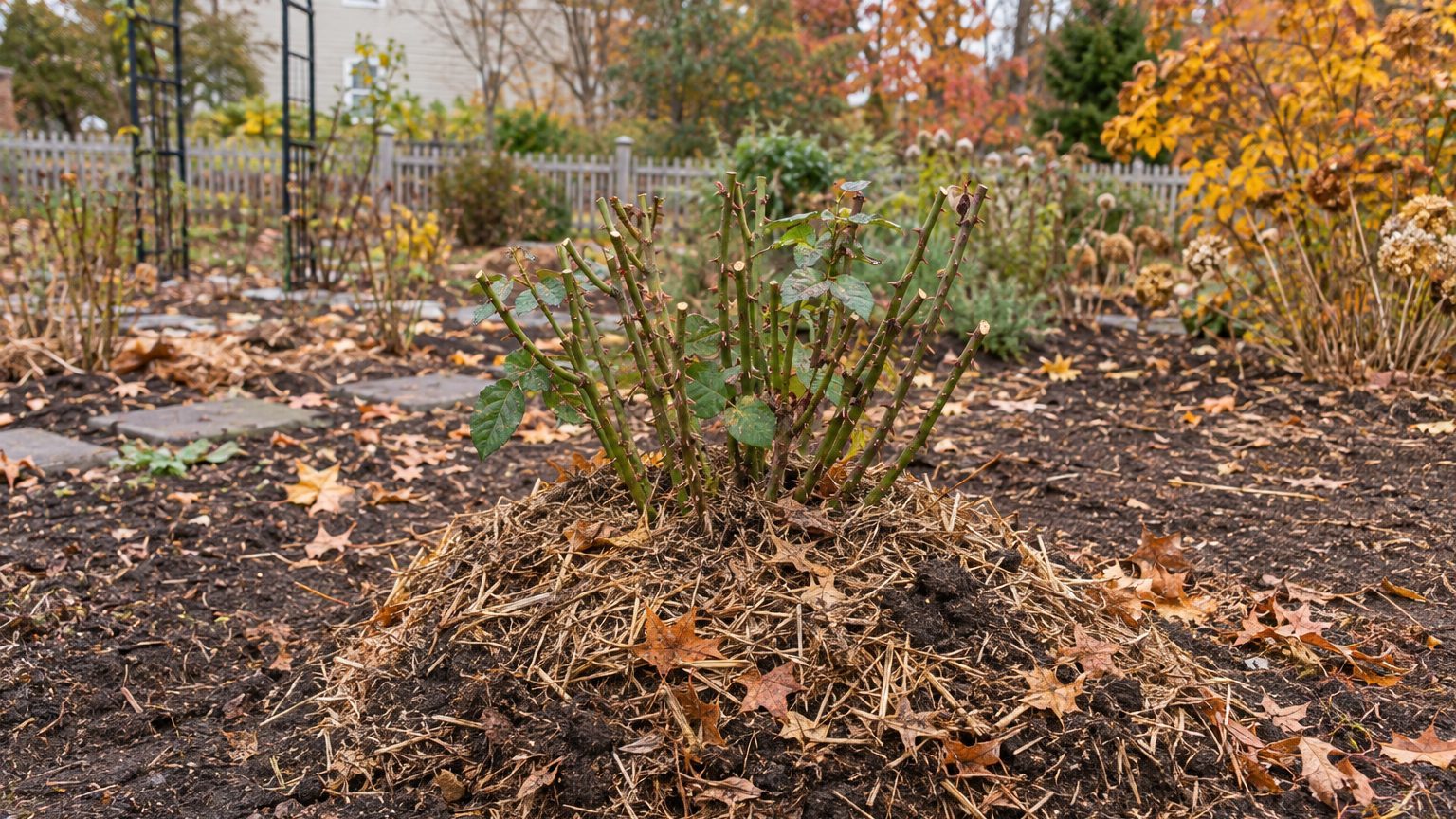
A rose bed after the leaves drop looks half asleep, and that is the plant doing what it should. What decides how it wakes in spring is how the base was covered and when. Where winter protection is needed, it often means mounding the crown after dormancy and removing the cover as spring settles in, with details that shift by climate and rose type.
Do Roses Need Winter Protection?
In cold-winter climates, yes. In mild ones, roses need little or none. A mound of soil or compost shields the stem and bud union, the part of the plant you most want alive in spring.
Type changes the job. Grafted roses carry a bud union that needs covering, while in Oklahoma certain cold-sensitive climbing hybrid tea roses are taken off their supports and laid down. Repeat bloomers flower on new wood and are pruned in spring, while once-bloomers flower on last year’s wood and are pruned just after flowering.
Climate sets the depth. Colder winters call for deeper mounds, and milder ones for a lighter hand. Your local county or provincial extension office can advise on winter protection for your area.
From the almanac
When to protect roses for winter, state by state
The months each state's extension calendar marks for this, kept inside that state's own frost-free season. Open your state for the frost dates, the USDA zone and the rest of the year.
Northeast
- ConnecticutNovUSDA 6a-7b
- MaineNovUSDA 3b-6a
- MassachusettsNovUSDA 5a-7b
- New HampshireNovUSDA 3b-6a
- New JerseyNovUSDA 6a-7b
- New YorkNovUSDA 3b-7b
- PennsylvaniaNovUSDA 5a-7b
- Rhode IslandNovUSDA 6a-7b
- VermontNovUSDA 3b-5b
Midwest
- IllinoisNovUSDA 5a-7b
- IndianaNovUSDA 5b-7a
- IowaNovUSDA 4b-6a
- KansasNovUSDA 5b-7a
- MichiganNovUSDA 4a-6b
- MinnesotaNovUSDA 3a-5a
- NebraskaNovUSDA 4a-5b
- North DakotaNovUSDA 3a-4b
- OhioNovUSDA 5b-6b
- South DakotaNovUSDA 3b-5b
- WisconsinNovUSDA 3b-6a
West
Pacific Northwest
Canada
- AlbertaNovZone 4a
- British ColumbiaNov–DecZone 9a
- ManitobaNovZone 3b
- New BrunswickNovZone 5a
- Newfoundland and LabradorNovZone 6a
- Nova ScotiaNovZone 6b
- OntarioNovZone 7a
- Prince Edward IslandNovZone 5b
- QuebecNovZone 5b
- SaskatchewanNovZone 3a
Sources: state frost facts and Iowa State University Extension ; Penn State Extension · University of Vermont Extension ; UNH Extension · NDSU Extension ; NDSU Extension · Colorado State University Extension ; Montana State University Extension. A state with no marked month is not shown.
How to Protect Roses in Winter

Winter protection works in a set order, and each step prepares the plant for the next.
- Cut tall canes back to a height of 3 feet in the fall (the advice in Oregon), so that winter weather does not snap them.
- In Nebraska, wait until 2-3 hard freezes have passed and the leaves have fallen before applying winter mulch.
- Mound soil or compost over the stem and bud union, so that the crown sits in a buffer against the coldest swings.
- Remove the mound gradually in early spring once lows are no longer forecast below 20°F (the guide in Pennsylvania), so that new growth is not smothered or caught by a hard freeze.
How deep to mound depends on where you garden. Kansas advice is 8-10 inches. In Missouri the suggestion is a mound 10 to 12 inches high. Colder parts of Pennsylvania call for a 12-inch-deep mound. At the other end of winter, Oklahoma gardeners should have canes completely uncovered by March 1 in most of the state.
Winter Protection by Rose Type
The basic approach varies with rose type and local winter conditions. Rose type and local conditions shape the extra protection a plant may need.
Repeat bloomers and once-bloomers differ in what winter cutting costs them. Once-bloomers carry next summer’s flowers on last year’s wood, so shorten them only as needed and save real pruning for after bloom.
| Rose Type | What changes | Why it matters |
|---|---|---|
| Cold-sensitive climbing hybrid tea | In Oklahoma, canes come off the trellis, are laid down and are covered eight to 10 inches deep | Canes left standing on a trellis take the full cold |
| Grafted rose | In Washington’s Chelan and Douglas area, the graft is planted two inches below the surface. It is mulched 2 – 3 inches deep in fall | Burying and mulching the graft helps the plant survive cold |
The right protection for shrub, old garden and rugosa roses depends on the plant and local winter conditions. If you grow a mix, check each rose’s graft and growth habit before deciding what protection it needs.
Winter Protection Mistakes to Avoid
Late Feeding and Deadheading
Late feeding and deadheading can keep a rose growing when it should be slowing down. In Illinois, the advice is no fertilizer after August 15.
In Illinois, stop deadheading or cutting flowers after October 1 and let the plant form hips to encourage dormancy.
Relying on a Cone Alone

A cone alone does not provide adequate winter protection. Nebraska advice is to mound 6-8 inches of soil around each plant first, since the cone by itself will not give adequate protection.
Pile the soil or compost up over the base, then add a cone if you like.
Covering Too Early
Mulch laid over a plant that is still active keeps it from settling into dormancy. In Nebraska, winter mulch goes on after 2-3 hard freezes, once all the leaves have fallen.
Let the weather make the call. Follow local hard-freeze timing and wait until the plant is dormant before covering it.
When to Protect Roses in Your State
The sign to act is the plant itself. Local weather and dormancy determine when winter protection should go on. In spring the cue runs the other way: buds begin to swell and the coldest nights ease.
- Apply winter protection after a few hard freezes, once the leaves have fallen.
- Remove the protection gradually as new growth emerges.
Common Questions
Can You Use Compost Instead of Soil to Mound Roses?
Yes. Kansas advice allows soil or compost, and in Pennsylvania the mound can be well-draining compost, potting mix, clean soil or aged manure. In Kentucky, a compost mound runs 12 to 18 inches high.
Can a Mulch Collar Replace a Mound?
In Central Oregon, a collar wrapped around the base and filled with mulch can protect the plant. It is filled approximately 6 to 8 inches deep. Choose a method that fits your rose and local winter conditions.
How Do You Protect a Newly Planted Bare Root Rose?
In Oregon, a temporary soil mound 4–6 inches high protects the emerging buds of a newly planted bare root rose from drying out; this is planting care, not winter protection. Remove it gradually as new growth emerges, typically within 2–3 weeks of planting.