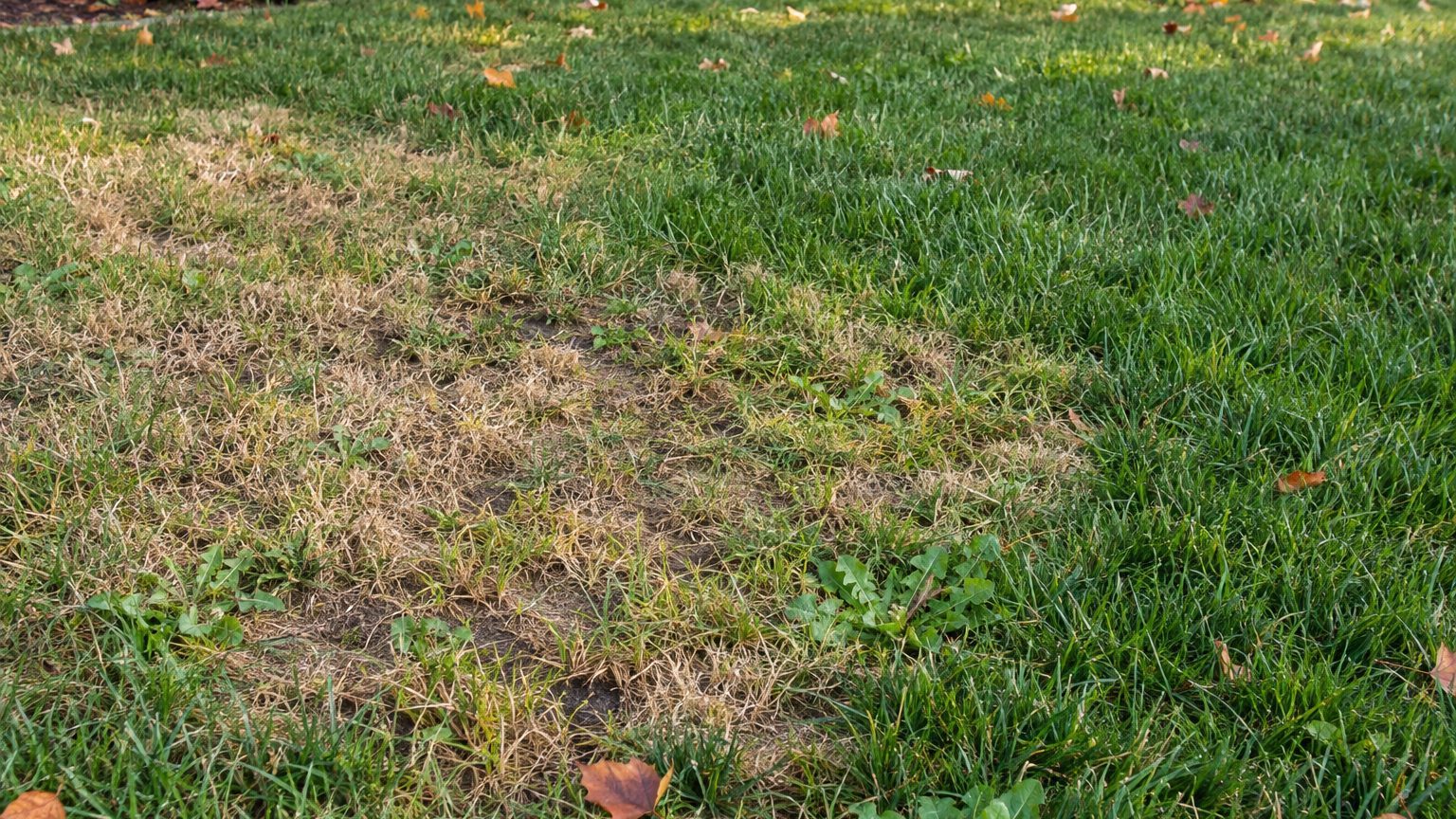
Brown patches that spread in July, a spongy feel underfoot, and crabgrass crowding the edge of the driveway are the usual complaints on West Virginia lawns. Humid summers, shaded hollows and clay soil can set them up. The fixes come down to timing, simple checks, and mowing, watering and feeding habits that suit cool-season grass.
Lawn Pests and Diseases in West Virginia
Crabgrass in Thin Spots

Crabgrass shows up as coarse, light green clumps that sprawl flat along bare or thin ground, usually where the lawn was stressed the summer before. A preventer put down in April, before crabgrass seeds sprout, keeps them from emerging. If April slips by, March or May still works.
Thick grass is the lasting fix, since crabgrass needs light to start.
Dollar Spot Patches
Dollar spot leaves small, straw-colored spots about the size of a silver dollar, often joining into larger blotches in warm, damp weather. Grass blades may show tan bands with darker edges. It favors lawns that are short of nitrogen, so a feeding in May and another in September helps keep it in check.
Brown Patch in Humid Heat
Brown patch makes roughly circular tan or brown areas and often appears in tall fescue during sticky summer stretches. Water in the early morning so blades dry quickly, and run the sprinkler less often. Watering matters most from June through August, when the lawn needs a deep soak without staying wet overnight.
Grubs Under Browning Turf
Grubs are C-shaped, creamy white larvae that chew grass roots, so damaged turf lifts like loose carpet. Pull back a square of sod and look at the root zone, since healthy grass resists tugging. Digging by birds, skunks or raccoons also suggests that something is feeding underneath.
Thatch and Spongy Turf
Thatch is the brown, woody layer of stems and roots between the green blades and the soil. Up to 1/2 inch is healthy, and thicker than that blocks water and invites disease. Core aerate or dethatch in August or September, with April or May as a fallback.
Moss in Shady Hollows
Moss forms soft green mats where grass struggles, typically in shade, on compacted clay, or in spots that stay wet. Raking it out only helps for a while. Open the canopy where you can, aerate, and overseed in August or September so grass fills the space.
West Virginia — the year and the numbers
- State
- West Virginia
- USDA zones
- 5a-7a
- Last spring frost
- April 9 to April 23
- First fall frost
- October 18 to November 1
- Annual rain
- 46 in
- Lawn type
- cool-season
- Source
- NOAA NCEI 1991-2020 Climate Normals, 32F freeze probabilities · Charleston
How to Tell Which Lawn Problem You Have
Start with the shape of the damage and the time of year, then check whether the grass pulls up easily. Clues work better together, so pair what you see with where it happens, such as sun or shade, wet or dry ground.
| What you see | Where and when | Likely problem |
|---|---|---|
| Coarse, sprawling clumps | Thin sunny spots, summer | Crabgrass |
| Small straw-colored spots | Humid weather, hungry lawn | Dollar spot |
| Large tan circles | Tall fescue, hot muggy stretches | Brown patch |
| Turf that rolls up like carpet | Patches with no roots to hold | Grubs |
| Spongy feel underfoot | Whole lawn, thick brown layer | Thatch |
| Soft green mat | Shade, clay, damp ground | Moss |
If the grass tugs out with damaged roots, inspect the root zone for grubs. If it stays firmly rooted and the patch has a ring or spots, fungus may be involved. Bare ground in shade with moss points to the site, not a pest.
Where Lawn Problems Are Worst in West Virginia
Elevation and terrain change which problems you meet, because the state runs from low river valleys to cool mountain ridges.
- Kanawha Valley around Charleston: Warm, humid air settles in the valley, so brown patch and dollar spot show up readily in summer. Grass here is also slower to see a hard freeze than it is on the ridges.
- Allegheny Highlands: Higher ground freezes noticeably earlier in fall, which shortens the window for seeding and feeding. Cooler summers ease fungus pressure, though shade and wet soil keep moss going.
- Eastern Panhandle: Martinsburg and Charles Town sit in a drier, more open valley, so dry spells stress turf and open the door for crabgrass.
Wherever you live, steep, shaded or clay-heavy yards often have more trouble.
Lawn Care Mistakes That Invite Problems in West Virginia
Mowing Too Short
Cutting low weakens roots and lets sunlight reach crabgrass seed. Mow regularly from April through November, and keep the blade higher in summer heat. Taking off only a little at a time keeps the grass dense enough to crowd out weeds.
Watering Lightly and Often
Frequent shallow sprinkling keeps the surface damp, which fungus loves, and it trains roots to stay near the top. Water deeply in June, July and August, early in the day. Skip a session after a soaking rain.
Feeding at the Wrong Time
Heavy nitrogen in midsummer pushes soft growth that brown patch attacks. Fertilize in May and September instead, with April or November as a fallback. A feeding in September also builds root strength going into winter.
Where to Get Lawn Advice in West Virginia
Local conditions vary from one hollow to the next, so a nearby expert can confirm what you see. West Virginia University Extension offers lawn guidance written for the state.
- Visit the extension site for turf guides, and check it before choosing seed or a treatment.
- Call your county extension office with a photo or a sample of damaged turf when a patch spreads fast.
- Ask about soil testing before fall feeding, so the visit comes ahead of August and September work.
Common Questions
Does West Virginia Grass Go Dormant in Summer?
Cool-season lawns can turn tan in prolonged heat and dry weather. Dormant grass usually greens again when cooler, wetter weather returns, but patches that stay brown and tug out easily may be damaged instead.
Can You Fix a Lawn in a Shady Yard?
Shade limits what grass can do, so combine thinner tree cover, aeration and overseeding in August or September. Where trees are dense, a groundcover or mulch may suit the spot better than turf.
What Does USDA Zone Mean for a West Virginia Lawn?
The USDA hardiness zone system runs from 5a to 7a across the state, based on average annual extreme minimum temperature. Mountain yards sit at the colder end and Charleston’s valley is milder, so grass choice and timing can differ across the state.