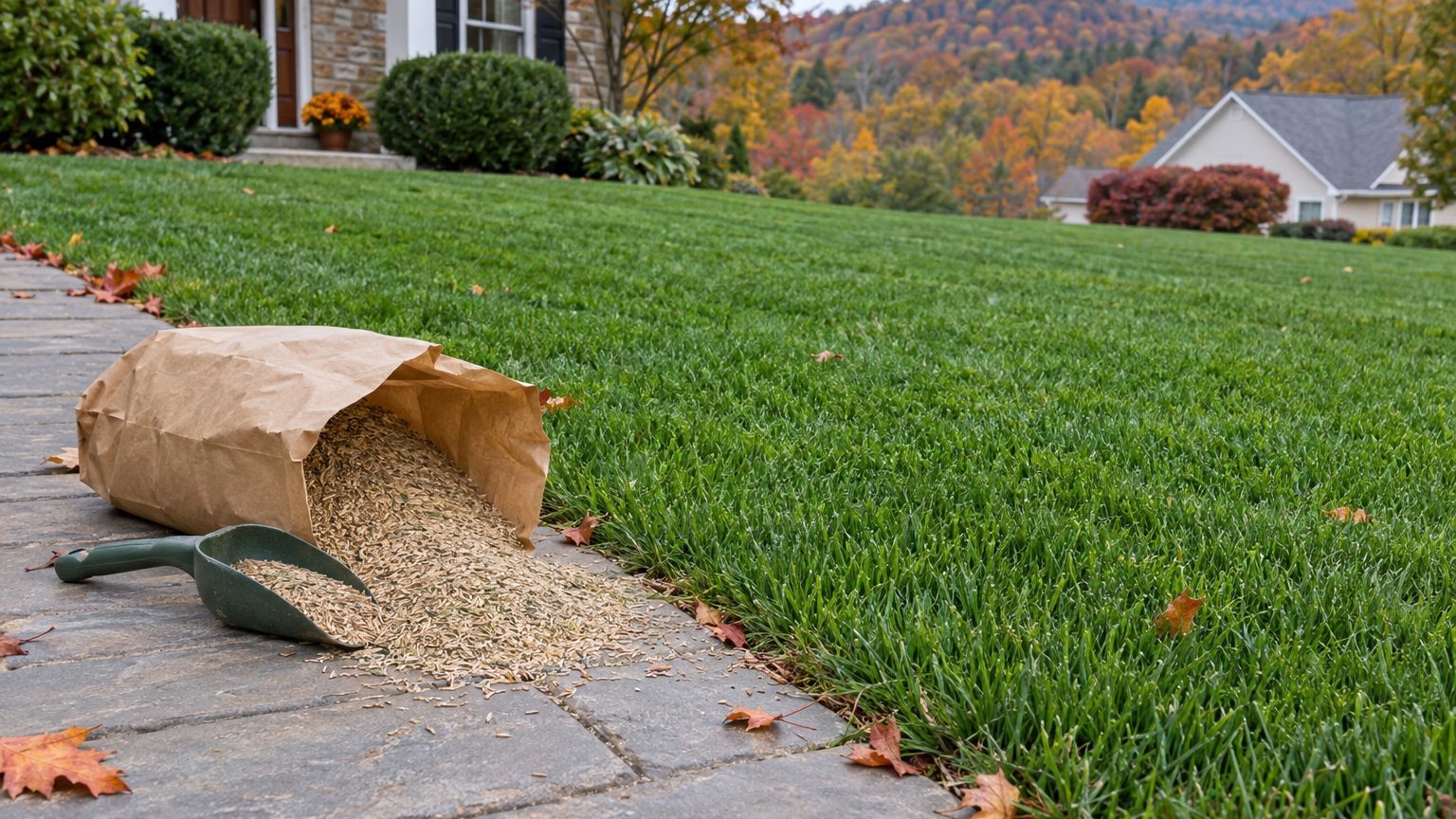
A thin, patchy lawn in West Virginia usually traces back to a seed that did not suit the slope, the shade or the summer. Cool-season grasses are the right family for the state, and tall fescue, Kentucky bluegrass, fine fescues and perennial ryegrass are the ones worth shopping for. Which one fits depends on your yard.
Which Grass Grows Best in West Virginia?
Cool-season grasses grow best here, and the USDA hardiness zone system places West Virginia in zones 5a-7a based on average annual extreme minimum temperature. Warm-season grasses struggle on the cold ridges. The grasses below suit different lawn conditions in this region.
Tall Fescue
Tall fescue is a dependable option in West Virginia. Its deep roots carry it through dry spells in July and August, and it tolerates foot traffic and partial shade better than bluegrass does.
It grows in clumps rather than spreading, so overseed thin spots in the seeding months rather than waiting for it to fill in on its own.
Fine Fescues
Creeping red, chewings and hard fescue are the ones to reach for under trees and on shaded banks. They get by on less light, less water and less fertilizer than the other grasses here.
They look soft and fine-bladed, but they dislike heavy traffic and soggy soil.
Perennial Ryegrass
Perennial ryegrass sprouts fast, which makes it useful for quick cover on bare ground or a slope that washes. It is usually blended with other grasses rather than sown alone.
Cold snaps on higher ground can thin it, so treat it as a helper and not the backbone of a mountain lawn.
Kentucky Bluegrass
Kentucky bluegrass makes a dense, dark green lawn that repairs itself by spreading. It needs full sun and steady moisture.
In a dry summer it goes dormant and browns, then recovers. That is fine if you accept a straw-colored lawn for a while, and frustrating if you do not.
West Virginia — the year and the numbers
- State
- West Virginia
- USDA zones
- 5a-7a
- Last spring frost
- April 9 to April 23
- First fall frost
- October 18 to November 1
- Annual rain
- 46 in
- Lawn type
- cool-season
- Source
- NOAA NCEI 1991-2020 Climate Normals, 32F freeze probabilities · Charleston
How to Choose Grass Seed for a West Virginia Yard
Start with the light your yard gets, then think about how much foot traffic it takes and how much you are willing to water and mow. Those answers narrow the field quickly.
Yards often mix conditions, so choose a blend whose grasses suit those different areas. Match each patch of ground to what it actually gets.
| Your yard | Grass | Why it fits |
|---|---|---|
| Full sun, kids and pets | Tall fescue | Tough, deep-rooted, handles traffic |
| Shade under trees | Fine fescues | Tolerate low light and thin soil |
| Little watering | Tall fescue or fine fescues | Cope with dry spells better than bluegrass |
| Dense, polished look in sun | Kentucky bluegrass | Spreads to fill gaps, needs more care |
| Bare slope needing quick cover | Perennial ryegrass in a blend | Sprouts fast to hold soil |
If you would rather mow less, the fine fescues grow slowly and can be left a bit longer. Seeding is best in August and September, and April and May also work if fall slips away.
Which Grasses Grow Where in West Virginia
Elevation shifts which cool-season grass is dependable in different parts of the state. The frost dates are a Charleston reference point, and other parts of the state differ.
- Charleston and the Kanawha Valley: Warm river-valley conditions favor tall fescue, and bluegrass blends do well where there is full sun and water.
- Eastern Panhandle: Hot, dry summer stretches reward tall fescue, with fine fescues where trees cast shade.
- Allegheny Highlands (Snowshoe and Canaan Valley): Fall frost arrives earlier on the high ground, so seed sooner in the season and lean on fine fescues and bluegrass for cold tolerance.
Wherever you live, count on the first fall freeze coming ahead of the valley dates once you gain elevation.
Grass Seed Mistakes to Avoid in West Virginia
Choosing the Wrong Species
Sun-loving bluegrass sown under a maple thins out over time, and fertilizer does not fix the lack of light. Look at the light first, then buy the species that suits it.
Seeding at the Wrong Time
Spring seedlings must race summer heat, while fall seed gets warm soil and cooling air. August and September give roots time to settle before winter, with April and May as the backup if you miss them.
Crabgrass preventer applied in April will also stop new grass seed from sprouting, so choose one task or the other for the same patch.
Too Much or Too Little Seed
Heavy sowing crowds seedlings and invites disease, while a sparse hand leaves room for weeds. Follow the rate on the bag for the species you chose.
Cover the seed with no more than 0.25 inch of soil and press it down so it touches the ground. Buried deeper, it often never emerges.
Where to Get Lawn Advice in West Virginia
West Virginia University Extension publishes lawn guidance written for the state’s soils and weather, and your county office can answer questions about your own yard.
- Visit the extension website before buying seed to compare grass choices for your part of the state.
- Call your county extension office in late summer to ask about a soil test before the seeding months begin.
- Bring a soil sample and a photo of any problem patch for a more specific answer.
Common Questions
Can You Grow Bermuda or Zoysia in West Virginia?
Warm-season grasses are a gamble here. Cold winters on higher ground can kill them or leave them brown for much of the year, so cool-season grasses are the safer bet.
Is a Shade Mix Different from a Sun Mix?
Yes. Shade mixes lean on fine fescues, while sun mixes lean on tall fescue or Kentucky bluegrass. Check the species on the label and match them to the light in your yard.
Should You Dethatch Before Overseeding?
Only when thatch is thicker than about an inch. Thinner thatch lets seed reach the soil, and aeration in August or September can help it make contact.