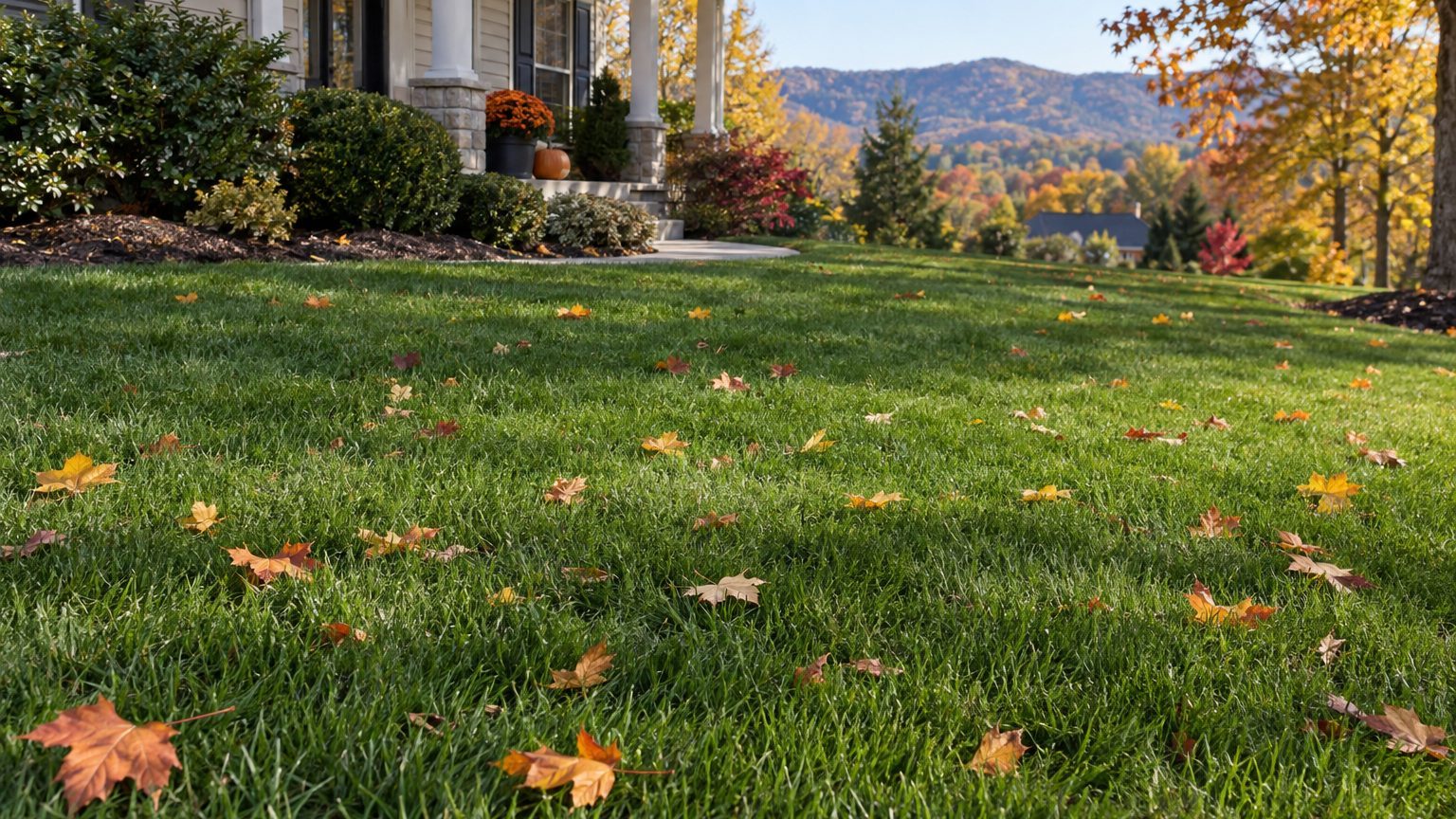
Crabgrass seedlings show up in the thin spots of a West Virginia lawn just as the redbuds fade, and the grass you seeded the previous fall is already thick enough to crowd out weeds. That rhythm of quiet winters, spring prevention, summer restraint and a busy late summer shapes the whole year for a cool-season lawn here.
What to Do Each Month in a West Virginia Lawn
Cool-season grasses such as Kentucky bluegrass, tall fescue and perennial ryegrass do their heavy lifting in cool weather. Each month below matches the job to the grass’s growth.
| Month | In the lawn |
|---|---|
| January | Rest. The grass is dormant. Keep heavy foot traffic off frozen turf, which snaps the crowns. |
| February | Rest. The grass is still dormant. Clear fallen limbs and plan your seed and fertilizer purchases. |
| March | Growth has not really started. If spring runs warm, you can put down crabgrass preventer now, and it also works in April. |
| April | Apply crabgrass preventer early in the month so it is down before weed seed sprouts. Begin mowing as the grass greens up. Bare patches can be seeded now, and core aeration also works this month. |
| May | Fertilize, since the grass is growing hard and can use the food. Mowing continues regularly. If you missed April, seeding, aeration and dethatching still work now. |
| June | Mow, and start watering when rain falls short. Deep, infrequent soaking pushes roots down before the heat arrives. |
| July | Keep mowing and watering. Cool-season grass slows in the heat, so skip fertilizer and heavy work. |
| August | Core aerate, dethatch if thatch is thicker than about an inch, seed and lay sod. Keep watering new work. Warm soil makes seed sprout fast. |
| September | Seed, aerate, dethatch and lay sod while the soil is still warm. Fertilize now as well, because roots build for winter. |
| October | Mow as long as the grass grows. Sod can still go down early in the month if you missed September. |
| November | Mow until growth stops, and rake leaves so they do not smother the turf. A last fertilizer feeding also works now. |
| December | Rest. The grass is dormant. Keep leaves off the lawn and stay off frozen grass. |
Late summer carries more weight than spring here. Good work in August and September does more for the lawn than fussing through the rest of the year.
West Virginia — the year and the numbers
- State
- West Virginia
- USDA zones
- 5a-7a
- Last spring frost
- April 9 to April 23
- First fall frost
- October 18 to November 1
- Annual rain
- 46 in
- Lawn type
- cool-season
- Source
- NOAA NCEI 1991-2020 Climate Normals, 32F freeze probabilities · Charleston
When Does the Lawn Season Start and End in West Virginia?
Growth starts when the soil warms, not when the last frost passes. Seed wakes up once the soil sits at 50 to 65 °F, which is why April and May work for spring seeding and why August and September work even better, when the ground holds summer’s warmth.
Frost dates matter mostly to young grass. In Charleston, the last spring freeze usually lands between April 9 and April 23, so spring seedlings can still get nipped before then. The first fall freeze usually arrives between October 18 and November 1, which gives fall seed a good stretch to root first.
The lawn season in practice runs from April mowing through November mowing, with the grass dormant for the winter months in between.
How the Lawn Calendar Shifts Across West Virginia
West Virginia runs from river valleys to mountain ridges, and the hardiness zones range from 5a to 7a under the USDA system. Charleston’s dates are a reference point for the Kanawha Valley, while elevation shifts the calendar elsewhere.
- Kanawha Valley: Near Charleston, sheltered river-valley ground tends to wake earlier in spring and freeze later in fall, so use the city’s dates as a starting point.
- Potomac Highlands and Canaan Valley: Higher, colder ground greens up later and freezes noticeably earlier in fall. Seed at the early end of the late-summer window so the grass can root first.
- Eastern Panhandle around Martinsburg: Lower ground along the Potomac tends to run milder than the mountains, so spring work can begin a bit sooner than in the highlands.
If you live on a ridge, treat the valley dates as a starting point and watch your own lawn for green-up.
Lawn Care Timing Mistakes to Avoid in West Virginia
Preventer Applied Too Late
Crabgrass preventer works only before the weed seed sprouts. Spread it after the plants are up and you have paid for a product that does nothing. Put it down in April, and March or May can work in a pinch.
Fall Seeding Left Until Too Late

Seed that goes down after September has less warm soil to root in, and a freeze can catch the seedlings thin. Aim for August and September. If you slip, April and May still give young grass a chance, though summer heat will test it.
Feeding in Midsummer
Fertilizer in July pushes soft growth on cool-season grass that is already stressed by heat, and it invites disease. Feed in May and September, when the grass is ready to use it.
Where to Get Lawn Advice in West Virginia
Local help fits the odd mix of valleys and mountains here, since soil and weather change from county to county.
- West Virginia University Extension offers lawn guidance written for the state, so check it before you choose seed or a fertilizer.
- Your county extension office can answer questions about your own soil and your own grass, and the visit is most useful in late summer before seeding.
Common Questions
Can You Seed a West Virginia Lawn in Spring Instead of Fall?
Yes, April and May both work. Spring seedlings face weeds and summer heat, so they need more watering and attention than seed sown in late summer.
Should You Dethatch Every Year?
No. Dethatch only when the thatch layer is thicker than about an inch. A thin layer helps the lawn.
When Should You Stop Mowing in West Virginia?
Keep mowing through November while the grass is growing. Once it goes dormant, put the mower away and keep leaves raked off the turf.