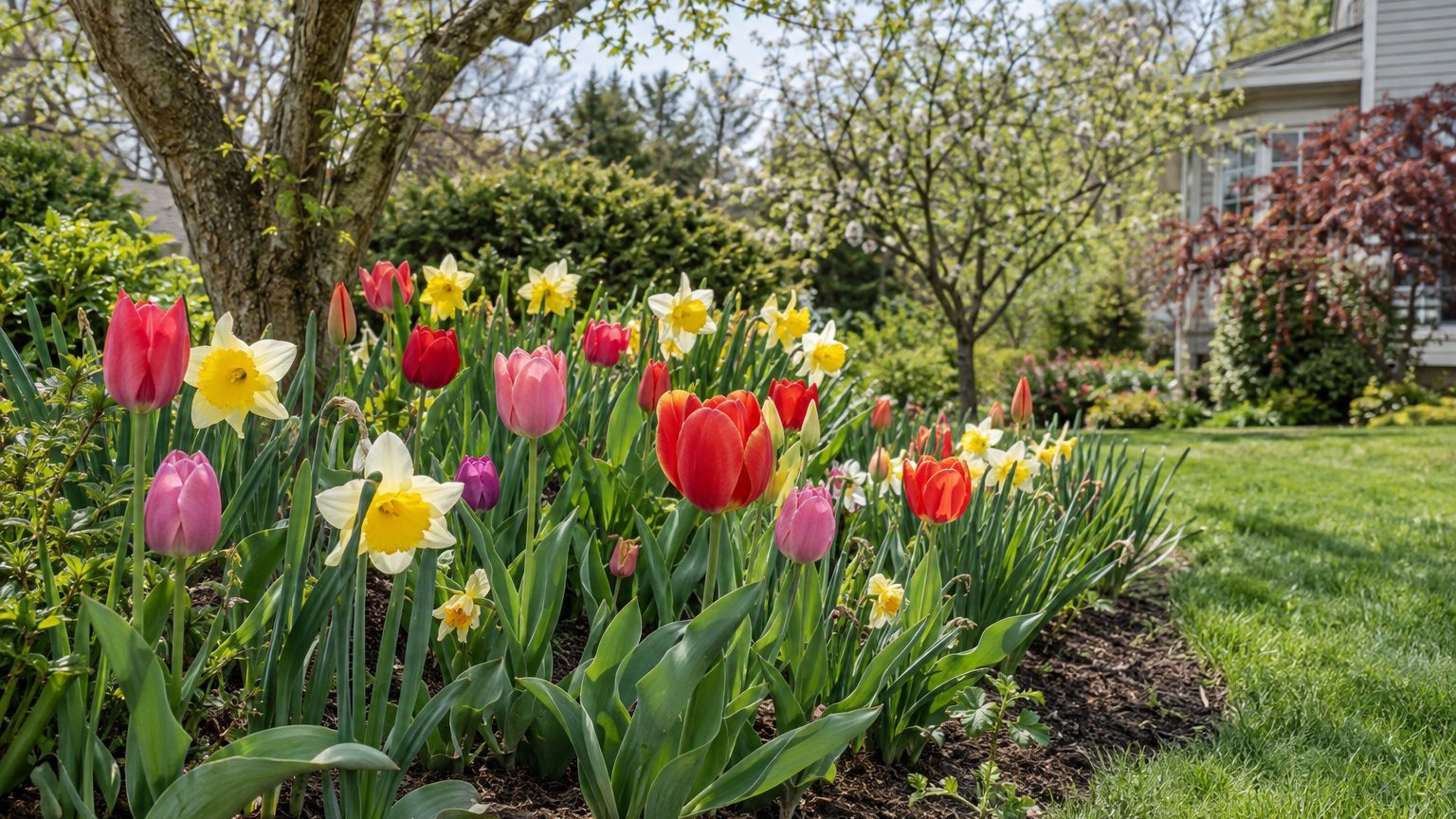
Green spears pushing through the last crusted patches of snow are the first sign that spring bulbs have made it through another Montana winter. Tulips and daffodils flower once the ground warms, and the weather of each spring moves the date. What follows covers how that timing works across the state and what to do once the flowers fade.
When Do Tulips and Daffodils Bloom in Montana?

Tulips and daffodils in Montana bloom when spring warms the soil, so no single month fits every yard or every year. A cold, late spring pushes the show back, and a mild one brings it forward. What stays constant is the winter cold the bulbs need before they flower.
| Bulb | When it blooms in Montana | What sets the timing |
|---|---|---|
| Crocus and daffodils | In spring, as the ground warms | Winter cold of about 12 to 16 weeks, then spring warmth |
| Tulips | In spring, as the ground warms | The same winter chill, then the warmth of the season |
| Hyacinths | In spring, as the ground warms | The same winter chill, then the warmth of the season |
| Alliums | Near the end of the spring bulb season | Winter chill needed, then spring warmth |
Spring bulbs flower in a long succession, from snowdrops and winter aconites at the start of the season to ornamental onions (alliums) at the end. Early, midseason and late tulips all follow that same warming, so planting a mix stretches the color across the season.
Montana — the year and the numbers
- State
- Montana
- USDA zones
- 3a-6a
- Last spring frost
- April 29 to May 10
- First fall frost
- October 1 to October 14
- Annual rain
- 14 in
- Lawn zone
- transition-season
- Source
- NOAA NCEI 1991-2020 Climate Normals, 32F freeze probabilities · Billings
How to Tell Your Bulbs Are About to Bloom
Bulbs announce themselves well before the petals open, and a quick walk along the beds in spring tells you what is coming.
- Pointed green tips breaking the soil tell you the bulb survived the winter and has started growing.
- Leaves that unfold and stand taller mean the bulb is drawing on its stored energy, so the flower is on its way.
- A fat bud nestled in the center of the leaves means the flower has formed and is waiting on warmer days.
- Buds that begin to show color at the tip are close to opening, often within a short stretch of mild weather.
- Foliage with no bud at all, particularly on a clump that has been in the ground for years, points to a crowded or tired planting that needs attention after bloom.
A hard late freeze can nip open flowers, but the leaves and bulbs below ground usually come through it fine.
What to Do After Tulips and Daffodils Bloom in Montana
Snip off the faded flowers and leave everything else alone. The leaves keep feeding the bulb long after the petals drop, and that stored energy builds next year’s flower. Do not cut them back and do not braid or tie them. Wait until they turn yellow and then brown, and the plant lets go of them on its own.
Expect the two bulbs to behave differently over the years. Tulips are often short-lived in the garden, while daffodils last longer and are the more reliable perennial bulb. Darwin hybrids and Emperor tulips are bred to return for several years, so they are worth a look in Montana if you want tulips that stay.
Fill gaps by planting new bulbs in September and October, which gives the roots time to settle before the ground freezes. Wait until the soil has cooled below about 60°F, so the bulbs root without sending up shoots in the fall.
How Bloom Time Shifts Across Montana
Montana’s USDA hardiness zones run from 3a to 6a, and bloom follows that spread: warmer, lower ground flowers earlier, and colder, higher ground flowers later.
- Billings and the Yellowstone Valley: This is one of the milder valleys in the state, so bulbs here tend to flower ahead of the rest of Montana.
- Gallatin Valley around Bozeman: Sitting higher and cooler, bulbs here generally open later than in Billings.
- High mountain valleys: Frost can arrive in any month, so growth starts later and flowers can be held back well behind the lower valleys.
Use your own yard as the guide, since a sheltered south wall can run ahead of an open lawn a few steps away.
Where to Get Bulb Advice in Montana
Local conditions in Montana change quickly from one valley to the next, so local help is worth a call. Montana State University Extension and your county extension office can answer questions that depend on your elevation and soil.
- The extension website carries gardening guidance for the state, and it is a good place to start in late summer before you order bulbs.
- Your county extension office can speak to conditions in your own valley, so call it with questions about a bed that struggles.
Common Questions
Can You Plant Bulbs That Are Still in the Bag After Fall?
Yes. A bulb still in the bag is better planted late than stored over the winter, so plant it as long as the ground can be dug.
Will Deer and Squirrels Eat Tulips and Daffodils?
Voles, squirrels, rabbits and deer eat tulips and crocus, but they leave daffodils alone. In beds with heavy animal traffic, daffodils are the safer choice.
Which Bulbs Handle Dry Conditions?
In Montana, species tulips, snow iris and crocus are among the best-adapted bulbs for droughty conditions. They are worth trying in a dry Montana bed too.