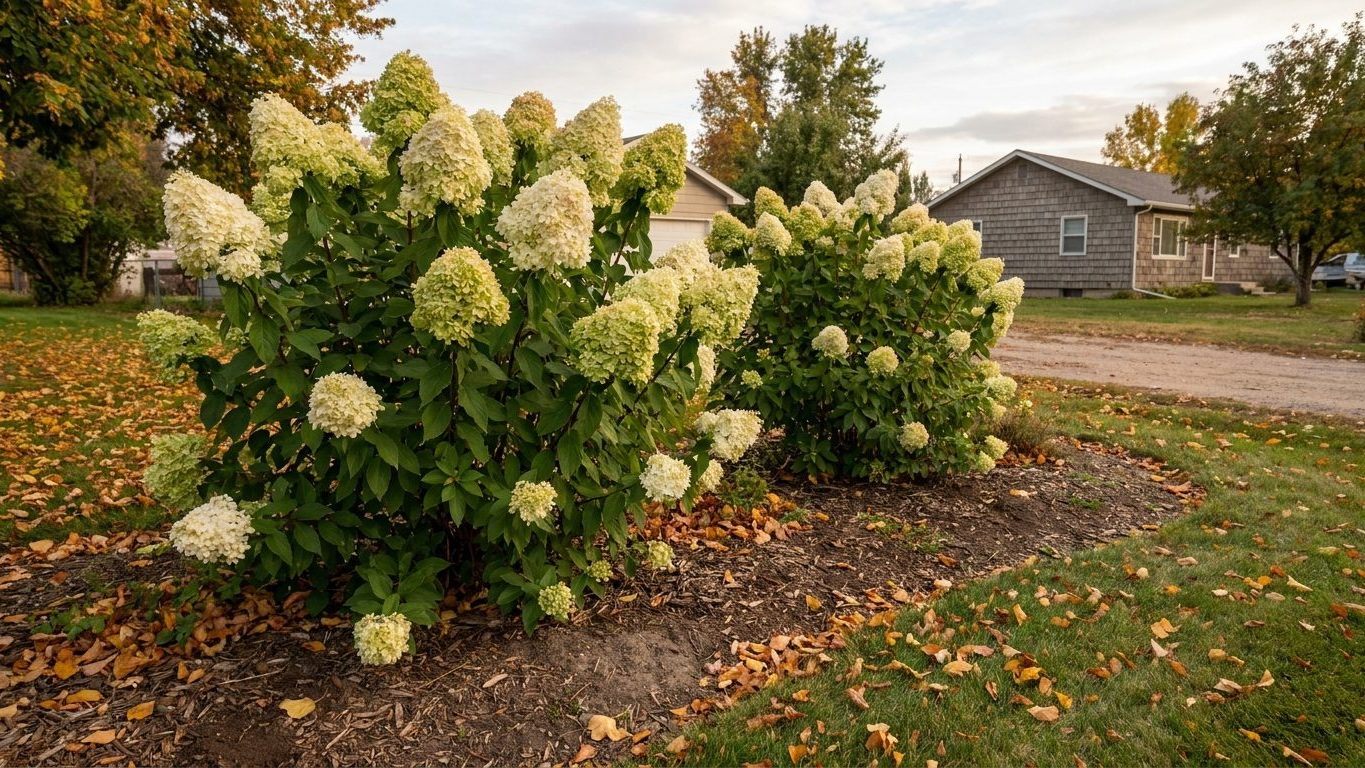
In Billings, the safe planting window falls in April to May or August to September, once the last spring frost (April 29 to May 10) has cleared or before the first fall frost (October 1 to October 14) arrives. Bigleaf hydrangea pruning waits for June and July, right after bloom, and zone 3a to 6a means winter protection matters as much as the date itself.
When to prune hydrangeas in Montana: The Short Answer
The USDA Plant Hardiness Zone Map puts Billings in zone 3a to 6a, a spread wide enough that the month-by-month calendar below decides more than any single date on it.
- January: The ground is frozen and the shrub is fully dormant, weeks past the first fall frost of October 1 to October 14. Leave the mulch mound in place and skip any tools this month.
- February: Still deep winter, with the last spring frost eight to ten weeks away. Use the quiet stretch to pick a variety suited to zone 3a to 6a rather than reaching for a bigleaf on impulse.
- March: The first fertilizer feeding of the year goes down now, ahead of the last spring frost window of April 29 to May 10. Wait for soil you can work with a trowel, not soil that is still frozen underneath.
- April: Planting opens this month, but I hold new stock until late April since frost can still hit through May 10. Container plants tolerate the wait far better than a shrub set out too early.
- May: Once the last frost date has passed, May carries both a planting window and a second fertilizer round. This is the month most Billings yards actually get a hydrangea in the ground.
- June: Pruning starts for bigleaf hydrangea, right after the spring flush of bloom fades. Cut only spent flower stems, since next year’s buds are already forming lower on the stem.
- July: Bigleaf pruning continues alongside a third fertilizer feeding. Midsummer heat means both jobs go best in the cooler part of the day.
- August: A second planting window opens, roughly two months ahead of the first fall frost of October 1 to October 14. Roots set in August have time to establish before the ground cools.
- September: Planting continues, and this is the safer of the two fall dates for anyone unsure about their site’s microclimate. Water new plantings deeply since fall rain in Montana is inconsistent.
- October: The first fall frost arrives sometime between October 1 and October 14. Stop feeding a few weeks before this window, since growth pushed by fertilizer won’t harden off in time.
- November: Mound mulch over the base once the ground has cooled but before hard freezes set in. This step matters more in a zone 3a pocket than in the milder ground near zone 6a.
- December: Fully dormant again, with the next planting window four months away. Check that mulch hasn’t blown off after any windstorm, since exposed roots are the main winter loss here.
Every one of these dates shifts with elevation and local pocket, but the Billings numbers above give a working baseline for the rest of the state.
Montana — the year and the numbers
- State
- Montana
- USDA zones
- 3a-6a
- Last spring frost
- April 29 to May 10
- First fall frost
- October 1 to October 14
- Annual rain
- 14 in
- Lawn zone
- transition-season
- Source
- NOAA NCEI 1991-2020 Climate Normals, 32F freeze probabilities · Billings
How to Work Out the Dates for Your Own Yard
Start from the two frost windows for Billings and work backward or forward by the number of weeks each task needs.
- Mark your last frost window: Billings runs April 29 to May 10, so anyone at a similar elevation should treat early May as the safer half of that range, not the earlier one.
- Count back four to six weeks for a fall planting: measured against the first fall frost of October 1 to October 14, that puts the safest window in mid to late August, which lines up with the state’s own August and September planting months.
- Check your own frost date against Billings: a yard tucked in a mountain valley can frost in any month, even July, so treat the reference dates as a floor rather than a guarantee.
- Watch the soil, not just the date: hydrangea roots want soil that has warmed past the earliest edge of frost risk, which in practice means waiting a week or two past the start of the spring window.
- Schedule the prune after the last frost, not before: bigleaf pruning falls in June and July here because cutting too early exposes next season’s buds to a frost that hasn’t finished yet.
None of these steps replace a local check. A yard one valley over from Billings can run two or three weeks colder in spring, which is enough to undo a planting date that looked safe on paper.
Montana North to South: How the Dates Shift
Elevation and a handful of valley pockets move these dates more than latitude does in a state this size.
- The Missouri River valleys (Great Falls, Billings): closest to the reference dates above, with a spring frost window that usually clears by mid May.
- Western mountain valleys (Missoula, Kalispell): a longer growing season near Flathead Lake softens the cold, but nearby benches sitting higher can still frost after the reference window closes.
- The high plains and eastern prairie (Miles City, Glasgow): more exposed to early fall cold snaps, which can push the first frost ahead of the October 1 to October 14 range used for Billings.
- Mountain basins and higher elevations (Bozeman, Helena): sit toward the colder end of the state’s 3a to 6a range, and a frost can arrive in nearly any month in a hard year.
Check the state guide for the county closest to your own yard before locking in a date.
Mistakes Montana Punishes
Planting the first warm week of spring
Billings’ last frost window runs April 29 to May 10, and a warm afternoon in early April can trick anyone into planting two or three weeks too soon. A late frost then kills the new growth to the ground. Wait for the back half of the spring window before digging.
Pruning bigleaf hydrangea in fall or early spring
Bigleaf sets its buds on old wood, so a cut made outside the June to July window removes next year’s flowers along with this year’s dead stems. Prune only right after bloom fades, and leave the rest of the plant alone through winter.
Skipping winter mulch in a zone 3a pocket
A shrub that survives fine in the milder end of the state’s 3a to 6a range can die back hard in a colder valley without a mulch mound over its base. Pile mulch once the ground cools in November, and pull it back only after the last frost risk has passed.
Montana Extension Offices and County Contacts
The Billings numbers above are a starting point, not a guarantee for every yard in the state. Montana State University Extension and your county office can confirm what holds up on your soil and at your elevation.
- Your state page: the frost dates and the pruning window where you live.
- Montana State University Extension: county-by-county contacts and local planting advice.
- Which ones hold up here: the variety picks that handle zone 3a to 6a without dying back every winter.
Common questions
What is the best month to plant hydrangeas in Montana?
May is usually the safest single month, since it falls after the last spring frost of April 29 to May 10 and still gives roots a full summer to establish. August works nearly as well for anyone planting from a container.
Can hydrangeas survive winter in Montana?
Some can, depending on variety and exactly where in the state’s 3a to 6a range a yard sits. Panicle and smooth types handle the cold far better than bigleaf, which often dies back to the ground in the colder valleys.
When should I stop fertilizing hydrangeas in Montana?
The state’s fertilizing calendar stops after July, which gives new growth enough time to harden off before the first fall frost arrives October 1 to October 14. Feeding later than that pushes tender growth right into frost season.