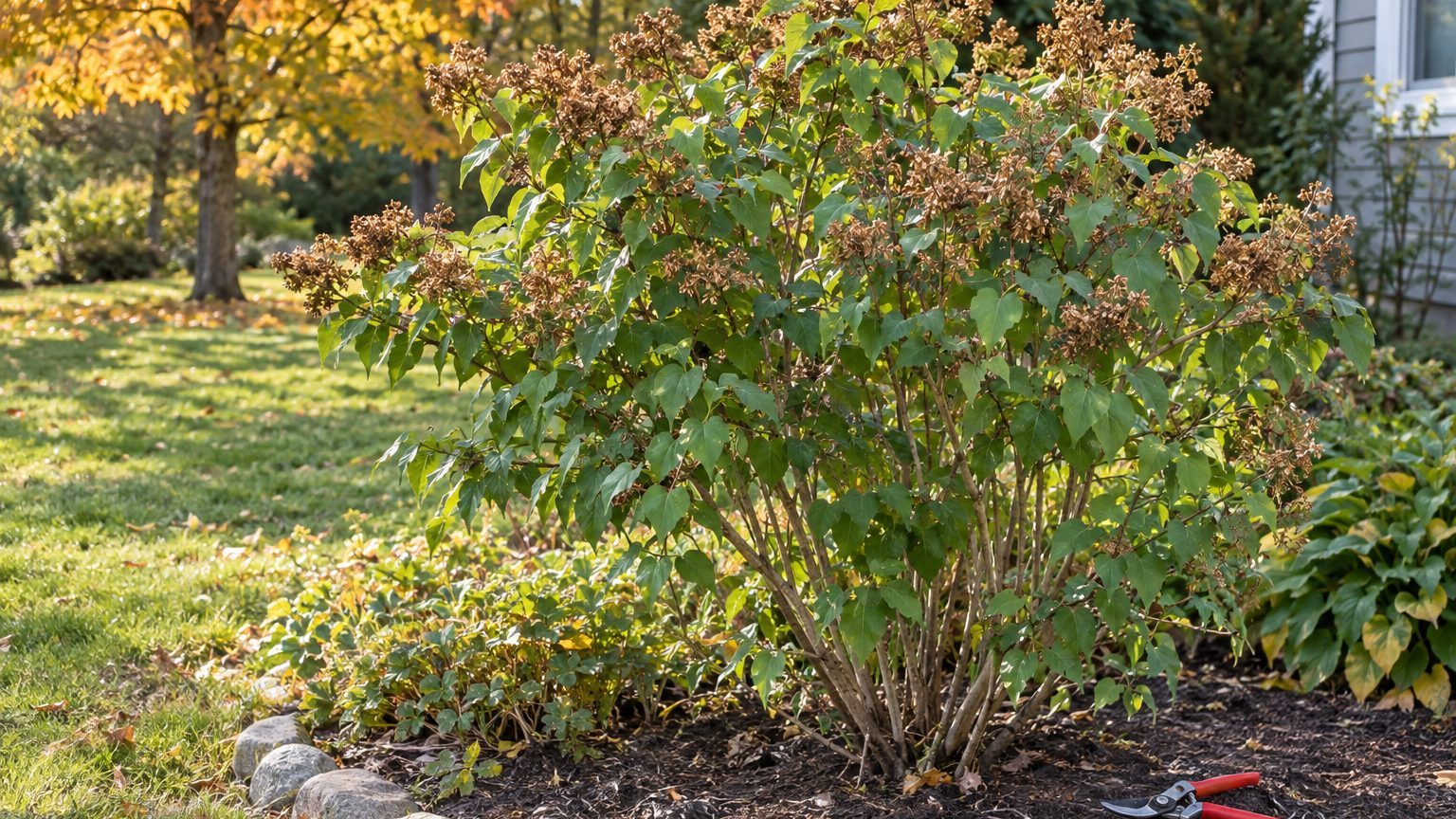
A lilac in full bloom smells like late spring, and the same shrub is already building next year’s flowers while the last blossoms brown. In Montana, that timing sets the pruning window: you cut right after the flowers fade, and the job is done before the new buds have much of a chance to be lost.
When to Prune Lilacs in Montana

Prune lilacs in June, right after the flowers fade. Bloom runs through May and into June, so the cut follows close behind it. If June slips by, it can also be done in July, though the buds for next year form in June and July.
| Type of pruning | When in Montana | Why |
|---|---|---|
| Routine upkeep after bloom | June, or July if needed | Next year’s flower buds form in June and July, so cutting soon after the flowers fade keeps them |
| Hard cut of an overgrown lilac | March to April | The plant is cut back hard in late winter, at the price of the next flowers |
This schedule is for once-blooming lilacs; ask your county extension office about reblooming lilacs. The hard late-winter cut is a rescue job, and an overgrown lilac will not flower for a few years afterward.
Why the Window Is So Narrow
A lilac blooms on last year’s wood. Once the flowers fade, the shrub sets the buds for next spring, so a cut made in late summer, fall or winter removes flowers you would otherwise see. That is the whole reason the calendar sits where it does.
Cold helps too. Lilacs need a winter rest to mature their flower buds, which is why they do well in Montana and struggle in hot, humid summers. Hardiness zones in the state run from 3a to 6a (USDA system), and lilacs are comfortable across that range, so the pruning window matters more than the cold does.
What a Good Cut Looks Like
Start by snipping off the spent flower clusters just below the fading bloom. Then take out dead or crossing wood and any weak, spindly stems. Keep the natural vase shape, because lilacs look best when you thin them rather than shear them into a ball.
Montana — the year and the numbers
- State
- Montana
- USDA zones
- 3a-6a
- Last spring frost
- April 29 to May 10
- First fall frost
- October 1 to October 14
- Annual rain
- 14 in
- Lawn zone
- transition-season
- Source
- NOAA NCEI 1991-2020 Climate Normals, 32F freeze probabilities · Billings
How to Tell When Your Lilacs Are Ready to Prune
The shrub gives clear signals, and they matter more than a date on the wall, since a cold spring can push bloom later in the season.
- Flower clusters turn brown and dry, which tells you the blooms are finished and the cut can begin.
- Petals drop and leave papery seed heads behind, showing that flowering has ended.
- Fresh green growth shows up around the base of the flower clusters, so you can see where live wood begins and where to stop cutting.
- A cluster that still holds some color should be left a little longer, because cutting into live bloom wastes flowers you could still enjoy.
- Late-blooming shrubs, such as the Japanese tree lilac, wait until their own flowers are done.
If every cluster is brown and the leaves are full and deep green, the lilac is ready for its trim.
Should You Prune Lilacs in Fall or Winter in Montana?
No, not for routine pruning. Fall and winter cuts take off the buds that were set the summer before, and the lilac then has little to show in spring. A shrub tidied in fall or winter can be a green mound with no flowers by May.
Hard renovation is different. An overgrown lilac that has grown leggy and bare at the base can be cut back hard in March or April while it is still dormant. You pay for it with flowers, since the shrub will skip bloom for a few years while new stems grow. Gradual renewal lets new stems grow.
How Lilac Pruning Time Shifts Across Montana
Montana’s climate varies a great deal from valley to mountain, and the blooming lilac sets the pace, so your pruning follows the flowers where you live.
- Billings and the milder valleys: Spring warms sooner here, so bloom and the pruning window arrive earlier than in the high country.
- Mountain valleys in the west and the Rocky Mountain Front: Frost can come in any month, and bloom runs later, so wait for the flowers to fade before you cut.
- Hyacinthiflora lilacs: These hybrids open earlier than common lilacs, and they do best where May frosts are less frequent.
Watch your own shrub first, and let the calendar be the backup.
Where to Get Lilac Advice in Montana
Local conditions vary enough that a nearby expert is worth a call. Montana State University Extension publishes lilac guidance written for the state, and your county office knows your valley.
- The state extension site has lilac guides on pruning and on varieties suited to Montana, and they are worth reading before the shrubs bloom.
- Your county extension office can look at a photo or a cutting and tell you what your shrub needs, so call it in late spring, as the flowers fade.
Common Questions
Can You Prune Lilacs in Early Spring?
Only for the hard renovation cut in March or April. A light trim then removes flower buds that are already formed, so most gardeners wait until the blooms are done.
How Much Can You Cut Off a Lilac at Once?
Remove the oldest, thickest stems gradually, and keep the younger wood that will carry next year’s flowers. Cutting all of it back at once costs you bloom for a few years.
Why Is a Montana Lilac Not Blooming?
Consider together when the shrub was last pruned and how much sun it gets. A lilac cut in fall or winter loses its buds, and a shady site gives few flowers even when pruning is right.