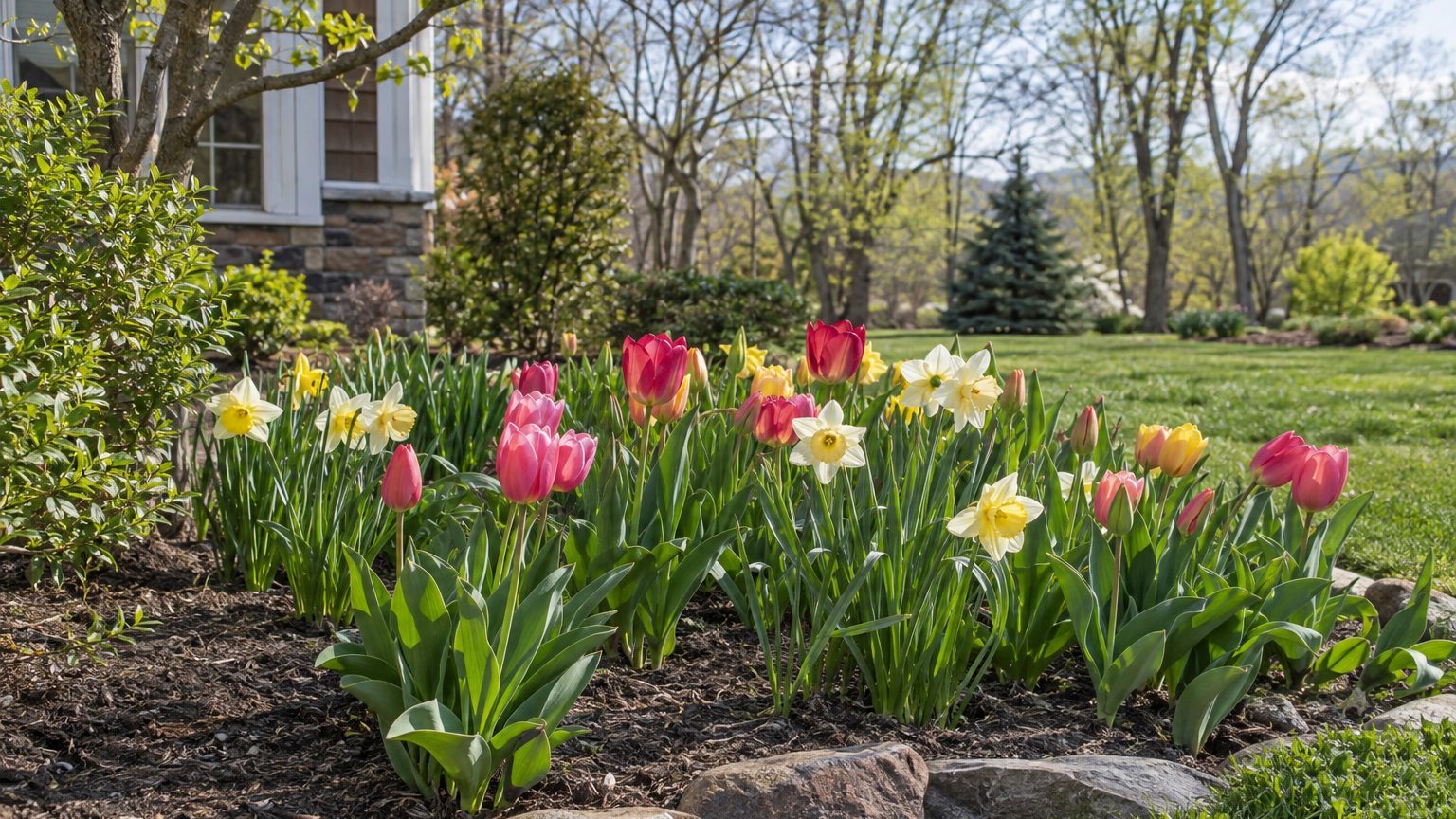
Green daffodil spears break through cold North Dakota soil in spring, and tulip buds swell and color a little later. The exact day the flowers open shifts from year to year, but the season is steady enough to plan around, and a few habits keep the bulbs coming back.
When Do Tulips and Daffodils Bloom in North Dakota?

Tulips and daffodils bloom in April and May in North Dakota. Tulips reach their peak from late April to mid-May, and a cold or warm spring nudges the whole show earlier or later.
| Bulb | When it blooms in North Dakota | What sets the timing |
|---|---|---|
| Daffodils | April to May | Spring warming, which varies by yard and by year |
| Tulips | April to May, peaking from late April to mid-May | Spring temperatures and your location |
| Alliums | At the close of the spring bulb season | Needs a chill period, then follows the warming of spring |
Crocus and hyacinths open as the soil warms, with no fixed month, so their bloom tracks the weather rather than the calendar. Winters in USDA zones 3a to 4b deliver plenty of cold for the roots and buds, which is why timing here depends on spring warmth and rarely on whether the bulbs got enough chill. Yards outside town or on higher ground warm up later than yards in town.
North Dakota — the year and the numbers
- State
- North Dakota
- USDA zones
- 3a-4b
- Last spring frost
- May 4 to May 15
- First fall frost
- September 25 to October 5
- Annual rain
- 24 in
- Lawn zone
- cool-season
- Source
- NOAA NCEI U.S. Climate Normals 1991-2020, 32F freeze probabilities · Fargo
How to Tell Your Bulbs Are About to Bloom
Bulbs give clear signals before the first flower opens, and watching them tells you when to expect color.
- Green tips poking through the soil mean the bulb has woken up, so leave any mulch loose and do not dig around the planting spot.
- Leaves that lengthen and widen show the bulb is gathering energy, and they should be left alone no matter how untidy they look.
- A flower bud that rises from the center of the leaves means bloom is close, and cold snaps at this stage may pause the show without ending it.
- Buds that begin to show color while still closed tell you the flowers will open soon, which makes it a good week to plan a photo or a bouquet.
- Chewed or missing buds point to rabbits or deer, since tulips and crocus are on their menu.
Because peak tulip bloom runs from late April to mid-May, a yard where leaves are up but buds are not yet colored is simply a little behind the calendar.
What to Do After Tulips and Daffodils Bloom in North Dakota
Snip off faded flowers, then leave the leaves alone until they turn yellow and then brown. The green leaves are feeding the bulb for next spring, so do not cut them, braid them, or tie them in knots, however tempting a tidy bed may be.
Tulips are often short-lived in the garden, while daffodils last longer and are the more reliable perennial bulb. Extension growers note that years of hybridizing have weakened the bulbs’ ability to return. Species tulips, the shorter types with smaller flowers, are suggested as a longer-lived choice, and hybrids can be treated as annuals.
Wet, heavy clay is hard on hybrid tulips, especially when thirsty annuals are planted right on top of them or next to them. Voles, squirrels, rabbits and deer eat tulips and crocus, but they leave daffodils alone. Alliums are also not bothered, since they have a slight skunky odor that repels rodents and deer.
How Bloom Time Shifts Across North Dakota
Bloom dates in North Dakota move with local warmth, and a few well-known parts of the state tend to run on slightly different schedules.
- Red River Valley: The flat eastern edge, around Fargo and Grand Forks, is where the spring figures here come from, and bulbs in town often wake up a bit before those in open country. Wind across the open fields can slow things down at the farm edge.
- Missouri River country: Yards around Bismarck sit in a different spring pattern, and the river corridor and sheltered south-facing walls give bulbs an early start.
- Turtle Mountains: Higher ground in the north central part of the state warms later, so bloom lands later than in the valley.
Rural and suburban yards usually see the last spring frost later than the airport city used as a reference, so look at your own county before betting on a date.
Where to Get Bulb Advice in North Dakota
Local advice beats general rules when a bed behaves differently from the neighbor’s. North Dakota State University Extension publishes research-based guidance for the state, and the county office can speak to the soil and weather where you live.
- The extension website has fall planting and spring care guidance, and it is worth a look in September before the bulbs go in the ground.
- Your county extension office can answer questions about soil, drainage and the animals that browse your beds, and spring is a good time to call with photos of what is up.
Common Questions
When Should You Plant Tulips and Daffodils in North Dakota?
Plant in September and October, from mid-September through mid-October, once the soil has cooled below about 60°F. That timing gives roots a chance to form before the ground freezes, and it keeps the bulbs from sprouting in the fall. Aim to have them in four to six weeks before the ground freezes.
Do Tulips and Daffodils Need Winter Cold to Bloom?
Most spring-flowering bulbs need about 12 to 16 weeks of cold to flower, and a North Dakota winter supplies that without help. Pre-chilling in the refrigerator is a trick for mild climates, so you can skip it here. According to Iowa State University Extension, alliums are not an exception, since they need a chill period to bloom.
Can You Plant Bulbs That Are Still in the Bag After the Ground Starts to Freeze?
Yes, as long as the ground can be dug. A bulb planted late has a better chance than one stored over the winter, so get it in the soil as soon as you can open a hole, even if the roots have little time to settle in.