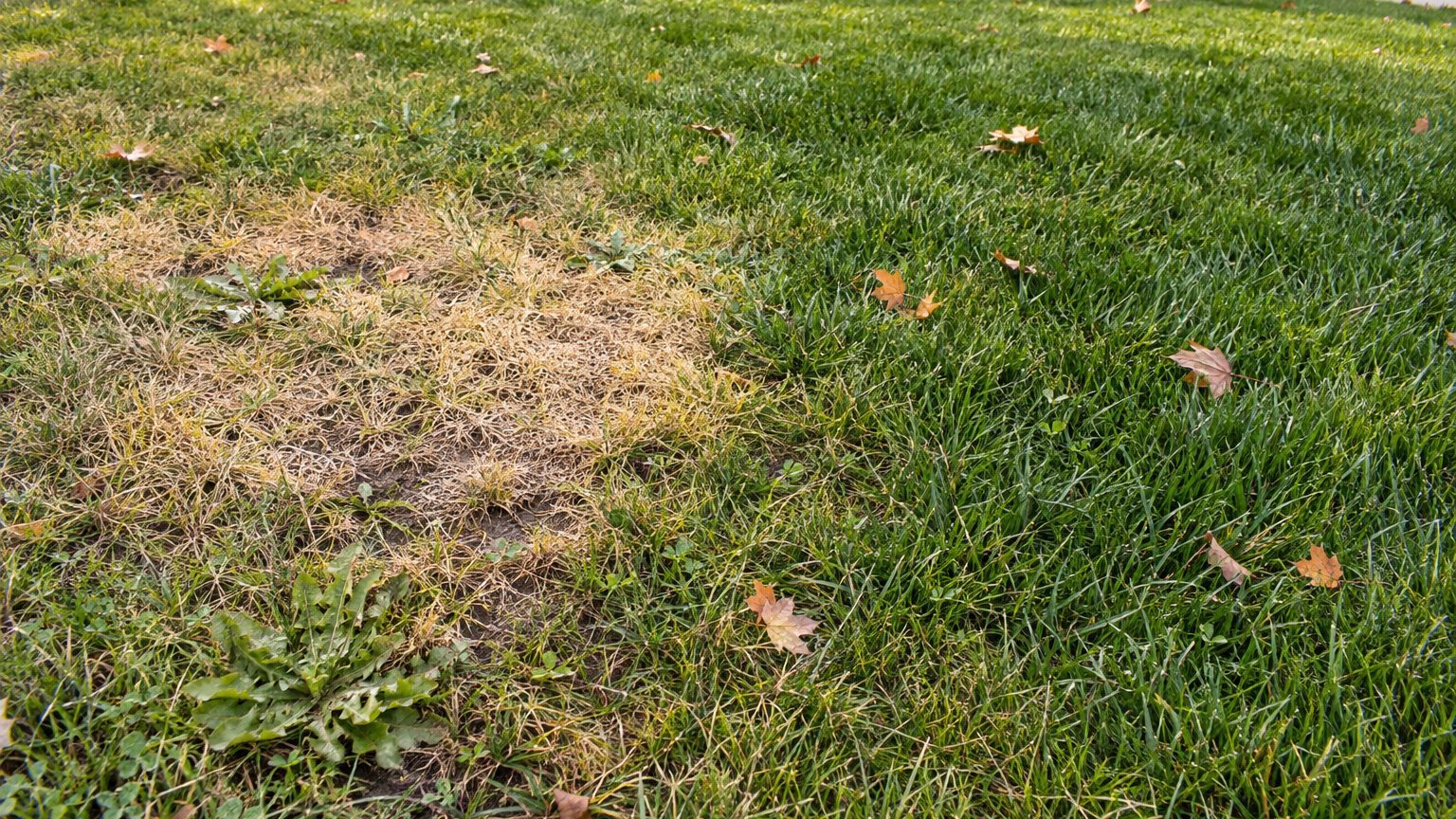
Brown patches that spread in July, grass that peels back like carpet in late summer, and a thin, weedy edge along the driveway are common Indiana lawn problems. These problems can trace back to causes tied to the state’s humid summers and cold winters. Knowing the look of each one tells you what to do next.
Lawn Pests and Diseases in Indiana
Crabgrass in Thin Spots

Crabgrass is a coarse, light green annual that sprawls outward, usually along pavement and in bare soil. It sprouts as the soil warms in spring and dies with the first hard frost, leaving gaps behind.
A pre-emergence preventer works best in April, and May still helps. Thick turf is the lasting fix, because crabgrass needs light reaching bare soil.
Thatch Buildup
Thatch is the spongy brown layer between the green blades and the soil. Up to 1/2 inch is healthy, but beyond that water and fertilizer struggle to reach the roots, and pests and disease settle in.
Push a screwdriver or cut a small plug to check its depth. Dethatch in August or September, or in April if you missed those months. Core aeration in September also breaks it up.
Brown Patches in Midsummer
Fungal disease shows up when humid heat settles over a lawn, especially cool-season grass like tall fescue and bluegrass. Patches look tan to brown, sometimes ringed, and often start where air barely moves or water lingers.
Water in the morning so blades dry quickly, and avoid heavy nitrogen in summer. Fertilizing in September and November builds the strength to recover.
Grubs Feeding on Roots
Grubs are pale, C-shaped larvae that chew grass roots in late summer. Damaged turf feels loose and peels up like a rug, and skunks or birds may tear at the lawn hunting them.
Lift a flap of sod and look at the soil beneath. Treat only after confirming that grubs are causing the damage.
Thin Grass Under Trees
Shade thins turf slowly, leaving bare soil, moss, and weeds in its place. Tree roots compete for the same water and nutrients, so grass under maples and oaks struggles through every dry spell.
Overseed shaded areas in August or September, when seedlings root before cold weather, or April and May as a fallback. Where shade is deep, a mulched bed does better than grass.
Indiana — the year and the numbers
- State
- Indiana
- USDA zones
- 5b-7a
- Last spring frost
- April 9 to April 21
- First fall frost
- October 21 to October 30
- Annual rain
- 44 in
- Lawn type
- cool-season
- Source
- NOAA NCEI 1991-2020 Climate Normals, 32F freeze probabilities · Indianapolis
How to Tell Which Lawn Problem You Have
A symptom can mislead, so consider what the patch looks like along with where and when it appears. Shape, season, and a simple pull test help narrow the possibilities.
Walk the lawn in daylight, then kneel and tug a handful of blades. Whether the grass resists or lifts away often settles the question.
| Sign | Where or when | Likely problem |
|---|---|---|
| Coarse, sprawling light green clumps | Edges and bare soil, spring into summer | Crabgrass |
| Spongy feel underfoot, brown layer at the base | Anywhere, worse in older lawns | Thatch |
| Tan or ringed patches | Humid midsummer, poor airflow | Fungal disease |
| Turf lifts like carpet | Late summer, roots missing | Grubs |
| Thin grass, moss, bare soil | Under trees, shaded most of the day | Shade stress |
A lawn that browns evenly during dry summer weather and greens up again after rain is usually dormant rather than diseased. Water in June, July, and August when growth slows, and check again before assuming something worse.
Where Lawn Problems Are Worst in Indiana
Conditions shift across the state, and the part you live in changes which problems show up first.
- Northwest Indiana: Sandy soils near Lake Michigan can dry quickly, leaving turf thin and drought-stressed.
- Indianapolis and central Indiana: Heavy clay and humid summers favor compaction, thatch, and fungal patches, so September aeration pays off here.
- Southern Indiana: Spring work can begin earlier and autumn work can run later than in the north.
In the colder north, spring work starts later, but apply preventer in April or May.
Lawn Care Mistakes That Invite Problems in Indiana
Mowing Too Short
Scalped grass has shallow roots and leaves bare soil for crabgrass seed to reach. It also dries out faster in summer.
Mow regularly from April through November, and raise the blade height in summer. Taller grass shades the soil and crowds out weeds.
Watering Lightly Every Evening
Frequent shallow watering keeps blades damp overnight, which is just what fungal disease wants. Roots stay near the surface and struggle during hot weather.
Water deeply and less often in the morning, mainly June through August. The soil should be moist below the surface, not just on top.
Fertilizing at the Wrong Time
Heavy summer nitrogen pushes soft growth that fungus loves, and spring feeding can favor weeds over grass. Cool-season lawns want food when they are building roots.
Fertilize in September and November, with May as a fallback. A fall feeding gives grass energy to thicken before winter and green up early.
Where to Get Lawn Advice in Indiana
Local soil and weather vary enough that a nearby expert can confirm what you suspect. Purdue Extension offers research-based lawn guidance for Indiana, and your county office adds local knowledge.
- Purdue Extension publishes lawn improvement guides and identification help, useful before you buy anything for a problem.
- Your county extension office can answer questions about soil, shade, and pests, so call when a patch keeps spreading.
- Bring a sample of affected turf with a plug of soil, and ask about a soil test before fertilizing.
Common Questions
Can You Fix a Lawn Full of Crabgrass in One Season?
Not entirely. Pull or spot-treat what is there, then reseed bare patches in August or September so grass fills the gaps before next spring.
Why Does the Grass Feel Bouncy to Walk On?
A springy feel with a brown layer at the base points to thatch. Check its depth, and if it exceeds the healthy range, dethatch or aerate.
Should You Water a Brown Lawn in Summer?
Check the crowns first. If they are still pale and firm and the pull test shows roots holding, the grass is probably dormant and a deep watering can revive it.