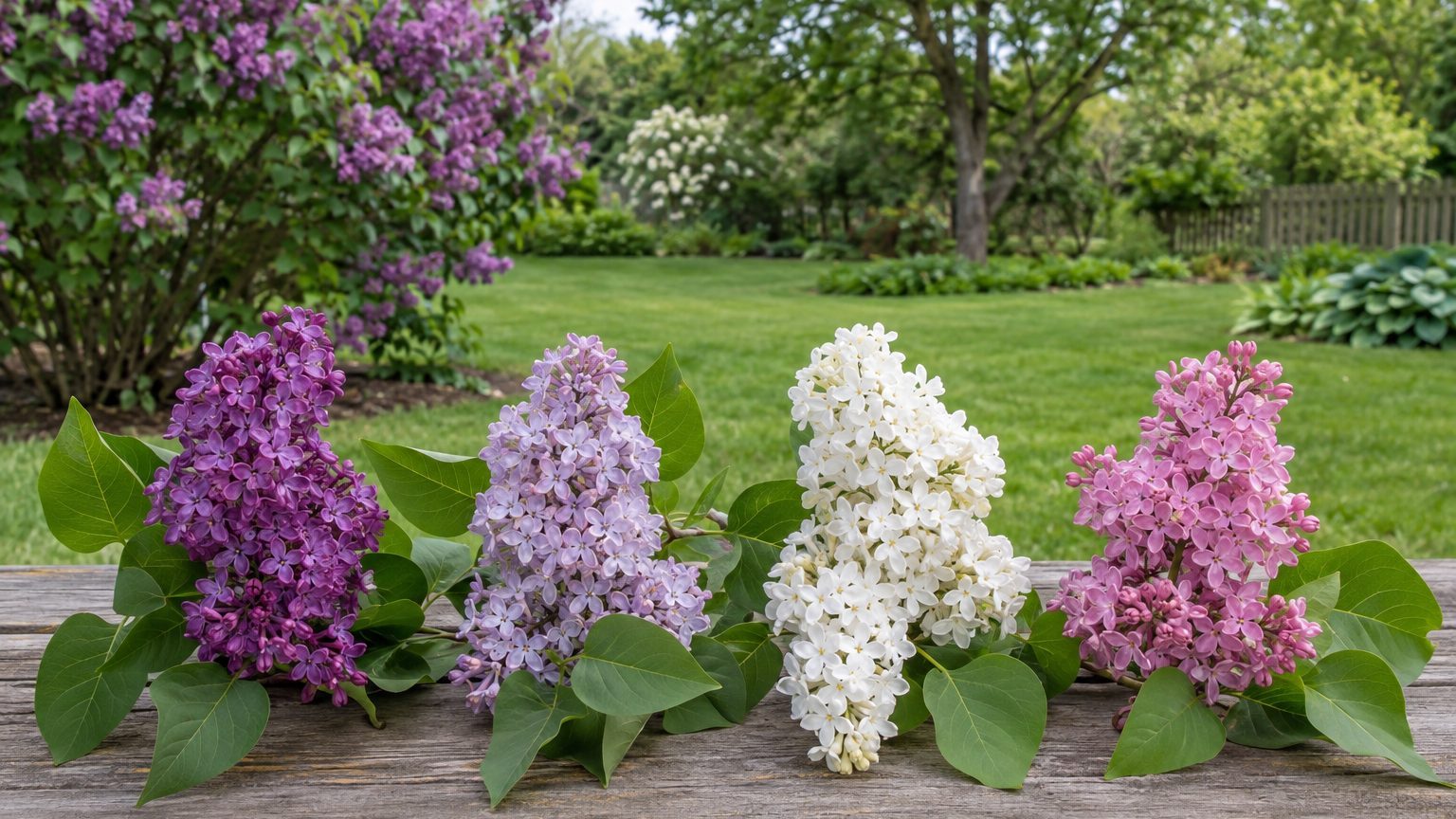
A lilac in full bloom fills a yard with scent each spring, and the shrub behind it rarely asks for much. In Indiana, the choice of type matters more than the care. Cold winters suit lilacs, hot humid summers test them, and the right pick settles most of it.
Best Lilacs to Grow in Indiana

Common lilacs, cold-climate hybrids and mildew-resistant cultivars hold up best here, because lilacs want a cold winter rest to mature their flower buds. Indiana runs from zone 5b to 7a in the USDA system, so the colder end suits them well. The warmer end, with its hot, humid summers, is harder on them, so cultivar choice counts more there.
Common Lilac

Syringa vulgaris is the lilac most people know, and it is the one sold in stores. It is cold-hardy, so Indiana winters are no trouble. It is not picky about soil, rarely needs fertilizer and has few pest or disease problems.
Early Hybrid Lilacs

These hybrids between S. oblata and S. vulgaris are well suited to cold climates and bloom early in the lilac season. They open ahead of the common lilacs, which stretches your season. Plant them in a sunny spot with good air circulation.
Large-Flowered Lilacs
Some common lilacs carry notably large flowers and bloom in the middle of the lilac season. They suit a front-yard shrub you want to be the main event. Give them sun and room for air to move through the branches.
Reblooming Lilacs
Many nice cultivars rebloom, and they are worth a look if you want more flowers after the spring display. They still need the same cold winter rest, so they do better in the colder parts of the state than in the hot, humid south.
Late-Blooming Lilacs
These open after the common lilacs and before the tree lilacs. Planted next to early and mid-season types, they carry fragrance toward the end of the bloom calendar, which runs from April through May and into June for later species and cultivars.
Mildew-Resistant Cultivars
Powdery mildew is a very common problem on common lilac, and the hot, humid weather of an Indiana summer favors it. Cultivars that resist it need less maintenance. Check the plant tag or ask the nursery before you buy.
Indiana — the year and the numbers
- State
- Indiana
- USDA zones
- 5b-7a
- Last spring frost
- April 9 to April 21
- First fall frost
- October 21 to October 30
- Annual rain
- 44 in
- Lawn zone
- cool-season
- Source
- NOAA NCEI 1991-2020 Climate Normals, 32F freeze probabilities · Indianapolis
How to Choose a Lilac for an Indiana Garden
Start with where your yard sits in the state and how much time you want to give the shrub. The colder your winters, the easier lilacs are. The hotter and stickier your summers, the more the cultivar matters.
Lilacs are not fussy once they are in the ground, so most of the decision happens at the nursery.
| Your situation | What suits it in Indiana | Why |
|---|---|---|
| Very cold winters | Common lilac | Cold-hardy and well suited to Indiana winters |
| Hot, humid summers | Mildew-resistant cultivars | Powdery mildew is very common on common lilac |
| Little time to spare | Common lilac in a sunny site | Not picky about soil, rarely needs fertilizer, few pests |
| A longer bloom season | Early hybrids, common lilacs and late bloomers together | They open in sequence from April into May |
| A need for winter cold | Cold-climate hybrids | Buds mature during a cold winter rest |
If you garden in the warmer south of the state, put mildew resistance first and give the shrub open, airy ground.
Which Lilacs Suit Different Parts of Indiana
Winter cold is what shifts the choice from one end of Indiana to the other, and so does the length of the hot season.
- Northern Indiana: Colder winters give lilacs the rest their buds need. Common lilacs and early hybrids settle in easily here.
- Indianapolis and central Indiana: Central Indiana offers the cold winter rest lilacs need, but cultivar choice still matters. Add mildew resistance to your shopping list, since summers turn humid.
- Southern Indiana: Spring comes earlier and autumn lingers longer than in the north. Hot, humid summers are harder on lilacs, so choose resistant cultivars and open, sunny sites.
Wherever you live in the state, give a lilac a sunny site with moving air.
Lilac Buying Mistakes to Avoid in Indiana
Buying a Type Not Built for Cold
Lilacs are adapted to cold-winter climates, and a novelty shrub with no cold track record is a gamble. If it struggles, flowering may disappoint. Stick with common lilac or the cold-climate hybrids, which are well suited to cold.
Ignoring How Much Cold a Cultivar Needs
A lilac that wants a long, cold winter will sulk through hot, humid summers and mild winters. That matters most in southern Indiana. Choose one with mildew resistance and plant it where air moves freely.
Buying a Pot Without Knowing Adult Size
A lilac can outgrow a tight spot, and one crowded against a house needs trimming sooner. Prune right after the flowers fade, in May or June, because buds for next spring form soon after. Cutting in late summer, fall or winter removes next year’s flowers.
An overgrown lilac can be cut back hard in March or April, but expect it not to flower for a few years afterward.
Where to Get Lilac Advice in Indiana
Local help matches a cultivar to your yard better than a plant tag can. Purdue Extension answers lilac questions, and its county office sits close to your soil and your weather.
- Call or visit the county extension office in spring, when lilacs flower in April and May, and ask which cultivars grow well nearby.
- Bring a photo or a cutting of a lilac with trouble, such as mildew on the leaves, so the staff can name the cause.
Common Questions
How Much Sun Do Lilacs Need?
Lilacs thrive in sunny sites with good air circulation. Pick the sunniest open spot in your yard rather than a corner where air stays still.
Are Lilacs Good for Pollinators?
Yes, they are highly attractive to pollinators. They also work well as border shrubs, privacy screens and vertical interest along a property line.
Are Lilacs Native to North America?
The common lilac was originally from Europe, but it is now considered a naturalized species of North America.