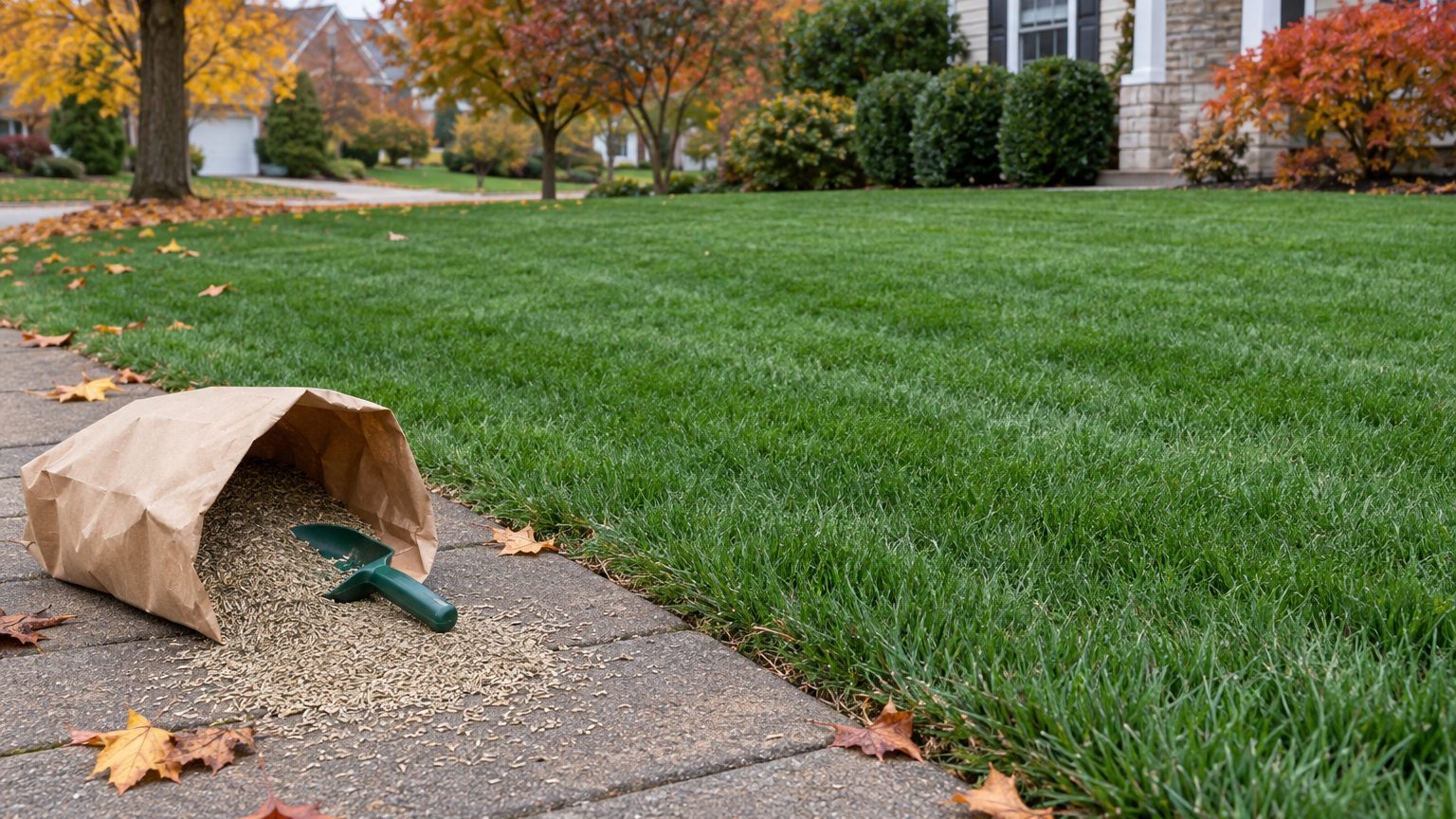
In late summer, Indiana lawns reveal how well cool-season grasses cope with heat and dry spells. Kentucky bluegrass, tall fescue, fine fescues and perennial ryegrass are the seed choices that make sense here, and the right one depends on your sun, traffic and patience for mowing.
Which Grass Grows Best in Indiana?
Cool-season grasses suit Indiana because its winters are cold and its summers are humid. These grasses grow hard in spring and again in fall, then rest through midsummer heat. Warm-season turf is a gamble here, since a cold winter can leave it brown and thin.
Tall Fescue
Tall fescue has deep roots, so it rides out dry spells and summer heat better than bluegrass does. It suits sunny family yards with real foot traffic, and it still tolerates some shade. It grows in upright clumps, so mow it high.
Kentucky Bluegrass
Kentucky bluegrass makes the dense, carpet-like lawn many people picture, and it spreads to repair small bare spots on its own. It thrives in full sun with regular water. The tradeoff is that it turns dormant and tan in a hot, dry summer unless you irrigate.
Perennial Ryegrass

Perennial ryegrass sprouts fast, which makes it useful for quick cover and for blending into a mix on slopes or overseeded patches. It is less tolerant of the coldest Indiana winters than bluegrass, so it works best as a partner in a blend rather than alone.
Fine Fescues
Creeping red, chewings and hard fescue handle shade and poor, dry soil better than the others. They need less fertilizer and less mowing, but they dislike heavy foot traffic and soggy ground. For a lawn under mature trees, they are the more dependable bet.
Indiana — the year and the numbers
- State
- Indiana
- USDA zones
- 5b-7a
- Last spring frost
- April 9 to April 21
- First fall frost
- October 21 to October 30
- Annual rain
- 44 in
- Lawn type
- cool-season
- Source
- NOAA NCEI 1991-2020 Climate Normals, 32F freeze probabilities · Indianapolis
How to Choose Grass Seed for an Indiana Yard
Start with the light your yard gets and the wear it takes. A sunny lawn with kids and dogs wants a different grass than a shaded corner under a maple. Water and mowing habits matter just as much.
A blend can work well because different grasses can cover for each other where conditions shift across the same lot. Check the label for the species names rather than a catchy mix title.
| Your yard | Grass to choose | Why it fits |
|---|---|---|
| Full sun, heavy traffic | Tall fescue | Deep roots and tough blades hold up to play and heat |
| Full sun, can irrigate | Kentucky bluegrass | Dense turf that repairs itself |
| Shade or dry soil | Fine fescues | Tolerate low light and need little feeding |
| Quick fix or slope | Perennial ryegrass in a blend | Germinates fast to hold soil |
| Little watering, less mowing | Fine fescues | Lower demand through summer |
If you like to mow often and keep a manicured look, bluegrass rewards you. If you would rather mow less and water rarely, lean toward fine fescues where the site suits them. Whatever you pick, cover the seed with no more than 0.25 inch of soil and press it down so it touches the ground firmly.
Which Grasses Grow Where in Indiana
Spring arrives earlier and autumn cold later in southern Indiana than in the north, and that shifts which grass is easiest to keep.
- Northern Indiana, around South Bend and Fort Wayne: Colder winters favor Kentucky bluegrass and fine fescues, which handle cold well.
- Central Indiana, around Indianapolis: Bluegrass, tall fescue and blends do well, and the statewide seeding window applies here.
- Southern Indiana, around Evansville and Bloomington: Hotter, longer summers push the choice toward tall fescue, which keeps its color better through the heat.
Wherever you live, local frost timing matters more than a statewide rule of thumb.
Grass Seed Mistakes to Avoid in Indiana
Choosing the Wrong Species
Planting a sun-loving bluegrass under heavy shade eventually gives you a thin, weedy patch. Match the grass to the light, using fine fescues for shade and tall fescue or bluegrass for sun. Warm-season grasses are better skipped in most of the state, since winter can set them back.
Seeding at the Wrong Time
Seed that lands in midsummer heat struggles to root, and seed that goes down too late gets caught by the cold before it matures. August and September are the best months for seeding in Indiana, and if you miss them, April and May still work. Fall seeding has the advantage of warm soil and fewer weeds competing.
Using Too Much or Too Little Seed
Thin sowing leaves gaps for weeds, while heavy sowing crowds seedlings so they fight each other and fall to disease. Follow the rate on the bag for the species you buy, and spread it evenly with passes in crossing directions. Keep the soil moist until the grass is established.
Where to Get Lawn Advice in Indiana
Local help is available for soil, seed and problem spots. Purdue Extension publishes lawn guidance written for Indiana conditions, and your county office can answer questions specific to your neighborhood.
- Purdue Extension has publications on choosing grasses and improving a lawn, which are worth reading before you buy seed in late summer.
- Your county extension office can advise on soil testing and on which species suit your part of the state, so call before your August seeding window opens.
Common Questions
Can You Plant Grass Seed in Indiana in Spring?
Yes. April and May work as a fallback if you miss the late-summer window. Spring seedlings have less time to root before summer heat, so water them regularly and expect to give them more attention.
Should You Use Crabgrass Preventer When Seeding?
Preventer stops new seed from sprouting along with the weeds, so it is best left off a freshly seeded spot. April is the usual month for preventer on established turf, and fall seeding avoids the conflict.
When Should You Fertilize a New Lawn in Indiana?
September and November are the best months for feeding cool-season turf, and May also works. A fall feeding builds roots that carry the grass through winter and into spring.