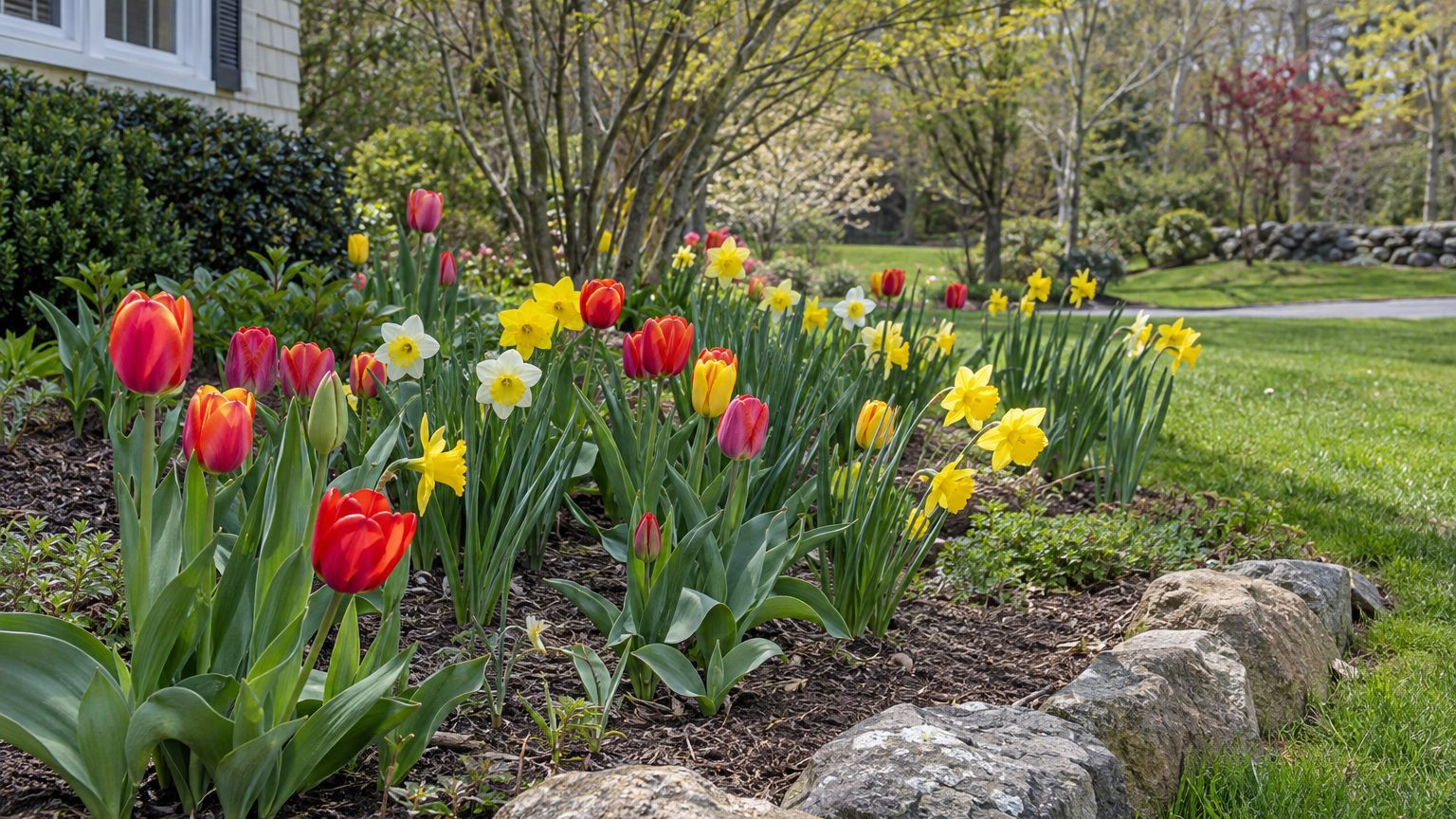
Green spears push through cold, damp soil, and then one morning the yard has color again. In Indiana, tulips and daffodils flower mostly in April and May, with the earliest daffodils opening in late February in some years. The timing follows how quickly spring warms up.
When Do Tulips and Daffodils Bloom in Indiana?

Tulips and daffodils bloom in Indiana mostly in April and May. Bulbs come up in March or early April, and a few early daffodils open as soon as late February when the weather allows. Bloom follows the warming of spring, so it shifts from year to year.
| Bulb | When it blooms in Indiana | What sets the timing |
|---|---|---|
| Daffodils | February to May, mostly April | Variety and how fast spring warms |
| Tulips | April to May | Variety and spring warmth |
Crocus, hyacinths and alliums open in the same general stretch of spring. Crocus come at the start of the season and ornamental onions (alliums) close it, but their exact months depend on the weather that year. According to Iowa State University Extension, alliums need the cold of winter to bloom, though they still go in with the other bulbs in the fall.
Indiana — the year and the numbers
- State
- Indiana
- USDA zones
- 5b-7a
- Last spring frost
- April 9 to April 21
- First fall frost
- October 21 to October 30
- Annual rain
- 44 in
- Lawn zone
- cool-season
- Source
- NOAA NCEI 1991-2020 Climate Normals, 32F freeze probabilities · Indianapolis
How to Tell Your Bulbs Are About to Bloom
Bulbs announce themselves well before the first flower, and a walk along the beds tells you more than a calendar does.
- Green tips poking through the soil in March or early April mean the bulbs have finished their winter rest and are growing.
- Leaves that stand several inches tall without a flower stalk show the plant is building strength, so flowers are still ahead.
- A flower stalk rising from the center of the leaves means bloom is close, and a cold snap now is worth watching for.
- Buds that swell and begin to show color mean the flowers will open soon.
- Early daffodils opening in late February tell you the season has started, and tulips usually follow in April.
A bed that shows nothing by April deserves a gentle dig to check for rot or for bulbs that animals have taken.
What to Do After Tulips and Daffodils Bloom in Indiana
Once the petals fade, snip off only the spent flowers. The leaves stay on the plant until they turn yellow and brown, because they feed the bulb for next year’s bloom. Do not cut them while they are green, and do not tie or braid them.
Tulips are often short-lived in the garden, and some gardeners treat the larger ones as annuals, lifting them in late spring to make room for other plants. Daffodils last longer and are the more dependable perennial bulb. They also tend to be left alone by voles, squirrels, rabbits and deer, which eat tulips and crocus.
The facts on hand give no feeding schedule, so there is no set rule to follow here.
How Bloom Time Shifts Across Indiana
Indiana spans a long north to south stretch, and spring arrives earlier in the southern part of the state than near Lake Michigan.
- Southern Indiana: Spring warms sooner here, so bulbs tend to come up and flower ahead of the rest of the state.
- Indianapolis and central Indiana: This middle ground follows the general April and May pattern for tulips and daffodils.
- Northern Indiana, near Lake Michigan: Spring comes later, so flowers open after those in the south.
Gardeners in the north will often see bloom lag behind the south by a fortnight or more.
Where to Get Bulb Advice in Indiana
Purdue Extension offers local guidance, and each county has its own office with people who know the soil and weather where you live.
- Purdue Extension has bulb planting and care guides, which are useful before the fall planting season.
- Your county extension office can answer questions about problem bulbs or pests, so call when something looks wrong in spring.
Common Questions
When Should You Plant Tulips and Daffodils in Indiana?
Plant them in September and October, and in Indiana the advice is late September through mid-October. The soil should have cooled off noticeably from summer warmth, which gives roots time to form before the ground freezes without pushing bulbs to sprout in fall. If bulbs are still in the bag, plant them as long as the ground can be dug, even in November or December.
Do Tulips and Daffodils Need Winter Cold to Bloom?
Yes. Most spring-flowering bulbs need about 12 to 16 weeks of cold to flower. Indiana winters supply that naturally, so the refrigerator chilling used where winters are mild is not needed here.
Which Spring Bulbs Do Animals Leave Alone?
Daffodils. Voles, squirrels, rabbits and deer go for tulips and crocus, so daffodils are a safer choice in beds that wildlife visits often.