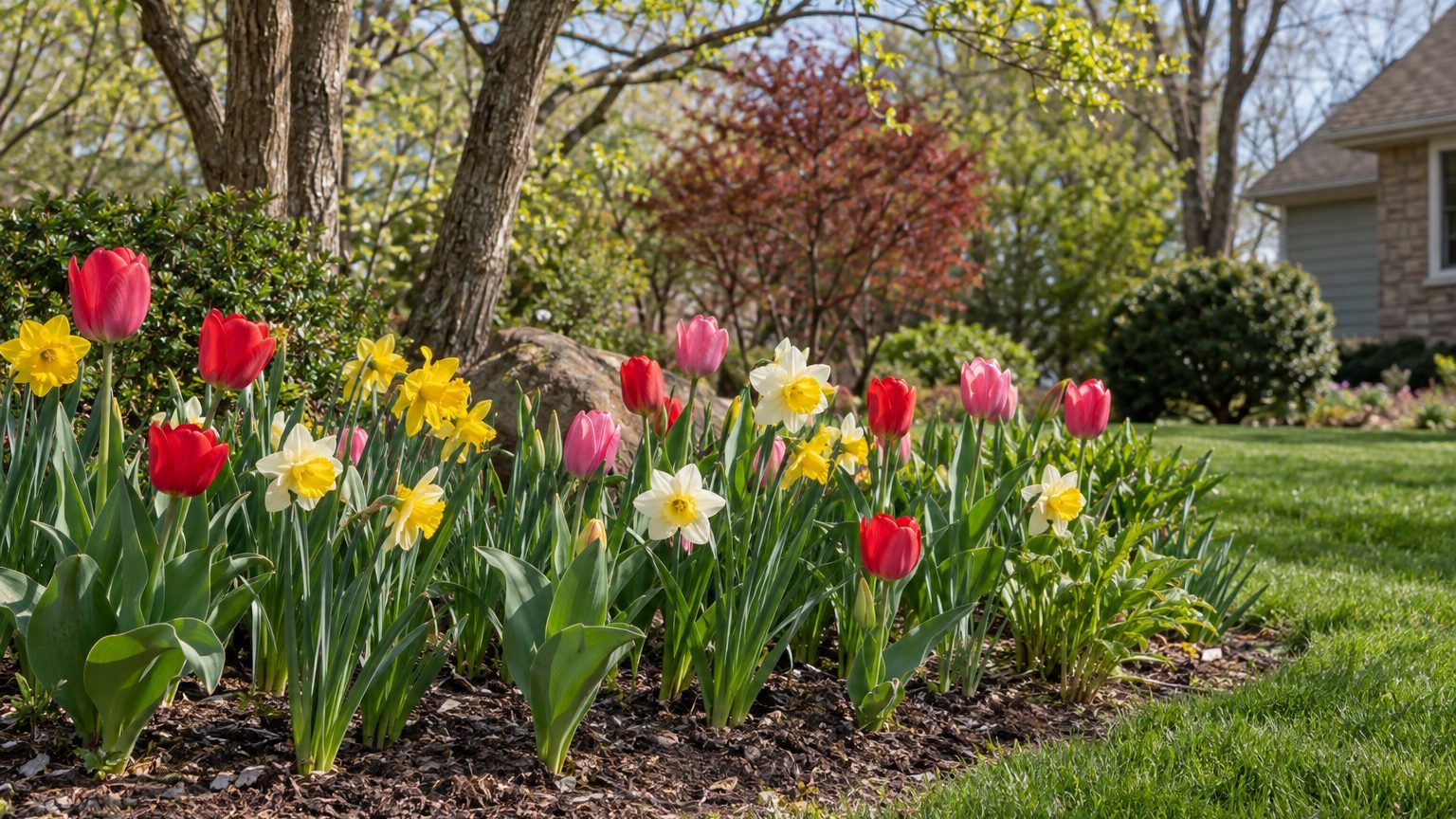
Green spears push through the leaf litter in late winter, and by spring the front beds fill with yellow trumpets and cups of every color. In West Virginia, tulips and daffodils follow the spring warm-up through the hills and hollows. Timing shifts a little with elevation and with how the winter went.
When Do Tulips and Daffodils Bloom in West Virginia?

Tulips and daffodils bloom in West Virginia in March, April and May, and a mild late winter can bring the first flowers in February. The exact week moves with the spring warm-up, so a warm March opens blooms sooner and a cold one holds them back.
| Bulb | When it blooms in West Virginia | What sets the timing |
|---|---|---|
| Snowdrops and winter aconites | The start of the season, from February | The first mild spells of late winter |
| Tulips and daffodils | March, April and May | Spring warming after a full winter chill |
| Alliums | The end of the bulb season, in late spring | Warming spring days, chill period needed |
Crocus and hyacinths also belong to this spring parade and flower within the same stretch of months. Most of these bulbs need about 12 to 16 weeks of cold to flower. That cold is why they go into the ground in fall, usually in October, though September or November also works, once the soil has cooled down and the warmth of summer has left it.
Cooling soil gives roots time to form before the ground freezes, yet keeps the bulbs from sprouting too early. For orientation, the USDA hardiness zone system places West Virginia between 5a and 7a, so the cold-hardy bulbs in this article are at home across the state.
West Virginia — the year and the numbers
- State
- West Virginia
- USDA zones
- 5a-7a
- Last spring frost
- April 9 to April 23
- First fall frost
- October 18 to November 1
- Annual rain
- 46 in
- Lawn zone
- cool-season
- Source
- NOAA NCEI 1991-2020 Climate Normals, 32F freeze probabilities · Charleston
How to Tell Your Bulbs Are About to Bloom
The plants announce themselves well before the first petal opens, and a walk along the beds on a mild day tells you where each clump stands.
- Green tips breaking the soil surface mean the bulb has woken up and roots are working, so it is time to rake away heavy leaf litter.
- Leaves that stretch taller and wider show the bulb is drawing on its stored energy, and they should be left alone from here on.
- A fat bud rising from the center of the leaves means a flower is on its way, usually only a short time before color appears.
- A bud tip that shows color means the bloom is close, and daffodils and tulips will open as soon as the days warm.
- Flower stems standing straight and firm in tulips tell you the plant came through the winter cold well.
- Chewed or missing tips, especially on tulips and crocus, point to voles, squirrels, rabbits or deer feeding on the bed.
A bed that stays bare long after its neighbors have sprouted is worth a gentle dig to check the bulbs.
What to Do After Tulips and Daffodils Bloom in West Virginia
Once the petals fade, snip off the spent flowers and leave everything else standing. Tulips and daffodils flower on energy their leaves stored the season before, so the leaves are working for next year even when they look untidy.
Leave the foliage in place until it turns yellow and then brown, and never tie it in knots or braid it. Cutting green leaves starves the bulb and costs you flowers the following spring. Planting perennials or summer annuals nearby lets their growth hide the fading leaves.
Expect the two bulbs to age differently. Tulips are often short-lived in the garden, so beds tend to thin out and need fresh bulbs in fall. Daffodils last longer and are the more reliable perennial bulb. Daffodils overwinter across every growing zone found in West Virginia.
How Bloom Time Shifts Across West Virginia
Elevation matters more than latitude here, since the state climbs from river bottoms to mountain ridges.
- Kanawha Valley around Charleston: As a river valley, this area warms sooner, so bulbs generally open earlier here than on the hills above.
- Allegheny Highlands: Higher ground freezes earlier in fall and stays cold longer in spring, so tulips and daffodils usually flower later than in the lower valleys.
A garden sitting on a hillside above a valley town may bloom a little later than a neighbor’s down by the river.
Where to Get Bulb Advice in West Virginia
Local questions about varieties, soil and timing are best answered close to home. West Virginia University Extension covers the state, and each county has its own office with people who know the local ground.
- West Virginia University Extension has gardening information you can read at any season, and fall is a good time to look before ordering bulbs.
- Your county extension office can speak to your elevation and soil, so call before you buy a large order of bulbs.
Common Questions
Will Deer and Voles Eat My Tulips and Daffodils?
Voles, squirrels, rabbits and deer eat tulips and crocus, while daffodils are left alone. Where deer are common, daffodils, hyacinths and alliums make safer choices.
Do Alliums Need Cold Weather to Bloom?
Yes. According to Iowa State University Extension, alliums need a chill period to bloom, like other spring bulbs. They still go in the ground in fall with the rest.
What If Bulbs Are Still in the Bag After November?
Plant them. A bulb still in the bag is better planted late than stored over the winter, so keep planting for as long as the ground can be dug.