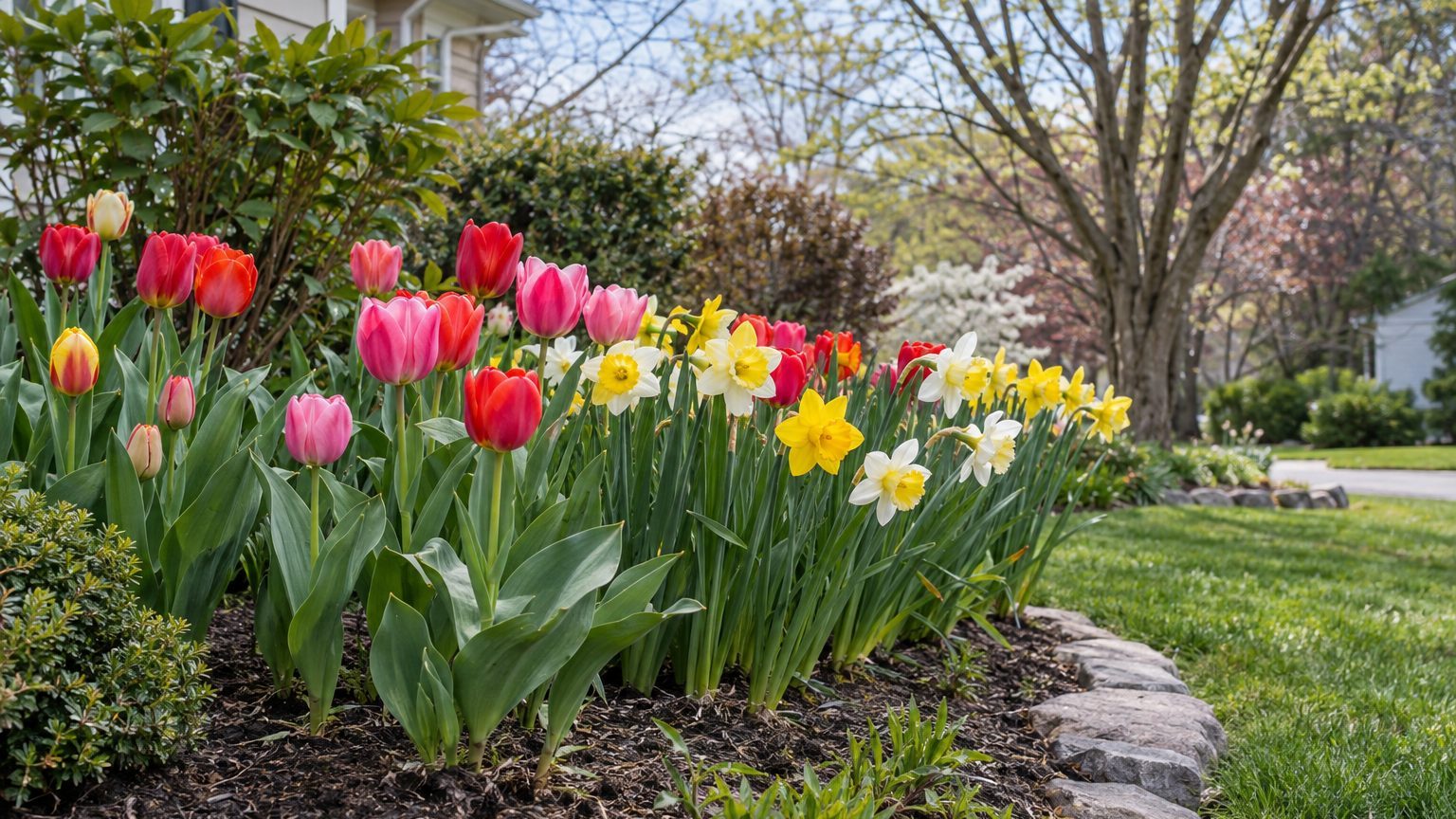
Daffodil spears push through leaf litter, and soon the tulips color up behind them. In Virginia, that spring show runs across several months, and where you garden shifts it a good deal. Knowing the usual window, and what moves it, helps you plan color and decide when to put the camera away.
When Do Tulips and Daffodils Bloom in Virginia?

Tulips and daffodils bloom in Virginia from March through May, and in a mild year the first flowers can open in February. Bloom follows how fast spring warms the ground and air, so a cold snap holds buds back and a warm spell pushes them forward.
Winter does the groundwork. Bulbs planted the previous fall need a long stretch of cold before they can flower, and the spring warm-up then sets the day the buds open.
| Bulb | When it blooms in Virginia | What sets the timing |
|---|---|---|
| Daffodils | March to May, with a few opening in February | Spring warming after a cold winter |
| Tulips | March to May, with a few opening in February | Spring warming after a cold winter |
| Alliums | Near the end of the spring bulb season | Needs a winter chill period, and the season’s warmth then decides |
Spring bulbs bloom in a long succession, starting with snowdrops and winter aconites and finishing with alliums, also called ornamental onions. Crocus and hyacinths sit between those ends, and tulip varieties spread across the season too, which is why a single planting of mixed types can stay colorful for a long stretch. Virginia spans USDA hardiness zones 5a to 8b, so the same bulb can open at quite different moments depending on your yard.
Virginia — the year and the numbers
- State
- Virginia
- USDA zones
- 5a-8b
- Last spring frost
- March 20 to April 3
- First fall frost
- November 10 to November 24
- Annual rain
- 47 in
- Lawn zone
- transition-season
- Source
- NOAA NCEI 1991-2020 Climate Normals, 32F freeze probabilities · Virginia Beach
How to Tell Your Bulbs Are About to Bloom
Bulbs announce themselves in stages, and each stage tells you something you can act on.
- Green tips poking through the soil mean the roots did their work over winter, so mark the spot and keep digging tools away from it.
- Leaves that lengthen and thicken show the bulb is drawing on its stored energy, which is the moment to clear fallen leaves and mulch from the planting bed.
- A bud rising between the leaves means flowers are close, so protect it from foot traffic and from rabbits and deer if they visit your yard.
- A bud that swells and begins to show color is days from opening, which makes it a good time to plan any cut flowers you want indoors.
- A flower stalk stretching taller each day tells you the warm spell is working, and a cold night can briefly pause it without harming the bulb.
If nothing appears where you planted, check the spot before assuming failure, because animals sometimes dig up tulips and crocus.
What to Do After Tulips and Daffodils Bloom in Virginia
Snip off the faded flowers and leave everything else alone. The leaves keep feeding the bulb for next year’s flowers, so let them stay on the plant until they turn yellow and then brown. Never cut them green, and never tie or braid them, because bundled leaves catch less light.
Plan for the two bulbs to behave differently over the years. Tulips are often short-lived in the garden, while daffodils last longer and are the more reliable perennial bulb. Voles, squirrels, rabbits and deer eat tulips and crocus, and they leave daffodils alone, which is another reason daffodils tend to hold their ground.
When it is time to refill gaps, plant spring bulbs in fall, once the soil has cooled down. October is the best month in Virginia, with September and November still workable. That timing gives roots a chance to form before the ground freezes, without letting the bulbs sprout too early.
How Bloom Time Shifts Across Virginia
Elevation and distance from the ocean move bloom dates more than anything else in the state, and the shift runs from the coast toward the mountains.
- Virginia Beach and the Hampton Roads coast: This is the mild end of the state, so bulbs here wake first and flowers open ahead of the rest of Virginia.
- The Blue Ridge: Spring arrives later on the ridges and in the high valleys, so the same daffodil that is fading near the coast may only be opening here.
- Southwest Virginia: Winters are colder and spring comes later, so bloom lands toward the back of the March to May window and sometimes spills past it.
A neighbor an hour or so away at a different elevation can be a useful guide, because watching their bulbs gives you a preview of your own.
Where to Get Bulb Advice in Virginia
Virginia Cooperative Extension offers research-based guidance on bulbs, and its county offices know the local conditions on your side of the state.
- The Virginia Cooperative Extension website carries gardening guides for homeowners, so check it before you buy bulbs in late summer or early fall.
- Your county extension office can answer questions about soil, pests and varieties, and a visit in fall helps you plant at the right time.
Common Questions
Do You Need to Chill Tulips and Hyacinths Before Planting?
Most spring-flowering bulbs need about 12 to 16 weeks of cold to flower. Where winters are too mild to supply it, tulips and hyacinths are chilled in the refrigerator before planting. If you garden on the coast and winters feel short, that step can be worth taking.
What If Bulbs Are Still in the Bag After October?
Plant them as long as the ground can be dug. A bulb planted late is a better bet than one stored over the winter, because a stored bulb dries out and loses its chance to bloom.
Which Bulbs Can You Plant If Deer or Squirrels Visit Your Yard?
Daffodils are the dependable choice, since animals leave them alone. Hyacinth, allium, fritillaria and scilla are also ones deer and squirrels tend to pass by, while tulips and crocus are the ones they go after.