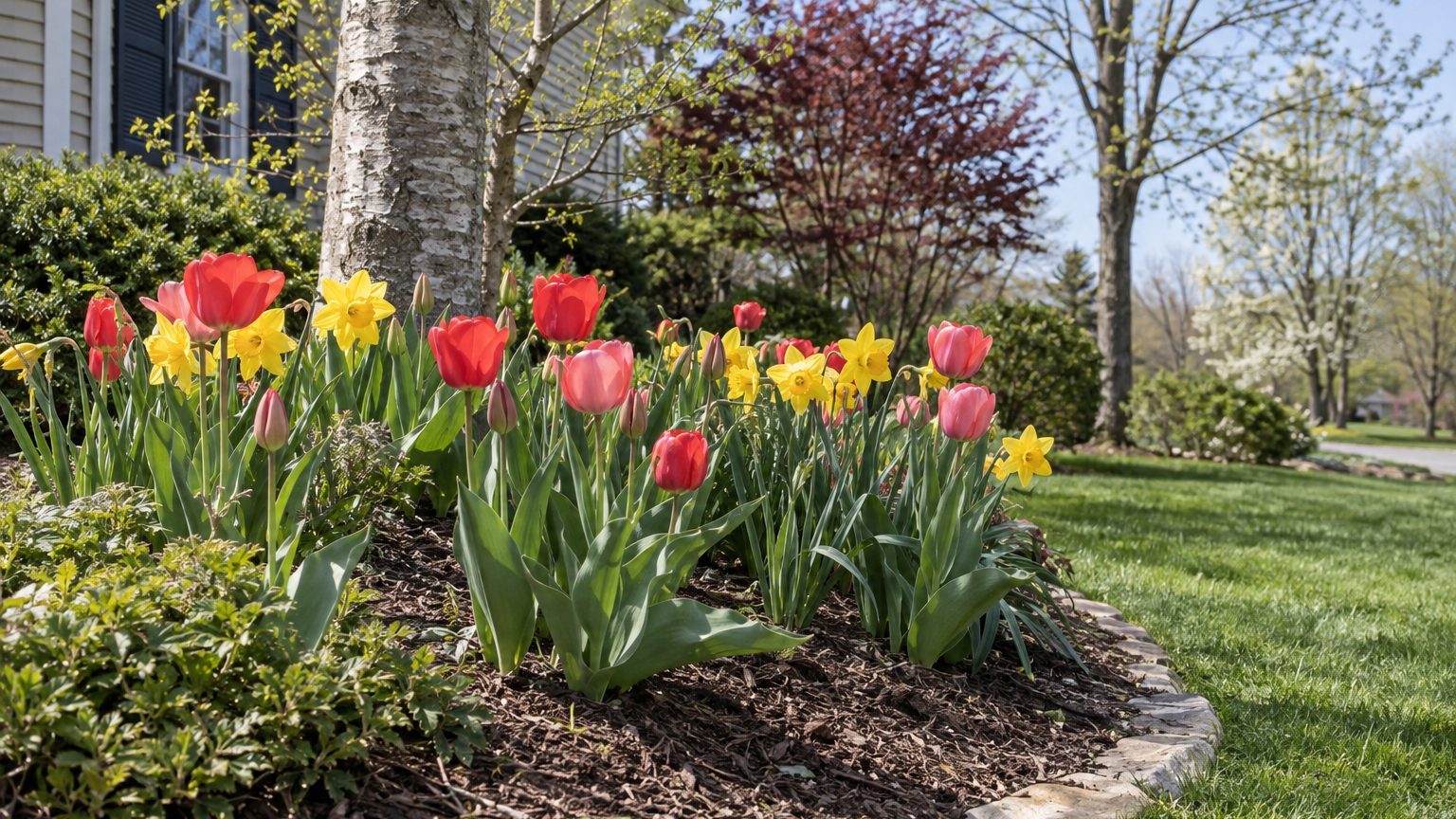
Green daffodil tips pushing through cold soil are an early sign of spring in an Ohio yard, and tulips follow once the days warm. Their bloom responds to the season, so timing shifts a little from year to year and across the state.
When Do Tulips and Daffodils Bloom in Ohio?

Tulips and daffodils bloom mostly in April and May in Ohio. Early daffodils can open as soon as late February, and a cold March simply holds the show back. Bloom follows the warming of spring, so the months below are a range, not a fixed date.
| Bulb | When it blooms in Ohio | What sets the timing |
|---|---|---|
| Daffodils | Late February into April and May | Variety, since some open early and others much later |
| Tulips | April through May | Variety and how quickly spring warms |
| Green shoots of spring bulbs | March or early April | Soil warming after winter cold |
Crocus, hyacinths and alliums also add spring color. Most spring-flowering bulbs need about 12 to 16 weeks of cold to flower. Plant them in September or October. November and even December planting still works if the ground has not frozen. Wait until the soil has cooled off enough in autumn so roots can form before the ground freezes without the bulbs sprouting in fall.
Ohio — the year and the numbers
- State
- Ohio
- USDA zones
- 5b-6b
- Last spring frost
- May 5 to May 15
- First fall frost
- October 5 to October 15
- Annual rain
- 42 in
- Lawn zone
- cool-season
- Source
- Ohio State University Extension — Ohio Gardening Calendar · Columbus
How to Tell Your Bulbs Are About to Bloom
The bulbs announce themselves in stages, and each stage tells you something useful about what is coming.
- Green tips breaking the soil in March or early April mean the bulbs have woken, so leave the ground alone and let the leaves unfurl.
- Daffodil buds, held upright in a papery sheath, swell and then nod sideways just before they open, which signals flowers within a short while.
- Tulip buds that show a stripe of color at the tip while still closed are close to opening, since the petals color before they spread.
- A fat flower stalk rising from the center of broadening leaves means a tulip or daffodil is getting ready to flower, while a plant with leaves alone may be a young bulb that skipped the year.
- A tight cluster of buds sitting low in the leaves of a hyacinth will lengthen into a spike as the weather warms.
A cold snap while buds are showing color can delay opening, but the bulb below ground is not harmed by it.
What to Do After Tulips and Daffodils Bloom in Ohio
Snip off the faded flowers and stop there. The leaves stay on the plant until they turn yellow and then brown, because the leaves feed the bulb and store the energy for next year’s flowers. Cutting them early, braiding them or tying them into knots shrinks next spring’s show.
Let the foliage fade among other plants. Hostas and daylilies coming up beside the bulbs will hide the yellowing leaves for you. When the leaves pull away with a gentle tug, they are finished and can go.
Tulips are often short-lived in the garden, so plan to add fresh ones in fall. Daffodils last longer and are the more reliable perennial bulb. If you want a dependable display with little replanting, build the bed around daffodils and treat tulips as a bonus.
How Bloom Time Shifts Across Ohio
Ohio is wide and the lake and river shape the weather, so the same bulb opens at different times in different yards.
- Lake Erie shore, including Cleveland and Ashtabula: The lake keeps spring cooler, so bulbs here tend to open later than in the rest of the state, and a long stretch of cool weather can stretch the bloom out.
- Ohio River valley, around Cincinnati: Spring warms sooner in the south, so bulbs push up and flower earlier here than in the north, and the earliest daffodils lead the way.
- Columbus and central Ohio: Timing lands between the lake and the river, and it follows the neighborhood, with sheltered, south-facing beds opening ahead of open, windy ones.
Within any one town, a bed against a warm wall will flower ahead of one in a low, cold pocket.
Where to Get Bulb Advice in Ohio
Ohio State University Extension publishes research-based guidance on planting and caring for spring bulbs, and your county has an office that can answer questions about your own soil and yard.
- The Extension website has fact sheets on bulbs and spring flower care, and it is a good place to read before ordering bulbs in late summer.
- Your county Extension office can answer local questions about soil, drainage and what is blooming nearby, and a call in early fall helps you plan planting.
Common Questions
Do Deer and Squirrels Eat Tulips and Daffodils?
Voles, squirrels, rabbits and deer eat tulips and crocus, but they leave daffodils alone. If animals are a problem in your yard, daffodils are the safer choice for a front bed.
Do Alliums Need Cold Weather to Bloom?
According to Iowa State University Extension, alliums, like other spring bulbs, need the cold of winter to bloom. They still go in during fall with the other spring bulbs.
Can You Plant Forced Daffodils Outdoors in Ohio?
Yes, forced daffodils can be saved for outdoor planting. They are more vigorous than tulips, which is why forced daffodils tend to settle in well.