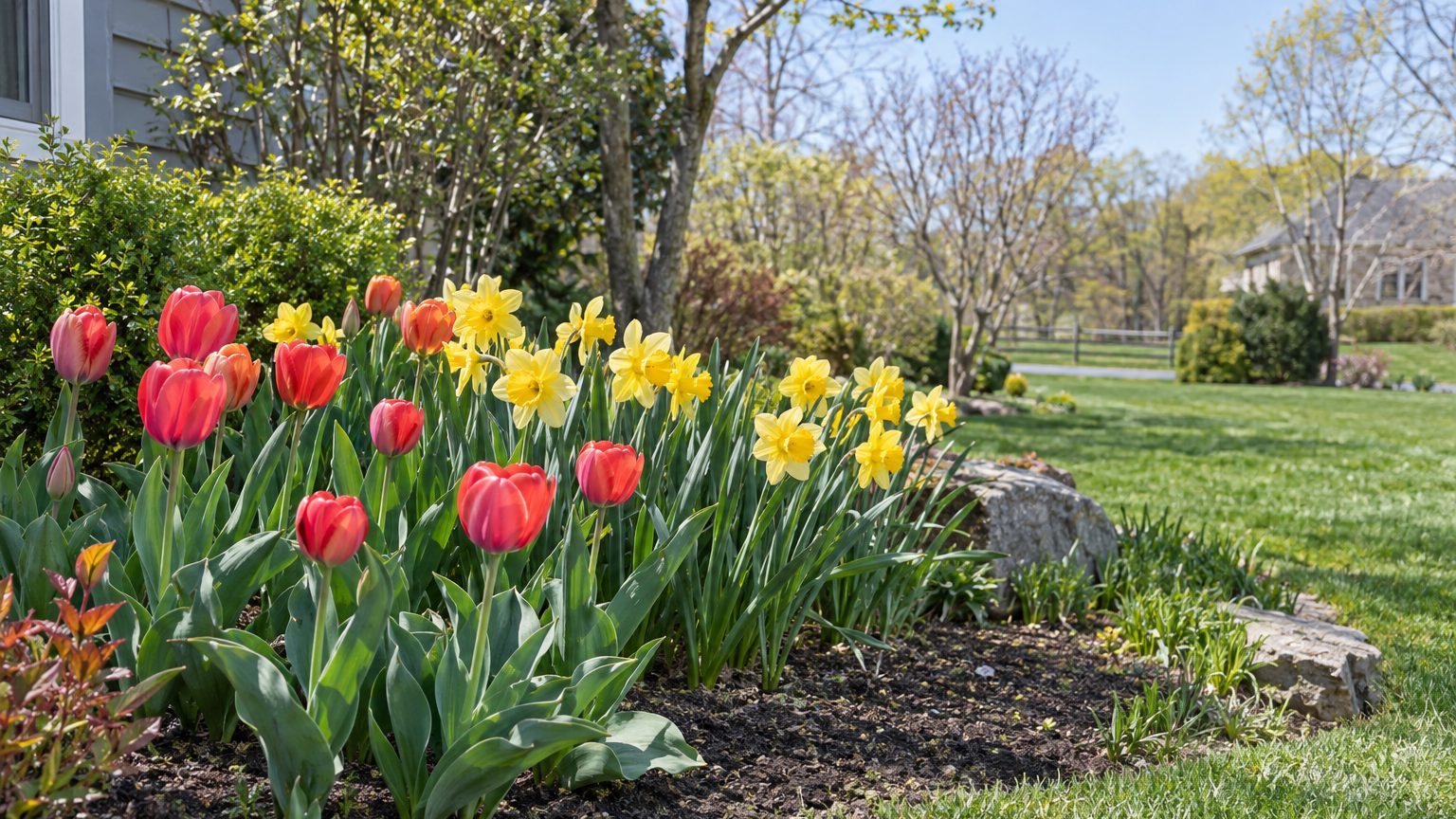
Green daffodil shoots pushing through cold mulch tell Maryland gardeners that spring has started well before the calendar says so. Tulips follow with their cups of color, and the whole bulb show runs through the spring months. Bloom dates for tulips and daffodils across Maryland, and what to do once the flowers fade, come down to a few seasonal rhythms.
When Do Tulips and Daffodils Bloom in Maryland?

Tulips and daffodils bloom in Maryland in March, April and May. In a mild late winter, the first flowers can also open in February. The exact week shifts from year to year because bloom follows how quickly spring warms up.
Bulbs that bloom early get the season going, and others follow in a long, overlapping succession. A single planting of daffodils and tulips can fill a bed for most of the spring.
| Bulb | When it blooms in Maryland | What sets the timing |
|---|---|---|
| Snowdrops and crocus | Start of the season, often dusted with snow | First warm spells after winter |
| Daffodils | March, April and May, with February possible in a mild year | Spring warming after about 12 to 16 weeks of cold |
| Hyacinths | Alongside the daffodils, in the main flush of spring | Spring warming after winter chill |
| Tulips | March, April and May, depending on the type | Spring warming after winter chill |
| Alliums | End of the spring succession, after the tulips and daffodils | Late spring warmth |
Ornamental onions (alliums) close the succession, so they carry color into the weeks when the daffodils are finished. Most spring bulbs need a stretch of winter cold to flower, and according to Iowa State University Extension, alliums do too.
Maryland — the year and the numbers
- State
- Maryland
- USDA zones
- 5b-8a
- Last spring frost
- April 3 to April 16
- First fall frost
- October 26 to November 5
- Annual rain
- 45 in
- Lawn zone
- transition-season
- Source
- NOAA NCEI 1991-2020 Climate Normals, 32F freeze probabilities · Baltimore
How to Tell Your Bulbs Are About to Bloom
Bulbs give plenty of warning, and a quick walk along the beds in late winter shows how far along they are.
- Pointed green tips breaking the soil mean the roots are active and the bulb is on its way, so there is nothing to do except keep heavy mulch from smothering them.
- Leaves that stand a few inches tall and look thick and healthy tell you the bulb has plenty of stored energy for this year.
- A fat bud tucked between the leaves means the flower has formed and bloom is close.
- Buds that begin to show color through their green wrapping mean the flowers will open soon, which is the cue to plan a vase or a photo.
- Foliage that appears in a cold snap and gets frosted usually recovers, and flowers still open as normal once the weather settles.
Early shoots can look alarming on a warm winter day, but a freeze rarely does lasting harm to growth that is still low to the ground.
What to Do After Tulips and Daffodils Bloom in Maryland
Snip off the faded flowers as soon as the petals drop, cutting just below the bloom. Leave the stems and every leaf in place. Removing only the flowers keeps the plant from spending energy on seed.
The leaves are the bulb’s kitchen. They gather sunlight and feed the bulb for next year’s flowers, so they stay on the plant until they turn yellow and then brown. Never braid, tie or cut them while green, however untidy the clump looks. Tucking perennials or annuals nearby hides the fading foliage without disturbing it.
Daffodils are the reliable perennial here and should return year after year. Tulips are often short-lived in the garden, so many gardeners add fresh tulip bulbs in fall to keep the display full, while daffodil clumps simply keep growing.
How Bloom Time Shifts Across Maryland
The state is small, but its mountains and its bay shoreline pull spring in different directions.
- Western Maryland: Garrett and Allegany counties are mountainous and run later than the rest of the state. Daffodils and tulips there open after their counterparts in central Maryland, so spring color arrives behind the rest of the state.
- Eastern Shore: The Eastern Shore runs milder, so bulbs wake up earlier and the first blooms come sooner than they do inland.
Bloom time shifts gradually from the areas that bloom earlier to those that bloom later, and each gardener’s own yard will usually sit close to the neighbors’ within a short distance.
Where to Get Bulb Advice in Maryland
Questions about varieties, soil or a bed that never blooms well are easiest to settle with people who know Maryland ground. Two places are worth a visit.
- University of Maryland Extension publishes bulb articles through its Maryland Grows pages, which are handy to browse in late summer before ordering.
- Your county extension office can answer local questions about soil and about which bulbs suit your part of the state, and a call in late summer gets you ready for fall planting.
Common Questions
When Should You Plant Tulips and Daffodils in Maryland?
October is the best month, with September and November also working. The soil should have cooled down noticeably from summer warmth, which gives roots time to form before the ground freezes yet keeps the bulbs from sprouting in the fall. In Maryland, daffodils are planted from late September to late November.
Will Deer and Squirrels Eat Spring Bulbs in Maryland?
Voles, squirrels, rabbits and deer eat tulips and crocus, and they leave daffodils alone. In Maryland, gardeners with deer or squirrels are advised to choose bulbs they dislike, such as daffodils, hyacinth, allium, fritillaria and scilla.
Can You Still Plant Bulbs That Missed the Fall?
Yes. A bulb left in the bag does better in the ground than stored over the winter, so plant it as long as the soil can be dug. Late planting may delay or shrink the first bloom, but the bulb settles in and recovers.