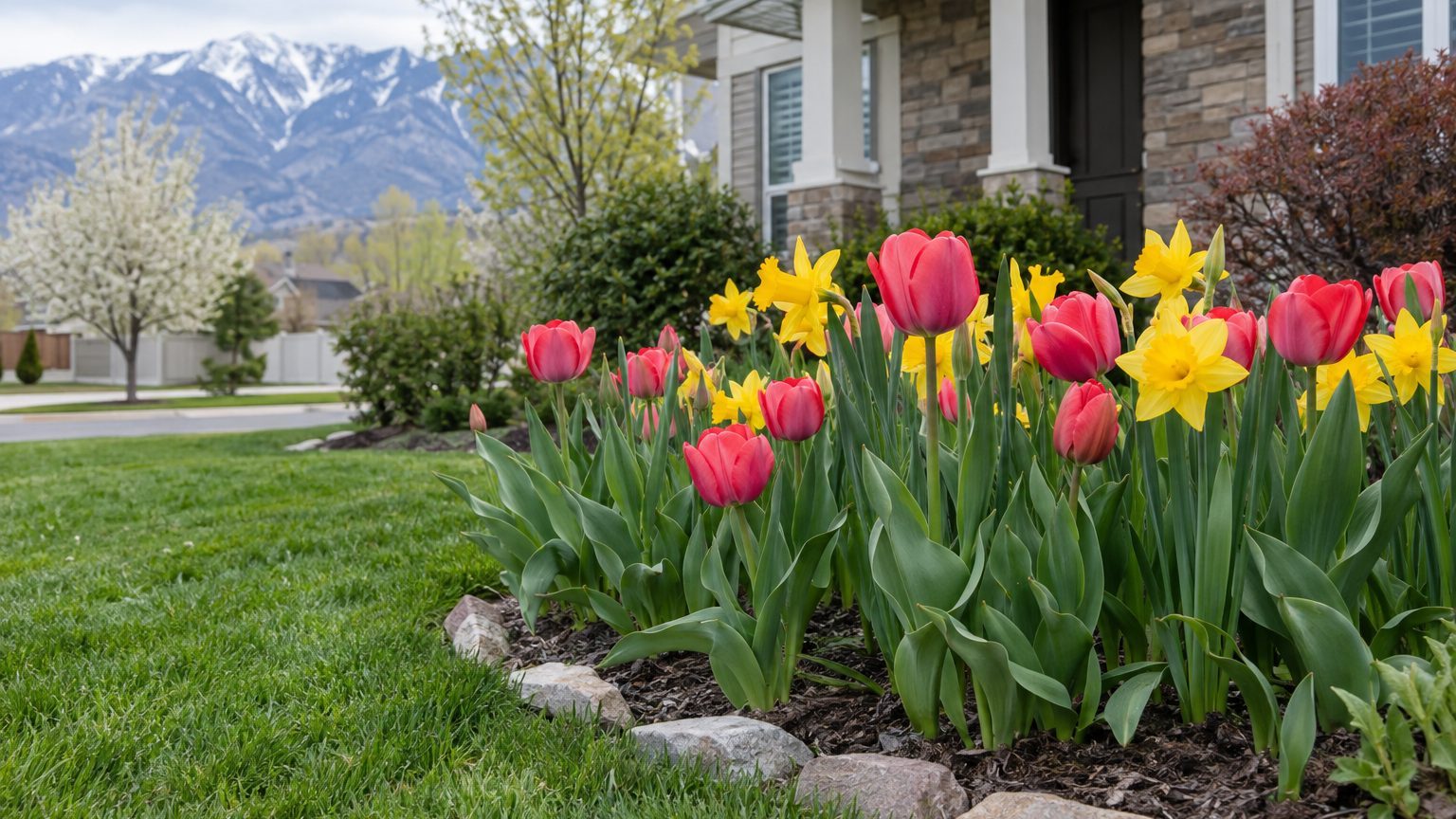
A stand of daffodils nodding along a fence in April says a lot about what suits Utah yards: bulbs that shrug off cold winters, dry ground and hungry wildlife. Spring bulbs are planted in autumn and reward you months later, so the choice matters more than the care.
Best Spring Bulbs to Grow in Utah

Daffodils, species tulips, snow iris, crocus, alliums and the sturdier hybrid tulips all do well in Utah. Winters here deliver the cold that tulips, daffodils and many other spring bulbs need before they flower, and these types cope with dry soil, browsing animals or a short life span better than fussier choices. Utah spans USDA hardiness zones 4a to 9a, so the details shift from one valley to the next.
Daffodils
Daffodils are the dependable perennial bulb in a Utah yard. They are deer resistant, and voles, squirrels and rabbits leave them alone too. They also come in many heights, colors, flower types and blooming periods, so a single planting can be varied.
Species Tulips
Species tulips are small, tough relatives of the big garden tulips and are well adapted to dry conditions. Tuck them into a sunny bed that does not get much extra water and let them settle in. Plant them in the fall with the rest of your bulbs.
Snow Iris
Snow iris is another bulb that handles dry ground well. It suits a rock garden, a sunny slope or the edge of a path where a thirstier plant would struggle. Like most spring bulbs, it needs a cold winter, which Utah provides.
Crocus
Crocus is small, well adapted to dry conditions and easy to tuck in by the dozen. The catch is that voles, squirrels, rabbits and deer eat crocus, so plant it where animals do not roam, such as close to the house or in a fenced bed.
Darwin Hybrid and Emperor Tulips
Tulips are often short-lived in the garden. Darwin hybrids and Emperor tulips are bred to return for several years, which makes them the tulips to choose if you want color beyond the first spring. They need the same cold winter and the same animal protection as other tulips.
Alliums
Alliums, the ornamental onions, bloom at the end of the bulb season, and according to Iowa State University Extension, alliums need the cold of winter to bloom. That makes them an easy fit anywhere in the state, including warmer spots where winter cold is thinner.
Utah — the year and the numbers
- State
- Utah
- USDA zones
- 4a-9a
- Last spring frost
- April 12 to April 29
- First fall frost
- October 18 to October 29
- Annual rain
- 16 in
- Lawn zone
- transition-season
- Source
- NOAA NCEI 1991-2020 Climate Normals, 32F freeze probabilities · Salt Lake City
How to Choose Spring Bulbs for Your Utah Garden
Start with the problem in your yard rather than the picture on the package. Deer, dry beds and mild winters each point toward different bulbs, and matching them saves you from replanting.
The table pairs common situations with the bulbs that handle them.
| Your situation | What suits it in Utah | Why |
|---|---|---|
| Deer, voles, squirrels or rabbits visit | Daffodils | Animals leave them alone, while tulips and crocus get eaten |
| You want bulbs that come back for years | Daffodils, Darwin hybrid tulips, Emperor tulips | Daffodils last longer than tulips, and these two tulips are bred to return |
| Dry bed with little extra watering | Species tulips, snow iris, crocus | All three are well adapted to dry conditions |
| You want color over a long stretch | Daffodils, then alliums | Daffodils vary in height, color and blooming period, and alliums close the season |
Hyacinths are worth a mention for gardeners with mild winters. They need the same winter cold as tulips and can be chilled before planting where nature does not supply enough.
Which Spring Bulbs Suit Different Parts of Utah
Utah is not one climate, and the bulb list shifts with elevation and latitude.
- Salt Lake Valley: This is a mild valley, and daffodils, Darwin hybrid tulips and Emperor tulips all get the winter cold they need. In Salt Lake City, the spring frost window is April 12 to April 29, which is a guide for frost risk rather than a planting date.
- Park City and other high towns: Most of Utah sits higher and colder than the valley floor. Winter cold is never in doubt, so daffodils, species tulips, snow iris and crocus are all reliable.
- St. George and the south: Winters are warmer, and most spring-flowering bulbs need about 12 to 16 weeks of cold to flower. Alliums need the cold of winter to bloom, and tulips and hyacinths can be chilled in the refrigerator before planting.
Check your own spot in the yard too, since a sheltered south wall and an open slope can behave like different towns.
Spring Bulb Buying Mistakes to Avoid in Utah
Counting on Tulips to Return
Tulips are often short-lived in the garden, and the bright first-year display may thin out fast. Plant Darwin hybrids or Emperor tulips for a longer run. For bulbs you want to forget about, daffodils are the more reliable perennial.
Planting Tulips and Crocus Where Animals Browse
Voles, squirrels, rabbits and deer eat tulips and crocus, and a whole bed can disappear before it blooms. If animals visit your yard, plant daffodils there instead. Save tulips and crocus for fenced spots or beds close to the house.
Holding Leftover Bulbs for Next Year
A bulb that is still in the bag is better planted late than stored over the winter. Put it in as long as the ground can be dug. Stored bulbs lose their chance at a spring bloom, while a late planting still gets some winter cold.
Where to Get Spring Bulb Advice in Utah
Utah State University Extension publishes gardening guidance written for Utah conditions, and your county extension office can answer questions about your own valley or slope.
- The Utah State University Extension gardening pages cover planting, chilling and the care of bulbs, so read them before you shop for bulbs.
- Your county extension office can tell you what grows well at your elevation, so call or stop by before you plan a large planting.
Common Questions
When Should You Plant Spring Bulbs in Utah?
September and October are the months to plant, so the bulbs root before the ground freezes. Wait until the soil has cooled below about 60°F. Earlier planting can push the bulbs to sprout in the fall.
What Do You Do with the Leaves After the Flowers Fade?
Leave the leaves on the plant until they turn brown, because they feed the bulb for next year. Remove only the faded flowers. Cutting or tying green leaves shortens next spring’s show.
Can You Grow Tulips in Pots to Bloom Indoors?
Yes, with a little trickery. Tulips and similar bulbs must be potted, chilled and then brought out into warmth and light. The chilling stands in for winter and tells the bulb it is time to bloom.