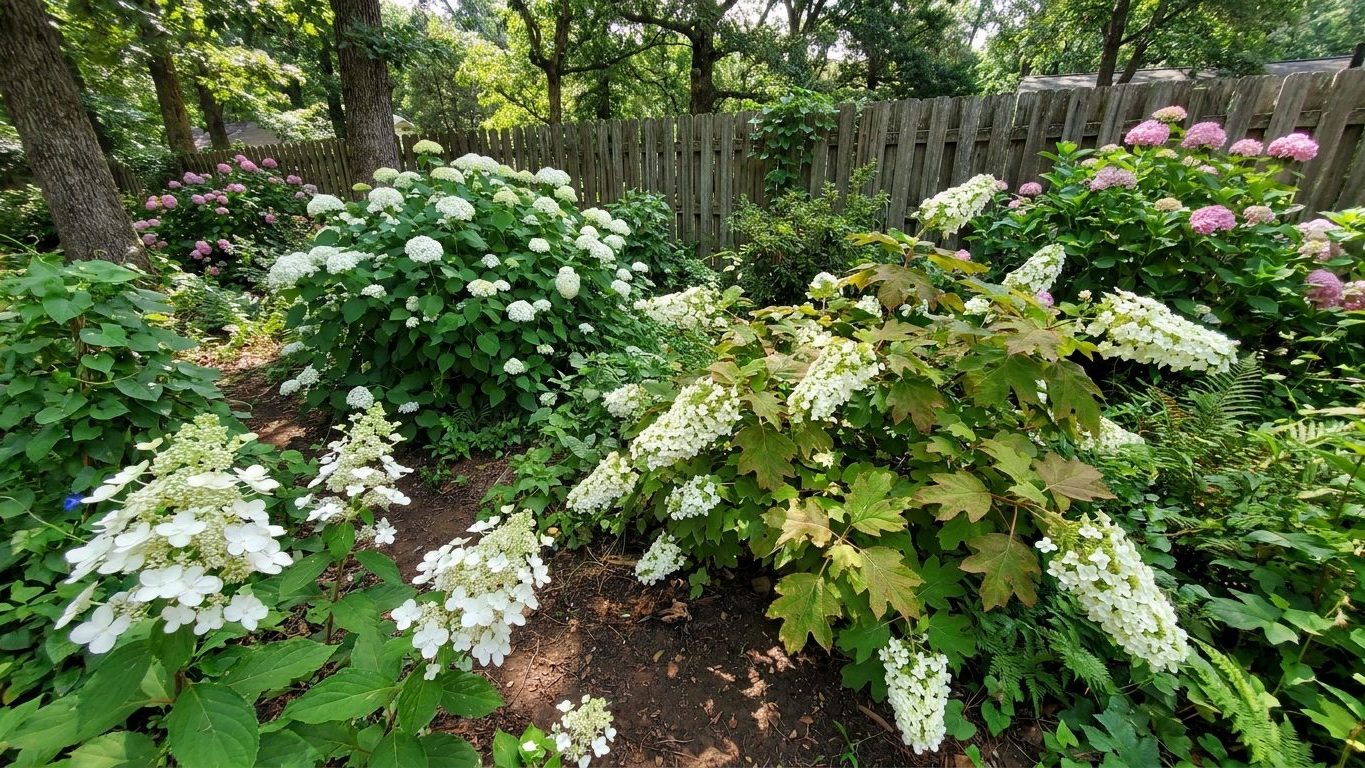
If you garden along the Wasatch Front, the hydrangeas built to last through Utah’s dry summers and cold snaps are panicle types such as ‘Limelight’ and smooth hydrangeas like ‘Annabelle.’ Both bloom on new wood, so a late spring freeze in Salt Lake City doesn’t wipe out the season. Bigleaf mopheads can survive here, but they need a sheltered, part-shade spot to bloom reliably.
Hydrangeas that grow well in Utah: The Short Answer
The USDA Plant Hardiness Zone Map puts Utah’s growing range at 4a to 9a, and Salt Lake City sits toward the milder middle of that spread. Higher valleys and southern desert towns pull the number toward either edge.
That gap matters for hydrangeas more than for most shrubs. Varieties that bloom on new wood shrug off a hard winter, while ones that set buds on old wood can lose a whole season to one cold snap.
Above 6,000 feet in the Wasatch Back or Cache Valley, expect the cold end of that range, closer to 4a. In St. George and the Dixie corridor, the mild end near 9a stretches the growing season by weeks.
Hydrangea paniculata ‘Limelight’

This panicle hydrangea blooms on new wood, so pruning mistakes or a late frost never erase the flush. It tolerates the alkaline clay common along the Wasatch Front and takes more direct sun than any other type on this list.
Hydrangea arborescens ‘Annabelle’

Smooth hydrangea comes from a much colder native range than Utah asks for, and it dies back and rebuilds its blooms every year. It wants regular water through a dry summer, but the cold here was never the problem.
Hydrangea paniculata ‘Pee Gee’

An older panicle cultivar, ‘Pee Gee’ handles the same wide temperature swings as ‘Limelight’ and can be trained into a small tree, which keeps its flowers above reflected heat from patios and driveways.
Hydrangea quercifolia ‘Snow Queen’

Oakleaf hydrangea does well in the Salt Lake Valley with afternoon shade, but it struggles in colder mountain valleys where a late frost can catch its early buds. Give it a spot out of the wind.
Hydrangea macrophylla ‘Endless Summer’

This bigleaf cultivar reblooms on new growth, which helps it recover from Utah’s freeze swings better than older mopheads. It still wants consistent moisture and shelter from the state’s dry wind and reflected sun.
Hydrangea anomala subsp. petiolaris

Climbing hydrangea is the riskiest pick on this list. It needs years of steady moisture and a shaded wall to establish, conditions Utah’s dry air and alkaline soil rarely offer without heavy irrigation.
Utah — the year and the numbers
- State
- Utah
- USDA zones
- 4a-9a
- Last spring frost
- April 12 to April 29
- First fall frost
- October 18 to October 29
- Annual rain
- 16 in
- Lawn zone
- transition-season
- Source
- NOAA NCEI 1991-2020 Climate Normals, 32F freeze probabilities · Salt Lake City
How to Work Out the Dates for Your Own Yard
Work backward from your own frost window instead of a generic planting chart, and the calendar for your specific yard falls into place.
- Find your frost window: NOAA NCEI’s 1991-2020 Climate Normals for station USW00024127 near Salt Lake City put the last spring freeze between April 12 and April 29, so treat that whole stretch as risk, not one date.
- Push planting past the frost tail: the state’s plant window opens in April and runs into May, right at the edge of that freeze range, so newly set roots need mulch for insurance.
- Pick bloom type by risk tolerance: if your yard sits in a low spot that catches cold air, choose a new-wood bloomer like ‘Limelight’ over a bigleaf type that sets buds the fall before.
- Count backward from fall frost: the first fall freeze lands between October 18 and October 29, so stop fertilizing by July, matching the third feeding window, to avoid pushing tender growth into that cold.
- Time the pruning cut: prune bigleaf hydrangeas in June or July, right after bloom and well ahead of both frost windows, so the plant has a full season to harden new wood.
- Plant again in late summer: the second window in August and September lets roots establish in warm soil before the October freeze, an option panicle types handle better than bigleaf.
In practice, ‘Limelight’ clears every one of these steps without extra fuss because it blooms on new wood and tolerates the alkaline soil common along the Wasatch Front.
Climbing hydrangea planted against a hot brick wall in the same yard often struggles through both frost windows and the dry months between them, since its roots need years of steady moisture to establish.
Utah North to South: How the Dates Shift
Elevation and desert exposure move these dates more than latitude does within Utah’s borders.
- Wasatch Front (Salt Lake City, Ogden, Provo): the valley floor holds heat longer into fall and warms earlier in spring than the benches above it, giving panicle and smooth types the longest safe season.
- High mountain valleys (Park City, Cache Valley, Bear Lake): cold air pools here on clear nights, pushing frost dates further apart than the valley floor, so bigleaf types struggle to finish a bloom cycle.
- Southern Utah and Dixie (St. George, Washington County, the Virgin River basin): lower elevation and desert heat push both frost dates outward, stretching the season while adding sun and wind stress none of these hydrangeas handle without afternoon shade.
- Uinta Basin and eastern high desert (Vernal, Roosevelt): elevation and dry continental air narrow the safe window from both ends, favoring only the hardiest panicle and smooth cultivars.
Match your own address to the closest of these before leaning on the statewide zone range, and check the Utah hydrangea state guide for the frost dates tied to your area.
Mistakes Utah Punishes
Three habits explain most of the hydrangea failures I hear about from Wasatch Front yards, and each one has a simple fix.
Pruning bigleaf hydrangeas in fall
Bigleaf types set next year’s flower buds on the current season’s wood, so a fall cleanup cut removes the very buds that would open next summer. Utah’s prune window for bigleaf falls in June and July only, right after bloom finishes and well before the first frost of fall arrives to catch new growth.
Skipping wind and afternoon shade
Utah’s dry air and strong valley wind scorch hydrangea leaves faster than the same heat would in a humid climate, especially on oakleaf and bigleaf types with big, thin leaves. Morning sun with afternoon shade, or a windbreak on the west side, keeps the foliage from crisping through July.
Chasing blue blooms in alkaline soil
Utah soil runs alkaline almost everywhere along the Wasatch Front, which pushes bigleaf hydrangea blooms toward pink no matter how much aluminum sulfate goes into the ground. Panicle and smooth types skip the fight entirely, since their white and green flowers don’t shift with soil pH at all.
Utah Extension Offices and County Contacts
The statewide zone range is a starting point, not a final answer for your address. Utah State University Extension and your county office layer local soil, elevation, and wind data on top of it.
- Utah State University Extension: extension.usu.edu lists county offices, soil testing services, and plant fact sheets for the state.
- Your county extension office: the local contact for a soil pH test and advice on microclimates specific to your elevation.
- The Utah hydrangea calendar page: the month-by-month planting, fertilizing, and pruning windows tied to your part of the state.
Common questions
Do hydrangeas need afternoon shade in Utah?
Most types do, especially bigleaf and oakleaf hydrangeas with broad leaves that scorch under the state’s dry, intense sun. Panicle types like ‘Limelight’ tolerate more direct exposure, but even they appreciate relief during the hottest weeks of July.
Can I grow bigleaf hydrangeas in Salt Lake City?
Yes, in a sheltered spot with afternoon shade and consistent water, though a reblooming cultivar such as ‘Endless Summer’ recovers better from cold snaps than older mophead varieties that set all their buds the fall before.
How do I get blue hydrangea blooms in Utah’s alkaline soil?
It’s a long fight against the state’s natural chemistry, and even heavy aluminum sulfate treatments tend to fade back toward pink within a season or two. Growing a variety in a large container with acidic potting mix gives more reliable control than amending ground soil.