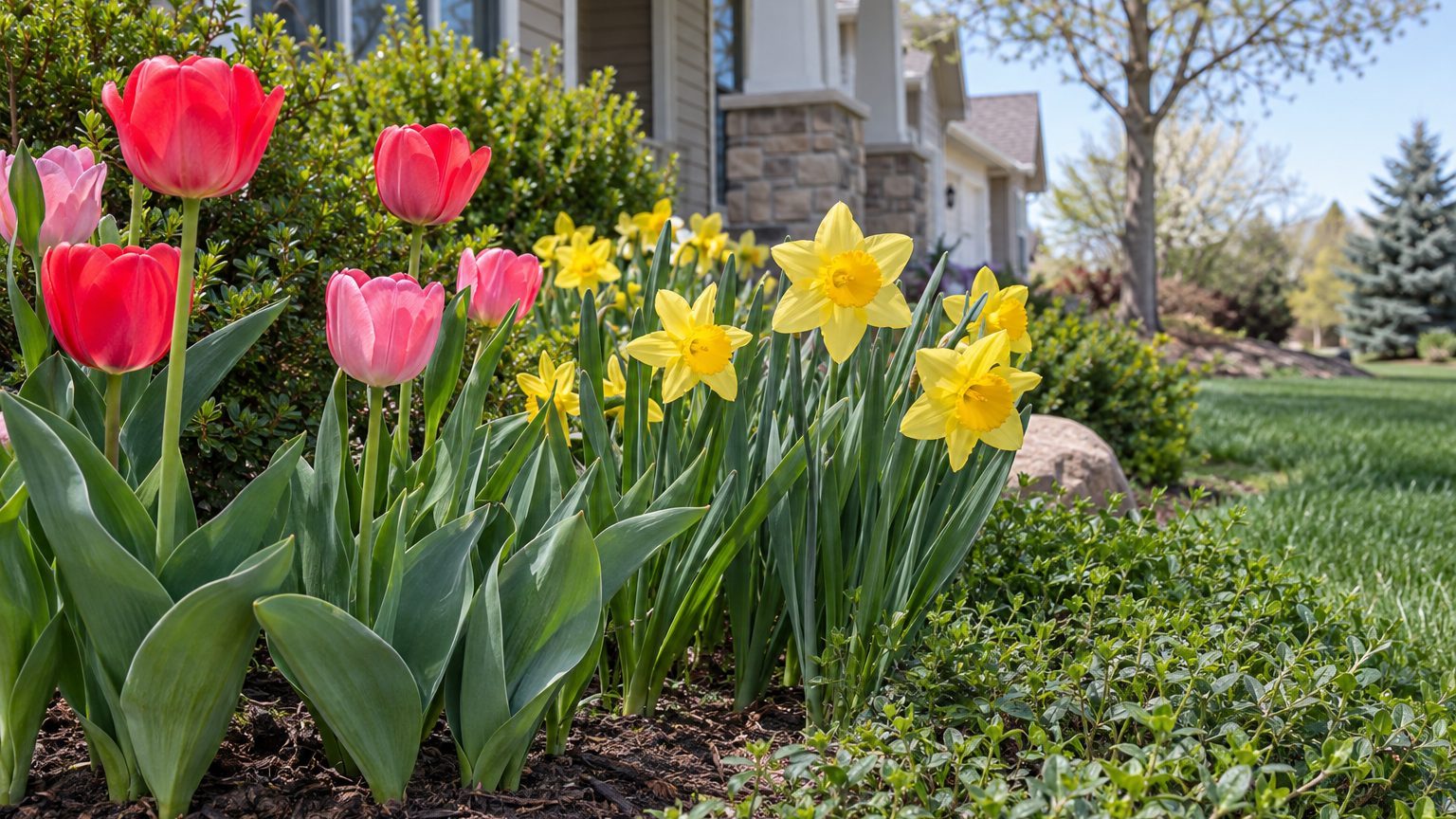
Daffodils pushing through cold soil and species tulips opening in a dry bed are common sights in Colorado yards each spring, and they are the right place to start. Bulbs that handle dry ground, cold winters and hungry wildlife do the best work here.
Best Spring Bulbs to Grow in Colorado

Species tulips, snow iris, crocus, Darwin hybrid and Emperor tulips, daffodils and alliums all suit Colorado. Winters here deliver the cold that spring bulbs need, so they can be planted without chilling them in advance. Dry conditions favor the small, tough types. Plant them in September and October so roots form before the ground freezes.
Species Tulips
Species tulips are among the bulbs best adapted to droughty conditions, which describes much of Colorado. They are smaller and wilder looking than the big hybrids sold in spring displays. Tuck them into a sunny, well-drained bed where summer watering stays light.
Snow Iris
Snow iris handles dry ground as well. It is a small bulb, so plant it in drifts near a walk or a front step where the early blooms are easy to see. Leave it undisturbed once it settles in.
Crocus
Crocus is another bulb that copes with dry conditions, and it fits where larger bulbs would look out of place, such as lawn edges and rock gardens. Plant it in groups rather than single bulbs so the display reads from the street.
Darwin Hybrid and Emperor Tulips
Tulips have a reputation for fading after a season or two, but Darwin hybrids and Emperor tulips are bred to return for several years. If you want the large, classic tulip look in a formal bed, choose these two groups over mixed bags of unnamed tulips.
Daffodils
Daffodils, also sold as narcissus, come in a wide range of heights, colors, flower types and blooming periods. They also last longer than tulips, which makes them the more reliable perennial bulb. A mixed planting of several kinds stretches color across the season.
Alliums
According to Iowa State University Extension, alliums, the ornamental onions, need the cold of winter to bloom. Their round purple or white heads stand tall above other plantings. Set them behind lower bulbs so the leaves of earlier bloomers do not crowd them.
Colorado — the year and the numbers
- State
- Colorado
- USDA zones
- 3b-7b
- Last spring frost
- May 1 to May 11
- First fall frost
- September 30 to October 12
- Annual rain
- 15 in
- Lawn zone
- transition-season
- Source
- NOAA NCEI 1991-2020 Climate Normals, 32F freeze probabilities · Denver
How to Choose Spring Bulbs for Your Colorado Garden
Colorado spans a wide range of winters. The USDA hardiness system, which rates a place by its average coldest night of the year, runs from zone 3b to zone 7b across the state. Pick bulbs by what your own yard throws at them.
Start with the problem you actually have, whether dry soil, hungry animals or limited time, then match the bulb.
| Your situation | What suits it in Colorado | Why |
|---|---|---|
| Very cold winter | Daffodils, crocus, snow iris | Spring bulbs need winter cold to flower, and these do well in a cold, dry climate |
| Dry, droughty soil | Species tulips, snow iris, crocus | Well adapted to dry conditions |
| Little time to fuss | Daffodils | More reliable as a perennial bulb than tulips |
| Want tulips back year after year | Darwin hybrids and Emperor tulips | Bred to return for several years |
| Deer, voles, squirrels or rabbits visit | Daffodils | Animals leave them alone, while tulips and crocus get eaten |
Alliums fit nearly any of these situations, and they add height at the back of a bed, and they need the cold of winter to bloom.
Which Spring Bulbs Suit Different Parts of Colorado
Elevation changes the season more than anything else in the state, so the right bulb mix shifts from the plains to the high country.
- Denver and the Front Range: Denver sits at 5,280 feet on the plains, where most of the bulbs above do well, including the larger tulips and a mixed daffodil planting.
- Mountain towns: Seasons here run far shorter, and frost can arrive in July, so plant in September while the ground is easy to dig.
- The Western Slope: Conditions differ again from both the plains and the mountains, so ask a local garden center or the county office which bulbs hold up in your valley.
Wherever you garden, the same fall planting months apply, and the leaves should be left to die back naturally.
Spring Bulb Buying Mistakes to Avoid in Colorado
Expecting Every Tulip to Last
Tulips are often short-lived in the garden, and a bed of unnamed mixed tulips may thin out after a season. That costs you a repeat of the bloom you paid for. Choose Darwin hybrids or Emperor tulips for return performance, and add daffodils for dependable perennial color.
Planting While the Soil Is Warm
Bulbs set into warm ground sprout too soon and lose their cold-weather start. Wait until the soil has cooled below about 60°F, which leaves roots enough time to form before the ground freezes yet keeps the bulbs from sprouting in the fall.
Ignoring Hungry Visitors
Voles, squirrels, rabbits and deer eat tulips and crocus, and a bed can vanish before it ever blooms. Daffodils are left alone, so plant them wherever wildlife passes through, and keep tulips and crocus closer to the house or in protected spots.
Where to Get Spring Bulb Advice in Colorado
Colorado State University Extension publishes fall-planted bulb guidance written for the state, and your county office knows how elevation affects planting in your own valley or town.
- The state extension site has fact sheets on fall-planted bulbs and corms, so read them before ordering in late summer.
- Your county extension office can answer questions about local soil and wildlife, and it is worth a call in early fall before planting begins.
Common Questions
When Can You Cut Back the Leaves on Spring Bulbs in Colorado?
Wait until the leaves turn brown, because they feed the bulb for next year. Remove only the faded flowers. Cutting or tying green leaves shortens the bulb’s life and weakens next spring’s bloom.
Do Tulips Need to Be Chilled Before Planting in Colorado?
Most spring bulbs need about 12 to 16 weeks of cold to flower, and Colorado winters supply it in the ground. Refrigerator chilling is a workaround for places with mild winters. Alliums need the cold of winter to bloom.
Can You Still Plant Bulbs That Stayed in the Bag?
Yes. A bulb still in the bag is better planted late than stored over the winter, so plant as long as the ground can be dug. Water the bed after planting so the roots can start.