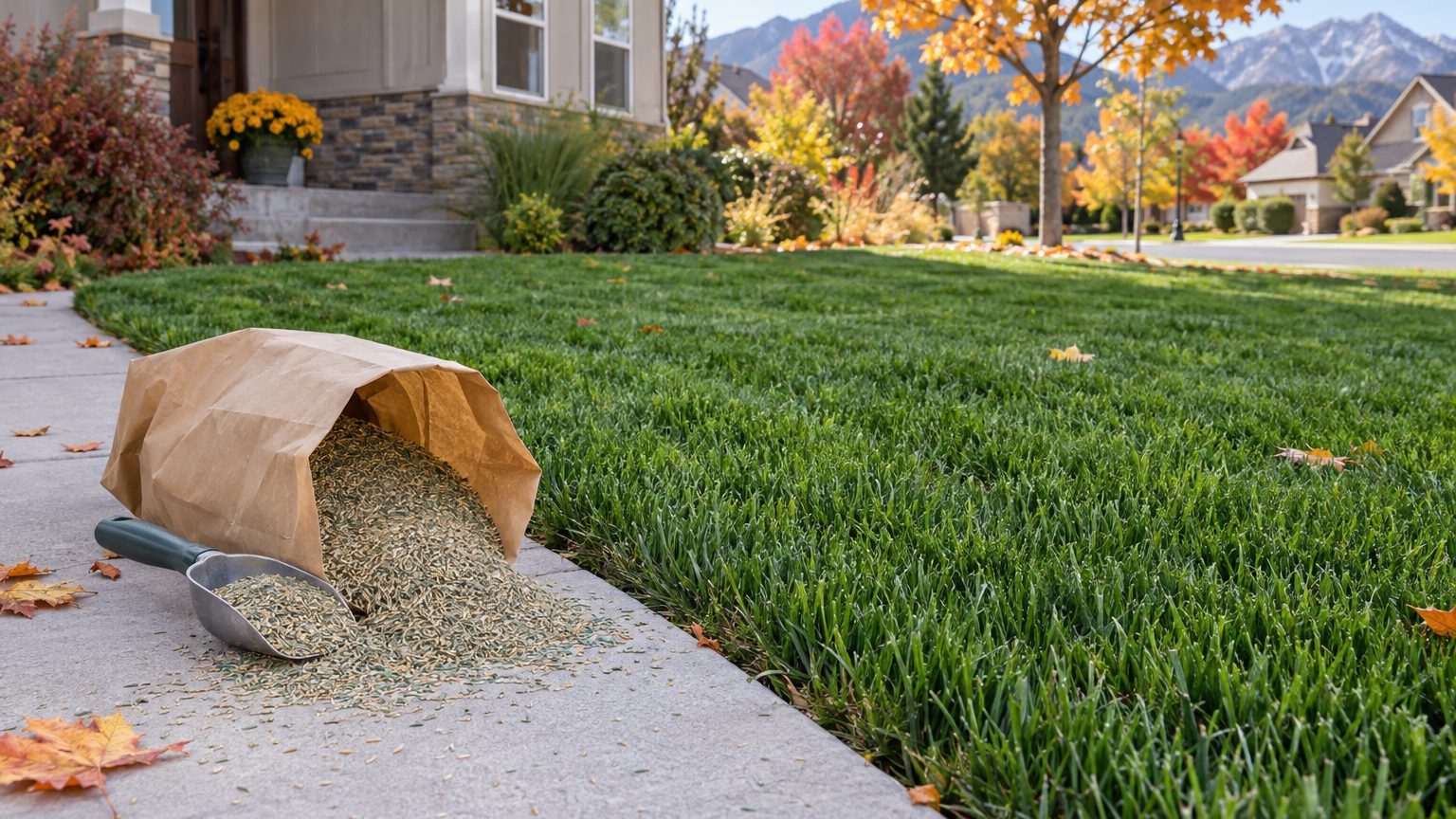
Grass that greens up in the cool of spring and turns thick again in September is the kind that lasts in a Utah lawn. Winters here freeze hard and summers run dry and hot, so cool-season grasses carry the state. Most yards do well with Kentucky bluegrass or tall fescue, and the shade and sun in your yard decide the rest.
Which Grass Grows Best in Utah?
Cool-season grasses suit Utah, because they handle the cold winters across a state that spans USDA hardiness zones 4a to 9a. They grow actively in spring and fall, then slow down in summer heat. Warm-season grasses are a poor fit for most of the state, and the lawn grasses recommended for this region are all cool-season types.
Kentucky Bluegrass
Bluegrass is a familiar Utah lawn grass, and for good reason. It shrugs off hard winters and spreads by underground stems, so it fills in thin spots and recovers from wear on its own.
The tradeoff is thirst. It wants regular water through the summer months, and it goes straw-colored if you let it dry out. It also germinates slowly, so be patient after seeding.
Tall Fescue
Tall fescue puts down deep roots, which helps it ride out dry spells better than bluegrass. That makes it a smart pick for sunny yards where you would rather water less.
It grows in clumps instead of spreading, so bare patches fill in slowly. Overseed thin areas now and then to keep the turf dense.
Fine Fescues
Creeping red, chewings and hard fescue form a soft, fine-bladed lawn that tolerates shade and poor soil. They are the usual answer under mature trees, where bluegrass thins out.
They do not like heavy foot traffic or soggy ground. Plan on them for quiet corners, not for a backyard where kids and dogs run daily.
Perennial Ryegrass
Perennial ryegrass sprouts fast, which is handy for patching a worn spot or getting quick green. It holds up to traffic well.
Perennial ryegrass can thin during severe cold snaps without snow cover. Many Utah homeowners use it as a minor part of a mix instead of the whole lawn.
Utah — the year and the numbers
- State
- Utah
- USDA zones
- 4a-9a
- Last spring frost
- April 12 to April 29
- First fall frost
- October 18 to October 29
- Annual rain
- 16 in
- Lawn type
- cool-season
- Source
- NOAA NCEI 1991-2020 Climate Normals, 32F freeze probabilities · Salt Lake City
How to Choose Grass Seed for a Utah Yard
Start with what your yard actually does: how much sun it gets, how much foot traffic it sees, and how much water you are willing to apply. Those answers narrow the field quickly.
Mixing compatible grasses is common and sensible, such as bluegrass with a little ryegrass. Read the seed tag and look for the species names rather than a marketing label.
| Grass | Season | Best yard fit |
|---|---|---|
| Kentucky bluegrass | Cool | Full sun, heavy use, and a willingness to water and mow regularly |
| Tall fescue | Cool | Sunny yards where you want deep roots and less watering |
| Fine fescues | Cool | Shade under trees, low traffic, and less frequent mowing |
| Perennial ryegrass | Cool | Quick patches and wear, ideally blended with another grass |
If you want a lawn you rarely mow, fine fescues grow slowly and stay short. For a play area that must recover fast, bluegrass with some ryegrass is the sturdier pairing.
Which Grasses Grow Where in Utah
Elevation and latitude shape what thrives, and the state’s lawn areas differ enough that the same seed bag will not suit Utah uniformly.
- Wasatch Front and Salt Lake Valley: This is the mild core of the state. Bluegrass and tall fescue both do well, and fine fescue earns its place in shaded lots.
- Cache Valley and Park City: Colder winters and a shorter growing season favor bluegrass and fine fescues. Ryegrass is a weaker bet here.
- St. George and the Dixie area: Summers are hotter and longer, so deep-rooted tall fescue gets the nod. Tall fescue still needs regular irrigation through St. George summers.
Check your own street’s conditions, because a shady cul-de-sac in the same town can call for a different mix than a sunny slope.
Grass Seed Mistakes to Avoid in Utah
Choosing the Wrong Grass
Planting bluegrass in deep shade or relying on ryegrass alone at high elevation can leave a thin lawn. Match the species to the spot first, then buy.
When a yard has both sun and shade, a blend that includes a fine fescue lets each part of the lawn find its grass.
Seeding at the Wrong Time
August and September give new seed warm soil and cooling air, so roots grow before winter. Spring also works, in April or May, but young grass then has to face summer heat before it matures.
Seeding in midsummer wastes seed, because it dries out quickly and weeds compete.
Too Much, Too Little, or Buried
Heavy seeding crowds seedlings, and a thin scatter leaves room for weeds. Follow the rate on the bag for the species you chose.
Cover seed with no more than 0.25 inch of soil, and press it down so it touches the ground firmly. Seed buried deeper often never surfaces.
Where to Get Lawn Advice in Utah
Local help is close by, and it is tuned to Utah soil and water.
- Utah State University Extension publishes lawn guides for the state’s climate, and it is a good first stop before buying seed.
- Your county extension office can answer questions about your soil and your town’s conditions, so call before you start a big renovation.
Bring a soil sample or a photo of the thin spot, and ask which grass has held up on your street.
Common Questions
Should You Put Down Crabgrass Preventer When Seeding?
Not usually: many crabgrass preventers also stop lawn seed from sprouting, so check the product label before use at seeding. If you seed in spring, skip any preventer that the label says is incompatible with seeding. Seeding in August or September avoids the clash, and preventer goes down in April, with May as a fallback.
When Should You Fertilize a New Lawn in Utah?
September and November are the usual times for feeding, and May works as a fallback. A September feeding also helps a lawn seeded that same season fill in before winter.
Should You Aerate or Dethatch Before Overseeding?
Core aeration can improve seed-to-soil contact, while dethatching helps only when thatch blocks the soil. Core aeration fits September, with April and May as spring options, while dethatching suits August or September, with April as a fallback. Choose the treatment your lawn needs before you spread seed.