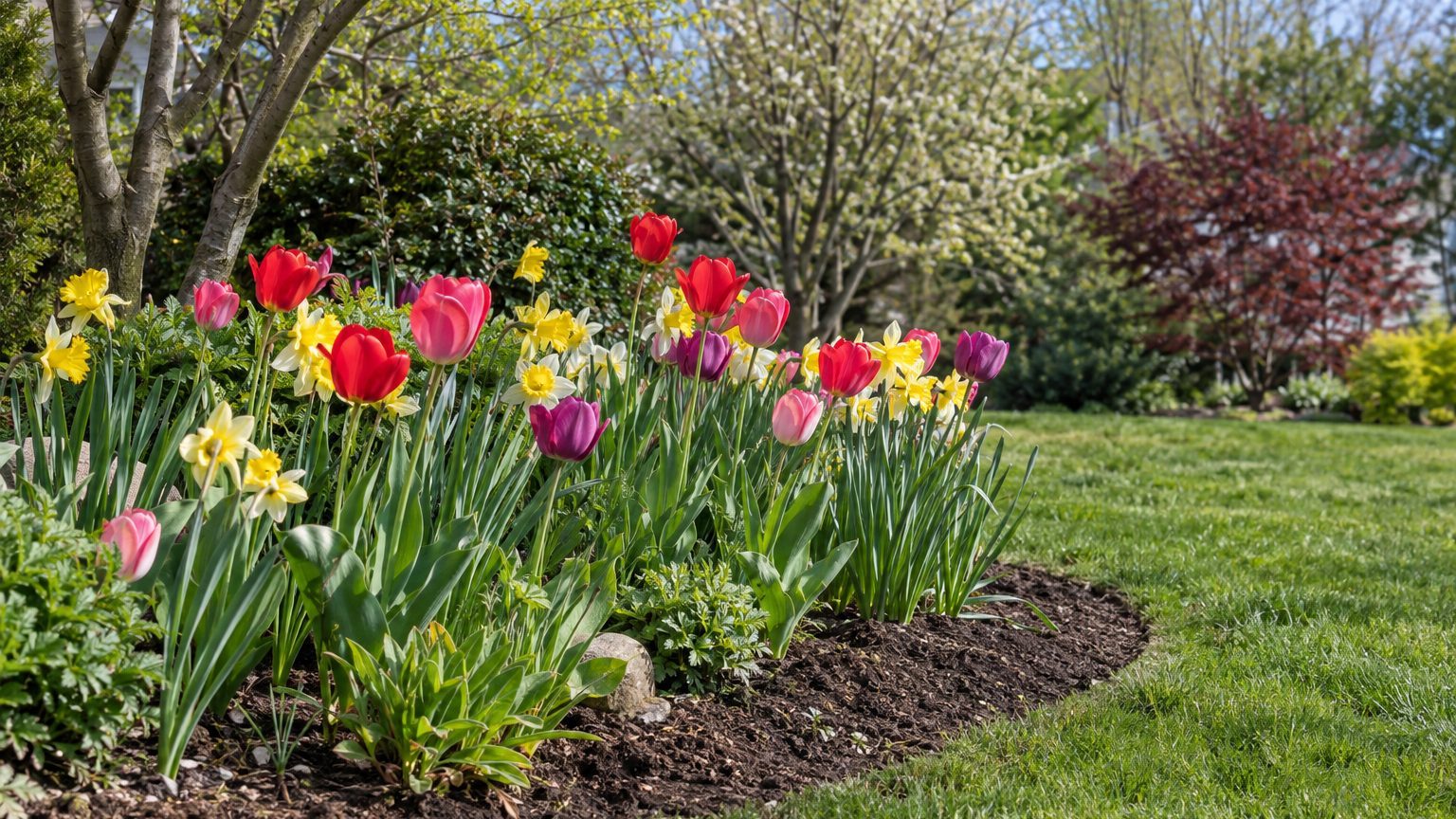
Daffodil spears pushing through cold ground and tulip buds fattening in the garden bed are the plainest signs of a Pennsylvania spring. Tulips and daffodils bloom from March through May, and a mild winter can bring the first flowers as early as February.
When Do Tulips and Daffodils Bloom in Pennsylvania?

Tulips and daffodils bloom in Pennsylvania from March through May, and in a mild winter the first flowers can open as early as February. Bloom follows the warming of spring, so a cold, late March holds buds back and a mild one brings them on.
Before any of that happens, the bulb needs its cold. Most spring-flowering bulbs need about 12 to 16 weeks of cold to flower.
| Bulb | When it blooms in Pennsylvania | What sets the timing |
|---|---|---|
| Snowdrops and winter aconites | Start of the season, as early as February | The first warm spells of late winter |
| Daffodils | March, April and May | Spring warming, after a full winter chill |
| Tulips | March, April and May | Spring warming, with enough winter cold to trigger flowers |
| Alliums | End of the season, into May | Needs a winter chill |
Crocus and hyacinths fill out the same season, and exact dates slide earlier or later with each spring’s weather. Treat the months as a window rather than a date, and expect a cold year and a warm year to look quite different in the same bed.
Pennsylvania — the year and the numbers
- State
- Pennsylvania
- USDA zones
- 5a-7b
- Last spring frost
- March 29 to April 6
- First fall frost
- November 5 to November 16
- Annual rain
- 44 in
- Lawn zone
- transition-season
- Source
- NOAA NCEI U.S. Climate Normals 1991-2020, 32F freeze probabilities · Philadelphia
How to Tell Your Bulbs Are About to Bloom
The bulbs announce themselves well before the first petal opens, and a walk along the beds tells you more than any calendar.
- Green tips breaking the soil mean growth has started, so leave the mulch loose and do not dig around them.
- Daffodil buds rising inside a sheath of leaves are close to opening, which is the moment to cut a few for a vase.
- Tulip buds that begin to show color between the leaves are close to opening, and a warm stretch will push them open quickly.
- A thick flower spike standing in the center of a hyacinth means bloom is close.
- Strap-like allium leaves coming up long before any bud appears are normal, because the flower heads arrive late in the bulb season.
A late cold snap can pause buds that have already formed, and they usually resume once the weather settles.
What to Do After Tulips and Daffodils Bloom in Pennsylvania
Snip off the faded flowers and leave everything else alone. The green leaves keep feeding the bulb after bloom, and that stored energy is what produces next year’s flowers. Wait until the leaves turn yellow and fade to brown before removing them, and never tie or braid them into neat bundles while they are green.
Tulips are often short-lived in the garden, so a bed that thins out after a few seasons is typical rather than a sign of poor care. Daffodils last longer and are the more reliable perennial bulb. The daffodil overwinters in USDA zones 3 through 8, and Pennsylvania falls in zones 5a to 7b on the USDA hardiness system.
Daffodils also suit naturalizing, which means scattering clumps through a lawn edge or under trees. They never have to be dug, so the spot you plant them is the spot they keep. Plant tulips where fading foliage will be hidden by perennials coming up around them.
How Bloom Time Shifts Across Pennsylvania
Pennsylvania runs from a warm southeastern corner to cold hill country, and bulbs follow that gradient, opening earlier in the south and later in the north.
- Philadelphia and the southeast: Bulbs here tend to open earlier than in the north of the state, and February bloom is most likely here in a gentle winter.
- The Northern Tier and the Alleghenies: Spring arrives noticeably later in these colder parts of the state, so daffodils and tulips often open toward the later part of the bloom window.
The order of the season stays the same everywhere, only shifted earlier or later on the calendar.
Where to Get Bulb Advice in Pennsylvania
Local conditions vary widely across the state, so local advice is worth a look before you buy or plant. Penn State Extension publishes bulb guidance for Pennsylvania gardeners, and each county has its own office with master gardeners.
- Penn State Extension has articles on daffodils and on bulbs in general, which are worth reading in late summer before ordering.
- Your county extension office can answer questions about your own soil and microclimate, and a call in early fall is a good time.
Common Questions
When Should You Plant Tulip and Daffodil Bulbs in Pennsylvania?
October is the target, though September and November also work. The deciding factor is soil temperature, which should have cooled down enough that it no longer feels warm. That gives roots time to form before the ground freezes, yet keeps bulbs from sprouting too early in fall.
Can You Still Plant Bulbs That Are Left in the Bag?
Yes. A bulb still in the bag does better planted late than stored over the winter, so put it in the ground as long as the soil can be dug.
Which Bulbs Do Deer and Squirrels Leave Alone?
Voles, squirrels, rabbits and deer eat tulips and crocus, while daffodils are left alone. Gardeners with deer or squirrels also choose hyacinth, allium, fritillaria and scilla, which makes a good starting list for Pennsylvania yards with the same visitors.